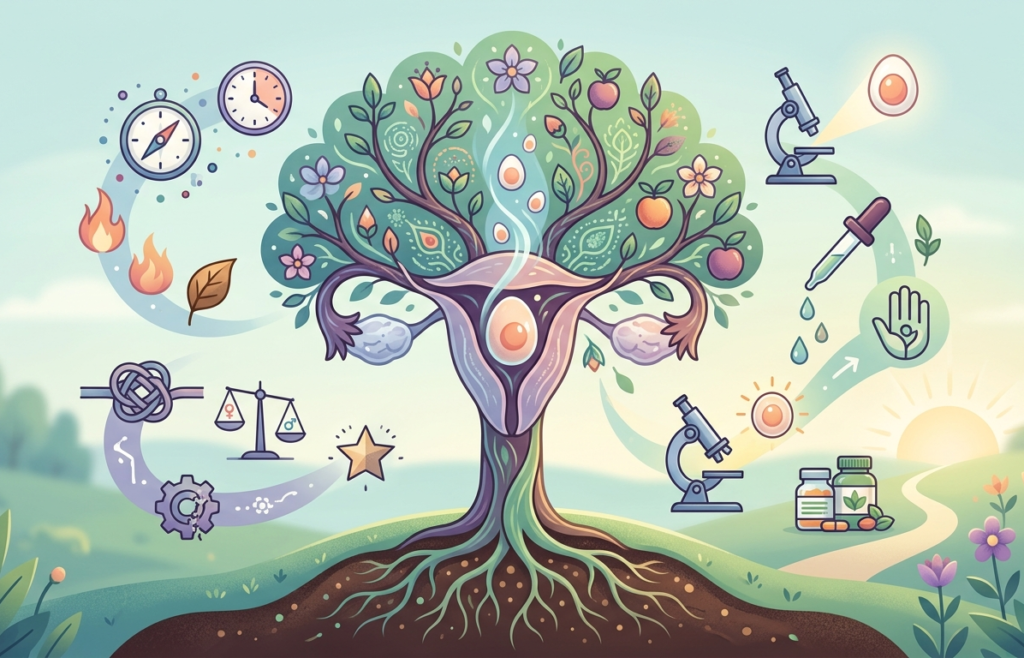
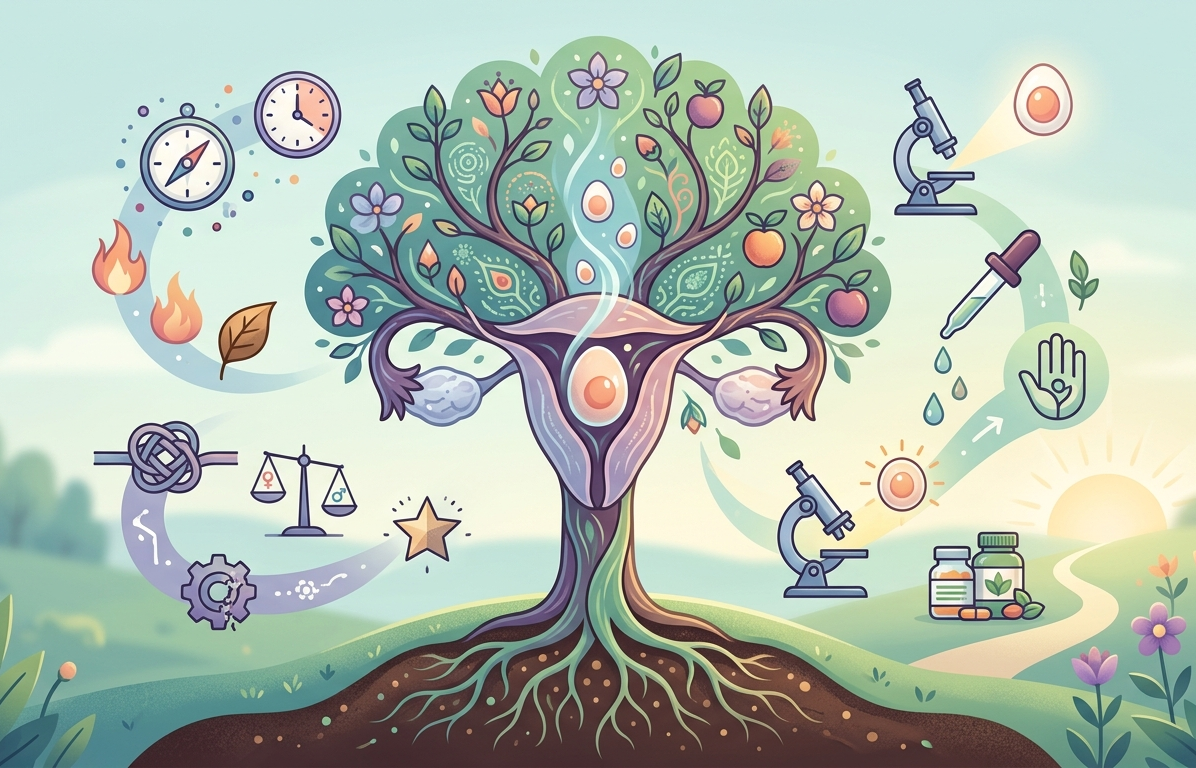
Among most of the women across the world, the prospect of infertility proves to be highly private and at times stressful too. For some motherhood comes easily, but for others infertility can lead to a troubled pregnancy which may contribute to uncertainty, worry and despair. Women can now choose to take certain measures to boost their reproductive health simply by becoming aware about the possible root causes, screenings, diagnosis and available treatment options.
What Does Female Infertility Exactly Mean?
The incapacity to reproduce after a particular period of constant, unprotected sexual activity is referred to as female infertility. According to medical description, it has been defined as the inability to conceive following one whole year for women younger than 35 and 6 months for women over 35 years of age. (Adebisi et al., 2025)
Thousands of women globally struggle with this disease, which is far more common than many individuals realize. Infertility problems in females can frequently be triggered by several kinds of biological and environmental factors.
Female Infertility is Common: Not a myth
Infertility is a significant health concern which affects 15% of families globally while female infertility makes up to 50% of such instances. (Adebisi et al., 2025)
This demonstrates that infertility is prevalent and that many women have to suffer from similar challenges. In addition to that, access to suitable medical attention and knowledge may substantially improve the outcomes.
Types of Female Infertility
It becomes easier to pick the most appropriate plan of treatment if one is conscious of types of female infertility. Some of the most common are;
This develops if a female has been attempting for more than a year yet couldn’t get pregnant.
This happens whenever a female has earlier gotten pregnant but can not conceive.
At times, despite thorough examination, the root cause remains unknown. Based on research, 15-30% of situations fit into this category. (Adebisi et al., 2025)
Common Infertility Problems in Females
Female infertility issues are often triggered by an array of biological and healthcare factors. The evaluation can be challenging as these factors typically coexist.
Among the major causes, responsible for 25-40% of cases, is ovulatory disruption. Healthy production of eggs is hampered by disorders like PCOS.
Egg and sperm cannot interact if the fallopian tubes are blocked or damaged. 20-25% cases of infertility are due to this reason.
The insertion of embryos may be inhibited by cysts, tumors, and uterine morphological abnormalities.
Fertility is affected by this illness, leading to a tissue imitating the lining of the uterus to grow outside the uterus.
The menstrual cycle and ovulation are greatly impacted by hormonal imbalance.
Stress, excessive alcohol consumption, cigarette smoking and being overweight all have the ability to significantly reduce fertility rates.
Diagnosis and Screening Test for Female Infertility
A thorough evaluation process must be performed to identify and diagnose infertility. Detailed medical history and physical check up are usually among the first steps taken by doctors.
Common Tests;
Ovulation Analysis
It is the usual diagnostic test for female infertility. Determines if ovulation is taking place frequently or not.
Ultrasound or Imaging Examination
The ovaries and uterus are thoroughly examined by ultrasound.
Hysterosalpingography (HSG)
This test reveals if the fallopian tube is blocked or not.
Laparoscopy
A minimally invasive surgical technique for detecting disorders like Endometriosis.
A proper medical diagnosis is vital because it facilitates targeted and personalized treatment plans for infertility by pinpointing the root cause of the problem.
Hormonal Testing For Female Infertility
A crucial aspect of assessing and diagnosing female infertility is hormonal testing. The quantity of these hormones in the blood particularly is crucial for the fertility rates.
Major Hormone Tests include;
- Follicle-Stimulating Hormone (FSH)
Analyzes the functions of the ovaries.
Assists in tracking ovulation.
Evaluate activity of the ovaries.
Proof of successful ovulation.
Determines ovaries reserves.
Treatment of Infertility in Females
The age of the female, overall health and actual causes all affect the pace of the treatment. There is no standardized approach to treat these issues.
However, lifestyle modifications such as having a healthy weight, staying far away from alcohol and regulating stress through exercising daily can improve the success rates.
Take the first step, get the right Female Infertility treatment here.
Other Female Infertility Treatment Options
Nowadays, there exist several clinical and advanced methods for addressing female infertility.
Fertility meds modulate hormones and trigger ovulation.
- Clomiphene citrate
- Letrozole
- Gonadotropin
In many females, these drugs may initiate ovulation, significantly increasing the possibility of getting pregnant.
Surgery is sometimes required to fix;
- Blocked Fallopian Tubes
- Uterus Abnormalities
- Endometriosis
- Assisted Reproductive Technologies (ART)
When other strategies fail, these advanced therapies are utilized.
- In-vitro Fertilization (IVF)
Followed by the fertilization outside the body, the embryos are implanted back into the uterus.
IVF has revolutionized the cure to infertility and boasts better outcomes, especially among younger females.
- Intrauterine Insemination (IUI)
In order to boost the odds of fertilization, sperm is delivered directly into the uterus.
Expectations from Infertility Treatment
Infertility treatments are sometimes mentally and financially demanding besides being physically laborious. Analysts claim that, a number of variables dictate the efficiency of the treatment;
- Age of the female
- The cause of infertility
- Ovarian reserve
- Lifestyle factors
Since fertility declines with age, younger women tend to have higher success rates.
Influence of Female Infertility on Emotions
Infertility exerts direct influence on psychological wellbeing, in addition to being an underlying physical condition.
Many females experience;
- Anxiety
- Depression
- Societal Pressure
Living with infertility demands support and patience from healthcare professionals, counselors and family.
How to Prevent Female Infertility?
Some measures may mitigate the risk, although not every factor is preventable.
- The early diagnosis of fertility issues
- Safe and secure sexual activity to guard against infections
- Maintaining a healthy way to life
- Avoiding adverse environment surroundings
If gestation does not happen properly within the expected time period, timely medical guidance is highly recommended.
In Conclusion
Even though female infertility is a complex matter affected by numerous factors, it is likewise fairly curable owing to current medical advancements. There are several solutions to this issue covering everything from sophisticated infertility treatment options like IVF to hormonal tests from clinics like NJINSKY IVF & Fertility Clinic in Lahore.
It can render a huge impact if you become familiar with your body, receive immediate medical attention and be aware. If you are or someone you know is dealing with infertility, remember that you are not alone and, there exist plenty of viable treatment options.