

Can Infertility Be Treated? Causes & Treatment Options

Can Infertility Be Treated

In an era of remarkable medical advancements, infertility remains clouded by stigma and misinformation,causing many to assume that it is untreatable. Advancement in research and medicine has introduced various infertility treatment options. Developments in reproductive medicine have given doctors evidence-based guidelines that can help couples in improving fertility naturally and medically.

Ways to Manage Fertility Problems

Medical solutions for infertility vary according to the root cause of infertility. Therefore, it is a crucial step to diagnose the exact cause of infertility. Fertility experts begin with a thorough history and examination— this gives them a brief idea of the cause. The presumptive diagnosis is then substantiated with relevant investigations.  Common investigations for a couple with infertility are as follows:

  1. Hormonal profile of both male and female partners– serum FSH,LH, AMH, progesterone, estrogen, testosterone, prolactin and thyroid profile are commonly assessed.
  2. Seman analysis for males
  3. Ultrasounds– pelvic, transvaginal, abdominal and scrotal ultrasounds might be required.
  4. Tubal patency assessment or females-hysterosalpingography (HSG) and sonosalpingography (SSG)


Further investigations might be prescribed by your fertility specialist accordingly.

In many cases infertility can be easily reversed by natural methods and your fertility expert may not prescribe any medications or procedures.Lifestyle modifications such as weight reduction, regular exercise, smoking cessation, reduced alcohol consumption, and stress management can significantly improve sperm and egg quality in some couples. 

In some cases, no exact cause of infertility is identified; this is known as “unexplained infertility.” This sounds like an alarming condition for many couples and some might even lose hope. However, the solution is simple. In most cases couples fail to plan the timing of intercourse during the fertile window— the egg usually has a life of 24-48 hours. The fertile window is considered 5 days before ovulation and the day of ovulation itself. Many couples are not aware of their fertile window. Through hormonal tests and ovulation tracking the fertile window can be identified and your fertility specialist will advise you to make sure intercourse takes place during that appropriate time.

Treatment for Conception Difficulties

Not all infertility issues can be resolved by lifestyle management and require medications or even advanced procedures. In cases where infertility is due to ovulatory disorders, female infertility treatment begins with using medications for ovulation induction— the released egg can be used for natural conception or IVF. Other treatments include treating the underlying cause such as hormonal therapy for hormonal disorders, surgery in cases of scarring caused by endometriosis, adhesion in the fallopian tubes or fibroids. Male infertility treatment also involves treating the underlying cause as well as sperm retrieving procedures such as TESA,TESE and micro-TESE. 

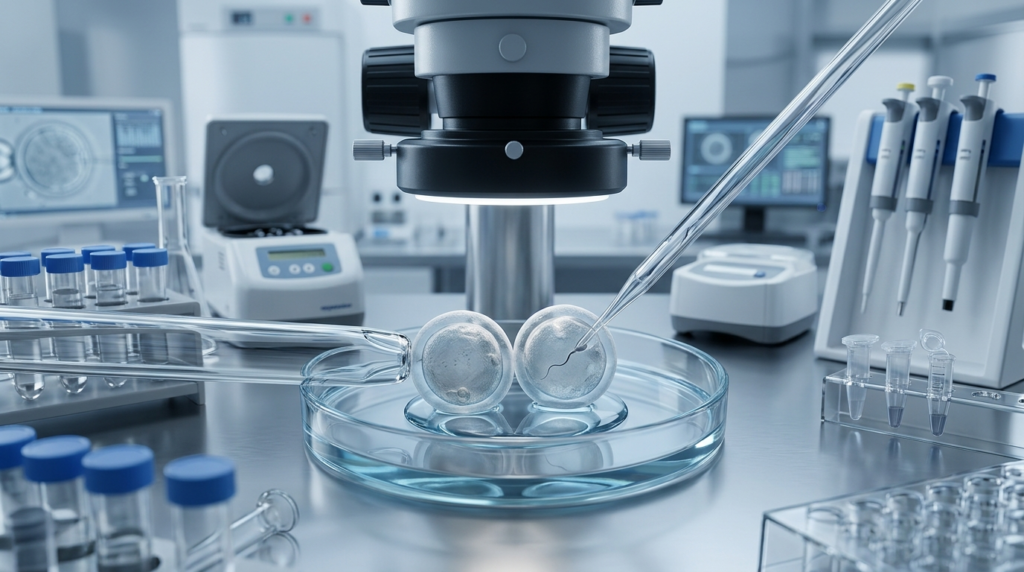
Njinsky IVF & Fertility Clinic is facilitated with fertility experts with extensive experience and advanced technology for Assisted Reproductive Techniques (ARTs): such as IUI, IVF and ICSI, to help patients achieve pregnancy. Our fellowship consultants provide accurate diagnosis with appropriate investigations and design a personalized treatment plan for the couple. We believe that every family begins with hope. Through expert care, advanced fertility treatments, and compassionate support, we are proud to help couples take the next step toward achieving their dream of parenthood.

Related Articles

Masturbation and PCOS: Myth vs Medical Facts
27Aug

Masturbation and PCOS: Myth vs Medical Facts

Explore the realities of PCOS and dispel the myth that masturbation causes it. Understand the hormonal factors involved and when to consult a healthcare professional.

PCOS vs PCOD: Understanding the Real Difference
27Aug

PCOS vs PCOD: Understanding the Real Difference

Explore the PCOS causes, from genetic predispositions to hormonal imbalances. Learn about its causes, symptoms, and the importance of understanding this syndrome.

The Science Behind PCOS Causes Explained
27Aug

The Science Behind PCOS Causes Explained

Explore the PCOS causes, from genetic predispositions to hormonal imbalances. Learn about its causes, symptoms, and the importance of understanding this syndrome.