


Low Sperm Count and Male Infertility: What’s the Link?
Learn how to check for infertility with common signs, when to seek help, and what tests assess fertility in women and men. Know your next steps.
When a couple plans to start a family they usually expect to conceive within a few months. However, this could take longer than expected for several reasons–couples usually feel frustrated and overwhelmed during this phase and often feel that they are infertile. Therefore, understanding reproductive health and infertility is important for every couple having difficulty conceiving.
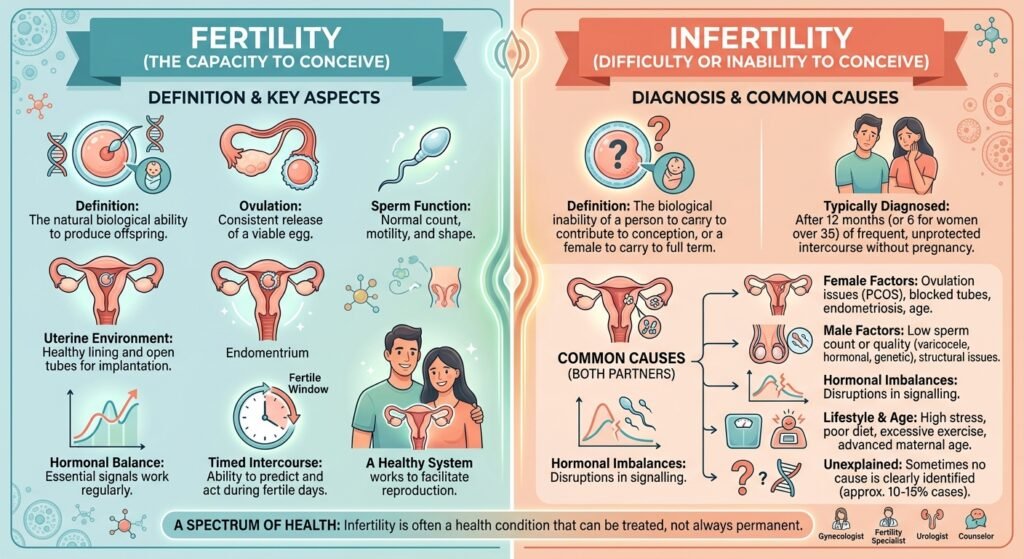
Infertility refers to the inability to conceive even after regular unprotected intercourse. In cases where the female is 35 years or above- inability to conceive after 6 months of intercourse is considered as infertility. Fertility mainly depends on the quality of sperm and egg, condition of fallopian tubes, health of uterus and hormones. If any of these have a problem, conception becomes difficult.
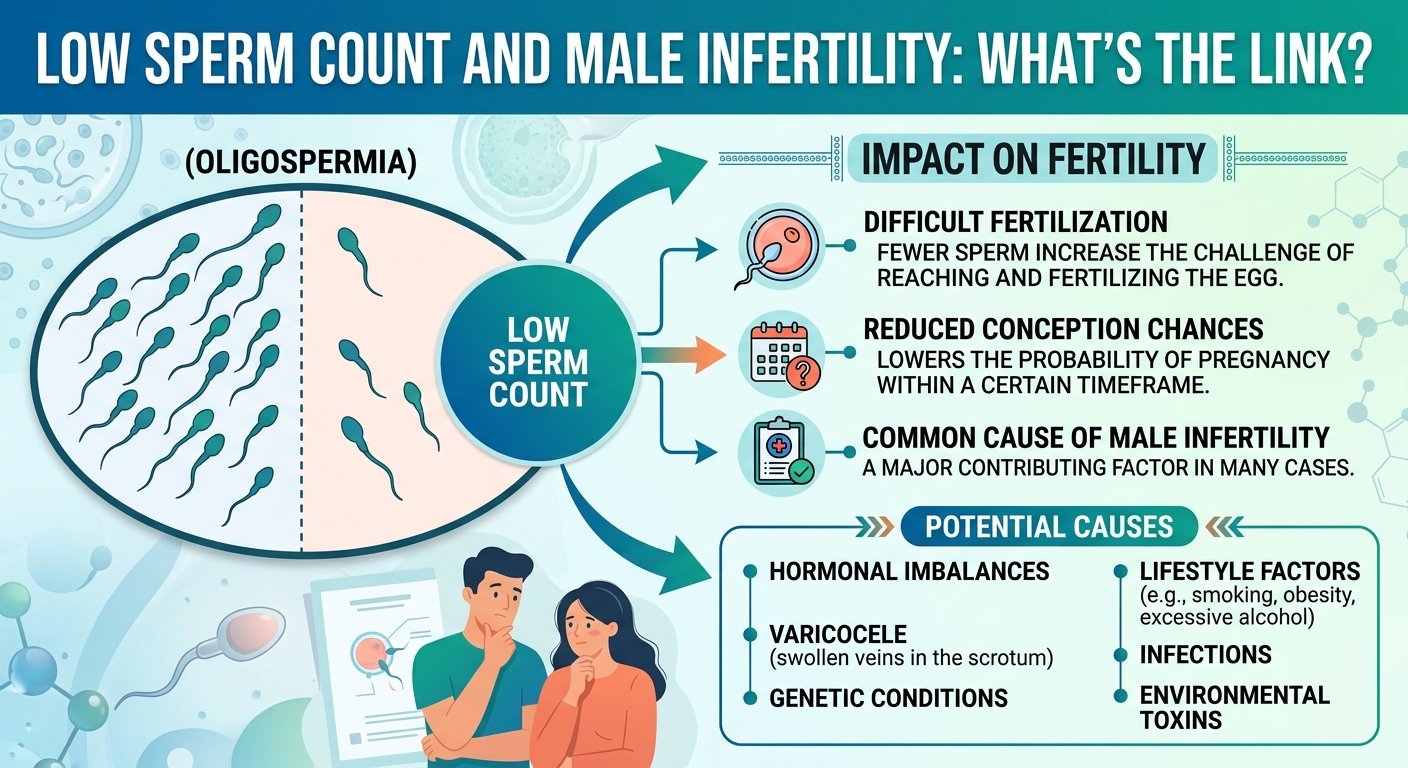
Fertility problems can be due to both male and female factors. Causes can be as follows:
Other factors affecting fertility and infertility include lifestyle causes. A high or low BMI, smoking, excessive alcohol consumption, poor diet, lack of sleep and stress can contribute to infertility. A few lifestyle modifications can significantly improve fertility and even reverse infertility in some cases.
Diagnosis of infertility can be made with history and examination. This may also include a series of investigations such as semen analysis, blood tests with hormonal profile and ultrasounds. This helps to identify the exact cause of infertility.
In Asian countries there is a misconception in many families that infertility is caused only due to a problem in women. This is not only true but has a negative impact on one’s mental health making the females seem worthless in the relationship. It is important to remember that male factors contribute to a significant proportion of infertility cases, which is why both partners should be evaluated. A semen analysis is an excellent diagnostic tool for testing males for infertility. It gives a detailed picture of the quality of sperm in males.
Once diagnosed with fertility,there is nothing to be ashamed of, due to advancements in research and technology many infertility treatments are available to help couples with infertility.
An infertility treatment focuses mainly on treating the cause of infertility. For example if infertility is caused by blockage of the fallopian tube it is corrected through a surgical procedure. It is vital for couples to understand that fertility can be treated but evaluation is important as soon as possible— as sperm and egg quality drops with advancement of age.
At Njinsky IVF & Fertility Clinic our expert team of fertility specialists does thorough evaluation to identify the cause of infertility with appropriate tests. Along with that we offer female fertility treatments such as ovulation induction for IVF. As well as male infertility treatments such as sperm retrieval techniques for low sperm count. Our clinic is equipped with advanced technology offering Assisted Reproductive techniques such IVF, IUI and ICSI for couples— making parenthood achievable for couples suffering from infertility. Our team handles patients with compassion and support throughout the treatment.
Learn how to check for infertility with common signs, when to seek help, and what tests assess fertility in women and men. Know your next steps.

Stay updated with the latest fertility breakthroughs, tips, and success stories.
Njinsky IVF & Fertility Centre