Many women of reproductive age live with a chronic condition known as endometriosis. Despite one of its common symptoms being painful menstruation, many women also report discomfort and pain during ovulation. This ovulation pain can affect fertility and overall well-being, interfering with everyday activities, and it may reflect inflammation or scarring affecting the ovaries or nearby pelvic structures.
Women can manage their symptoms more effectively and protect their reproductive well-being by understanding what endometriosis-related ovulation pain is, recognizing its patterns, and knowing when to seek medical attention.
What is Endometriosis Pain?
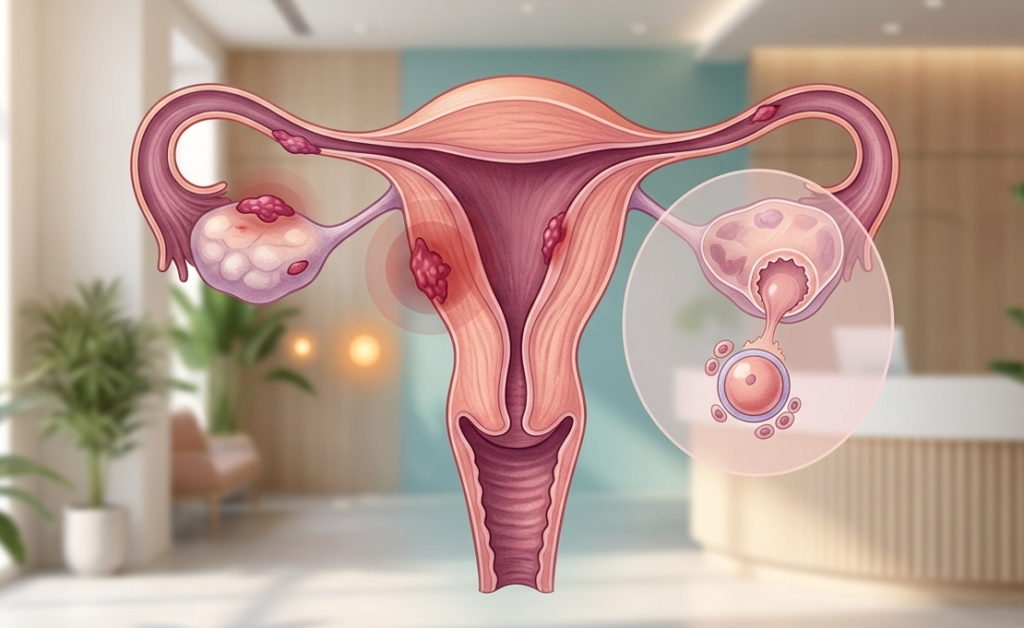
Many people want to understand what endometriosis pain is and how it differs from normal period cramps. Endometriosis pain occurs when tissue similar to the uterine lining grows outside the uterus, typically on the ovaries, fallopian tubes, pelvic lining, or other organs. Like the lining of the uterus, this tissue responds to changes in hormone levels during the menstrual cycle.
Because this tissue and blood cannot leave the body as menstrual blood normally would, it can trigger inflammation, irritation, and scar tissue, which may lead to persistent pelvic pain. Unlike normal menstrual discomfort, endometriosis pain can occur before, during, and after the menstrual period. In some women, ovulation, sexual activity, bowel movements, and urination may also cause pain.
Why Does Ovulation Cause Pain In Endometriosis?
Ovulation is the release of a mature egg from one of the ovaries. For most women, this causes little to no discomfort. In women with endometriosis, however, ovulation can cause sharp pelvic pain. Endometriosis-related ovulation pain can be triggered by several factors, including:
- Inflammation around the ovaries
- Endometriosis lesions forming close to the ovaries
- Ovarian cysts or endometriomas
- Pelvic adhesions that restrict normal movement
- Elevated sensitivity of pelvic nerves
When the ovary releases an egg, it can irritate the inflamed tissue nearby, making ovulation considerably more painful than usual.
Intensity of Endometriosis Ovulation Pain
Every woman experiences ovulation pain differently.
Common descriptions include:
- Sharp pain on one side of the pelvis
- Lower abdominal pain
- Deep pressure within the pelvis
- Lower back soreness
- Pain that remains for days and even longer
The discomfort is usually felt on the same side as the ovary that releases the egg during that cycle, whether the left or the right. Endometriosis-related pain varies from person to person and is rarely linked to the severity of the disease. Some patients with extensive lesions may have little to no symptoms, while others with mild endometriosis may experience severe, debilitating pain. Pain during menstruation is common, but it can also be persistent and affect the pelvic region, lower abdomen, bowel movements, urination, and sexual activity. This can significantly affect daily activities, work, education, and overall quality of life.
Endometriosis Pain before Menstruation
Pain before periods is one of the most frequent complaints in endometriosis. Some women experience pain for several days before their period begins. Hormonal changes cause the endometriosis tissue growing outside the uterus to become inflamed, which can result in:
- Cramps in pelvic region
- Lower back pain
- Abdominal bloating
- Fatigue
- Pain during bowel movements
Some women feel increasing pain in the days leading up to the start of menstruation.
Recognizing the Pain Patterns of Endometriosis
Although each woman’s endometriosis pain pattern is different, many notice symptoms once the menstrual cycle has started.
A general pattern is as follows:
Hormonal changes may cause mild pelvic discomfort in some women.
The pain and discomfort become more severe and localized, especially when endometriosis affects the ovaries.
Pelvic pain and discomfort often intensify as inflammation increases.
As pelvic pain increases, some women also experience fatigue and heavy bleeding.
Many women notice substantial relief in their symptoms, but some still feel pelvic pain because of chronic inflammation and adhesions.
Recognizing this pattern can help doctors determine whether the symptoms are related to endometriosis.
Does Ovulation Pain Always Indicate Endometriosis?
Endometriosis is not the cause of all ovulation pain. The mild discomfort known as “Mittelschmerz” is common in healthy women and is generally harmless and temporary. Ovulation pain should, however, be evaluated by a doctor when it:
- Becomes severe
- Lasts for days
- Hinders everyday activities
- Occurs alongside heavy menstrual bleeding
- Is connected to infertility
Persistent or worsening pain should not be ignored.
Can Ovulation Be Affected by Endometriosis?
Although endometriosis can affect the ovaries in several ways, it does not always prevent ovulation. Advanced disease may lead to:
- Ovarian cysts or endometriomas
- Scar tissue surrounding the ovaries
- Reduced ovarian reserve
- Difficulty releasing eggs normally
As a result of these changes, some women may have difficulty becoming pregnant.
Diagnosis of Endometriosis
If your symptoms suggest endometriosis, your physician may recommend one or more of the following to reach a diagnosis:
Laparoscopy remains the most reliable method for confirming endometriosis and assessing its severity.
Endometriosis Care At Top Fertility Clinic
NJINSKY IVF & Fertility Clinic provides specialized services for women with endometriosis-related fertility issues or chronic pelvic pain. With the goal to tackle the impacts of endometriosis on healthy reproduction, this clinic conducts comprehensive fertility assessments, precise diagnostic testing, ovulation monitoring, and personalized treatment strategies. In an effort to assist women in receiving personalized treatment care according to each individual’s severity of the disease and fertility goals, NJINSKY IVF & Fertility Clinic additionally provides treatments for infertility such as IVF, IUI, and ICSI, for women who are considering getting pregnant.
Concluding Remarks
Understanding endometriosis pain helps in recognizing when pelvic pain may be more than ordinary period cramps. Some women experience severe endometriosis pain before menstruation that disrupts their daily lives, while many follow a typical pattern of increased pain around ovulation and menstruation.
Although ovulation pain caused by endometriosis can be distressing, prompt diagnosis and effective treatment can make a significant difference. Regardless of the severity of their symptoms, a skilled gynecologist or fertility specialist can provide women with an accurate diagnosis, effective symptom management, and individualized reproductive care when needed.