Polycystic Ovary Syndrome, or PCOS, is one of the most common hormonal conditions affecting women of reproductive age. Even though it is common, there are still many myths regarding its causes, including the belief that masturbation causes PCOS.
Many women become confused or concerned when they come across questions like “Does masturbation cause PCOS?” on social media and other platforms.
The short answer is no.
There is no scientific evidence to suggest that masturbation causes PCOS. PCOS is a complex hormonal and metabolic condition associated with genetic, hormonal, and metabolic factors. It is not caused by masturbation or normal sexual activity.
This blog explores the reasoning behind this common myth, the factors associated with PCOS, and when it may be appropriate to consult a specialist.
The Real Question
Does Masturbation Cause PCOS?
The belief that masturbation harms the ovaries or causes hormonal imbalances is one of the myths surrounding women’s reproductive health.
In reality, masturbation does not cause PCOS. There is no evidence that it damages the ovaries, permanently changes hormone levels, prevents ovulation, or causes PCOS.
Masturbation is a normal form of sexual activity and does not interfere with the reproductive system in a way that causes PCOS. If someone develops PCOS after beginning masturbation, the timing does not mean that one caused the other.
Why Do People Believe This Myth?
For many generations, misinformation has surrounded sexual and reproductive health.
Masturbation has sometimes been incorrectly associated with reproductive problems, irregular periods, hormonal imbalance, and infertility. However, these claims are not supported by modern medical evidence.
Some women may also notice PCOS symptoms around the time they go through puberty or become sexually mature. This can create confusion about whether sexual activity has caused the condition.
In reality, PCOS is associated with biological and metabolic factors that are not caused by masturbation or sexual activity.
What is PCOS?
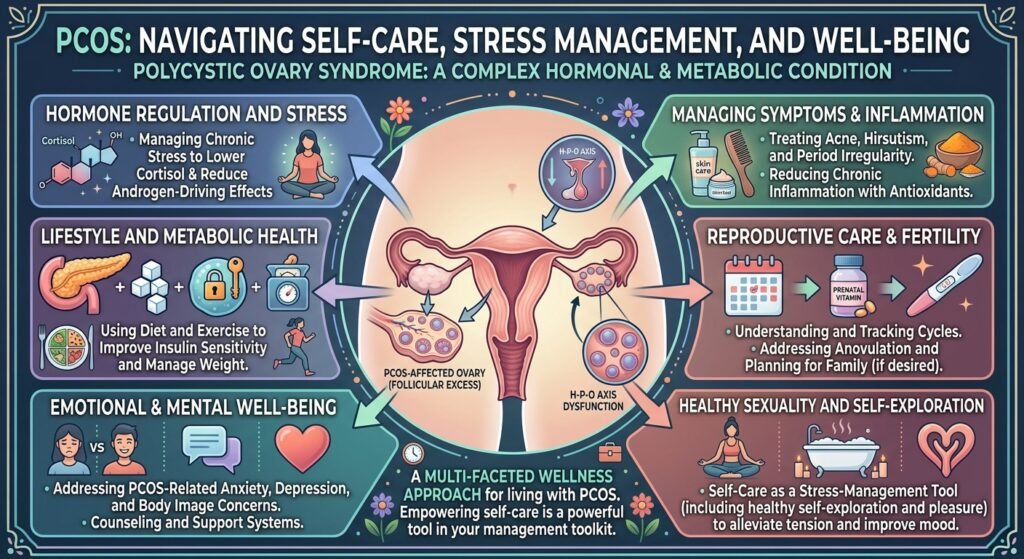
Polycystic Ovary Syndrome is a complex hormonal and metabolic condition that can affect ovulation, menstrual cycles, androgen levels, and fertility.
Women with PCOS may experience:
- Irregular or absent ovulation
- Increased androgen activity
- Irregular menstrual cycles
- Acne and oily skin
- Excess facial or body hair
- Difficulty becoming pregnant
- Polycystic ovarian morphology on ultrasound
Despite its name, not every woman with PCOS has polycystic ovaries or ovarian cysts. A diagnosis is based on a combination of symptoms, medical history, examination, hormone testing, and, where appropriate, ultrasound findings.
The Actual Causes of PCOS
Unlike masturbation, PCOS is associated with several biological and metabolic factors. There is no single cause that explains every case.
Some important factors associated with PCOS include:
- Genetics – PCOS can run in families. Women with a close family history of PCOS may have a higher likelihood of developing the condition.
- Insulin resistance – Insulin resistance is common in PCOS. Higher insulin levels may contribute to increased androgen production and interfere with normal ovulation.
- Hormonal factors – Increased androgen activity can contribute to symptoms such as acne, excess facial or body hair, and irregular periods.
- Metabolic factors – Changes in metabolism and insulin sensitivity can contribute to some of the health features associated with PCOS.
- Other biological factors – Research continues to examine the role of inflammation and other biological pathways in the development of PCOS.
Can Masturbation Affect Hormones?
Hormone levels naturally change throughout the menstrual cycle and can also fluctuate throughout the day.
Sexual stimulation and orgasm can cause short-term physiological changes in the body, but there is no evidence that masturbation causes the persistent hormonal changes associated with PCOS.
Masturbation does not permanently alter reproductive hormones or cause PCOS.
Can Ovarian Cysts Be Caused by Masturbation?
The belief that masturbation causes ovarian cysts is another widespread misconception.
There is no scientific evidence supporting this claim.
The ovaries naturally develop follicles as part of the normal menstrual cycle. In some women with PCOS, a greater number of small follicles may be visible on ultrasound because of altered follicular development.
These findings are associated with the underlying biology of PCOS and are not caused by masturbation or sexual stimulation.
It is also important to remember that the small follicles seen in PCOS are not the same thing as ovarian cysts.
Masturbation and Fertility
Regular masturbation does not reduce female fertility.
It does not:
- Damage the eggs
- Block the fallopian tubes
- Prevent ovulation
- Cause infertility
- Make it difficult to become pregnant
When fertility problems occur, they may be related to conditions such as PCOS, endometriosis, thyroid disorders, fallopian tube problems, or male-factor infertility.
If a couple is experiencing difficulty conceiving, both partners may need appropriate medical assessment.
Warning Signs of PCOS
What symptoms should women recognise if masturbation is not the cause?
Some common signs associated with PCOS include:
- Irregular or missed periods
- Persistent acne
- Oily or greasy skin
- Thinning scalp hair
- Excess facial or body hair
- Weight changes
- Difficulty becoming pregnant
- Darkened patches of skin, particularly around the neck or underarms
Experiencing one or more of these symptoms does not necessarily mean that you have PCOS. A qualified healthcare professional can perform an appropriate assessment.
Treatment of PCOS
PCOS can usually be managed effectively, although there is currently no single permanent cure for the condition.
Treatment depends on the woman’s symptoms, overall health, and future family goals.
Management may include:
- Maintaining a healthy lifestyle
- Regular physical activity
- Managing weight where appropriate
- Medications to manage menstrual or hormonal symptoms
- Ovulation induction
- Fertility treatments when conception is desired
Early diagnosis and appropriate management can help address reproductive and metabolic health concerns associated with PCOS.
When Should You See a Doctor?
Consider speaking with a healthcare professional if you experience:
- Consistently irregular or missed periods
- Persistent acne
- Excess facial or body hair
- Thinning scalp hair
- Unexplained weight changes
- Difficulty becoming pregnant
- Darkened patches of skin around the neck or underarms
Early assessment can help identify the possible cause of these symptoms and allow an appropriate treatment strategy to be developed.
Complete PCOS Care at Top Fertility Clinic
Obtaining expert medical advice is important for accurate diagnosis and appropriate treatment when you are experiencing symptoms associated with PCOS.
Qualified gynaecologists and fertility specialists at NJINSKY IVF & Fertility Clinic offer comprehensive assessments that may include pelvic ultrasound scans, hormonal evaluations, ovulation assessment, fertility testing, and personalised treatment plans.
The clinic also provides fertility treatments such as ovulation induction, IUI, IVF, ICSI, and embryo transfer for women who are considering pregnancy, depending on their individual clinical circumstances.
NJINSKY IVF & Fertility Clinic focuses on personalised reproductive care designed around each woman’s symptoms, fertility needs, and treatment goals.
Finally
There is no scientific evidence supporting the belief that masturbation causes PCOS.
PCOS is a complex hormonal and metabolic condition associated with genetic, hormonal, and metabolic factors. It is not caused by masturbation or normal sexual activity.
Rather than relying on misleading information, women should focus on recognising possible PCOS symptoms and seeking medical advice if they experience persistent menstrual irregularities, acne, excess hair growth, scalp hair thinning, or difficulty becoming pregnant.
With timely assessment, appropriate management, and personalised care, many women with PCOS can successfully manage their symptoms and support their long-term reproductive health.