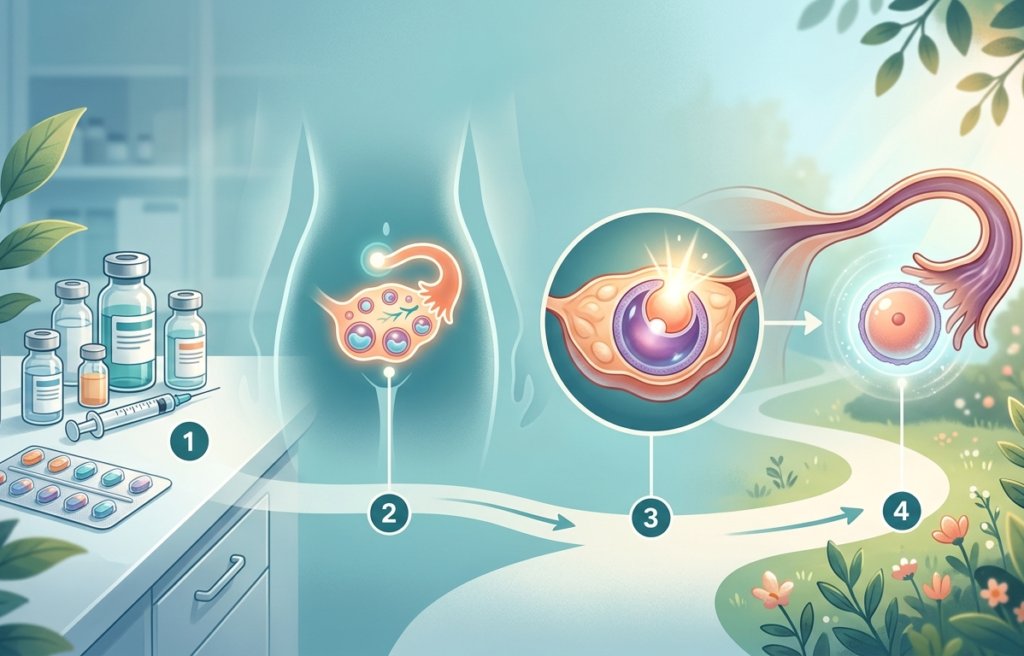
The most recent developments in conventional fertility treatment have offered women who are suffering from ovulation irregularities or problems in conceiving with practical solutions. The ovulation induction, a medically monitored technique that is designed to help stimulate the ovaries to yield eggs, is the commonly used medical procedure.
Many patients are asking about, what is ovulation induction, the prescribed drugs, if it’s risk-free and in what manner the procedure operates systematically. Having the knowledge about these variables can decrease the stress and improve the success rate of the treatment.
With a goal to improve the chance of conception, clinics like NJINSKY IVF & Fertility Clinic, provide structured ovulation induction procedure facilities that include hormonal testing, ultrasound imaging, personalized treatment plans and reliable ovulation stimulation techniques. Their systemic approach blends patient care with novel reproductive healthcare practices, which is essential for getting potential outcomes from ovulation based reproductive treatment techniques.
In a simple and easy to understand way, this blog covers the procedure of ovulation induction, the drugs that are used, negative effects and overall safety.
Ovulation Induction Explained
The fertility procedure called ovulation induction utilizes medications to stimulate the ovaries in releasing one or more eggs during the time of ovulation. It is mainly used on women who either suffer from no ovulation (anovulation) or abnormal ovulation.
The ovary produces a fully developed egg once every cycle during regular ovulation although not all cycles are identical. Disturbed hormone levels, though, can interfere by causing problems such as Polycystic Ovary Syndrome (PCOS). Ovulation Induction boosts the chances of conception, conception after timed intercourse or IUI by reviving or regulating the ovulation process.
Since it’s straightforward, cost-effective, and medically validated, it is considered as one of the important first-line treatments related to infertility.
Why Is Ovulation Induction Used?
For several reasons, physicians recommend ovulation induction treatment. Some of them are listed below;
- Irregular menstrual periods
- PCOS associated with anovulation
- Hormonal imbalance affecting ovulation
- Some cases with unexplained infertility
- Often combined with timed intercourse or IUI
Ovulation problems are often linked to infertility, making this therapy very important for many patients.
The Procedure of Ovulation Induction
Fertility specialists carefully arrange and supervise the procedure of ovulation induction to ensure safety and efficacy.
1. First Consultation and Evaluation
The specialists usually do;
- Blood tests to check hormone levels
- Ovarian ultrasound
- Evaluation of medical history
This helps in determining the appropriate ovulation induction protocols through which the procedure will happen.
2. Start Taking Ovulation Induction Medications
The medications of ovulation induction, which include oral tablets or injections, are administered to initiate the treatment.
Common medication are;
- Letrozole
- Clomiphene Citrate
- Metformin (for PCOS support)
- Human Chorionic Gonadotropin
- FSH injections
These medicines are administered to stimulate follicle growth in the ovaries.
3. Tracking the Follicle Growth
Regular ultrasound imaging is done to;
- Measure the size of the follicle
- Thickness of the endometrial lining
- Ovarian response
Monitoring keeps in check in case of overstimulation and ensures accurate timings.
4. Ovulation Induction Injections
An injection for ovulation induction, often an hCG trigger injection, is given once follicles are matured.
This injection stimulates;
- Last stage of egg maturation
- Ovulation(egg release)- 24 to 36 hours.
5. Timed Intercourse or IUI
After injections; For better outcomes, planned intercourse is advised, or treatment of IUI. For both of these cases, timing is crucial.
6. Luteal Phase Support
Progesterone hormone is given to certain patients in an effort to help maintain uterine lining and assist with implantation.
Ovulation Induction Done With PCOS
Ovulation induction in PCOS is the most widely used treatment.
The condition of PCOS causes;
- Ovulation abnormalities
- Hormonal imbalance
- Realising of mature eggs is difficult
Treatment in such condition can help in;
- Triggering regular ovulation
- Supporting follicle and egg development
- Raising the chances of conception
Letrozole does not simply increase the response of ovulation; it helps induce ovulation and is commonly recommended as first line treatment for many women with PCOS-related infertility.
Medications Used In Ovulation Induction
The ones listed below are the main medications prescribed to induce ovulation.
Oral Medication;
- Clomiphene Citrate
- Letrozole
Both of these trigger the body’s natural reproductive system by releasing ovulation hormones.
Injectable Medication;
- FSH injections (Stimulate follicular growth and egg development)
- hMG injections (promote follicular growth)
- hCG injections (trigger ovulation)
At times, when oral medications are inadequate, injections are used.
Side Effects of Injections
The side effects of ovulation induction injections tend to be mild and temporary.
Typical effects are;
- Mild abdominal bloating
- Pelvic discomfort or pain
- Mood swings
- Breast sensitivity
- Tiredness
Rare risks are;
- Ovarian Hyperstimulation Syndrome(OHSS)
- Multiple pregnancies(can be twins or more)
Through careful monitoring these risks can be minimized.
Safety of Ovulation Induction
Ovulation induction is generally safe in the following cases;
- Prescribed carefully
- Routinely examined through ultrasounds
- Modified based on doctor’s suggestion
Balanced dosage and personalized treatment plans are necessary for safety and health.
Protocols for Ovulation Induction
Based on patient’s health status, different ovulation induction protocols are utilized;
- Oral Protocol
Simple and is considered the first line treatment for many women with ovulation dysfunction, but for not all infertility cases.
- Injectable Protocol
- Gonadotropins for ovarian stimulation
- Used to stimulate follicle development and ovulation
- Integrated Protocol
Oral + Injectable Protocols combination.
Combined protocols may be used in selected patients who have not responded adequately to oral medications or who require enhanced ovarian stimulation. Each treatment protocol is adjusted according to the diagnosis and hormonal changes.
NJINSKY Ovulation Induction Approach
Ovulation induction at NJINSKY IVF & Fertility Clinic is a systematic fertility pathway. The clinic prioritizes:
- A complete and thorough hormonal profile before starting the treatment
- Monitoring follicles condition by ultrasound imaging
- Tailored approaches for inducing ovulation
- Ovulation trigger injections administered on time
- When necessary, luteal support and cycle tracking
Instead of following a non-standard clinical method, NJINSKY IVF & Fertility Clinic follows a structured protocol based approach, guaranteeing that each patient receives timely and appropriate treatment tailored to their medical condition. This improves safety and optimizes the conception chances in disorders like PCOS and unexplained infertility.
Cons and Limitations
Despite its efficacy, its drawbacks include:
- Limited effectiveness in women with blocked fallopian tubes
- Sometimes it takes several cycles.
- Multiple pregnancy risk
- Need for regular monitoring
Final Thoughts
One of the most commonly used fertility treatments for women with ovulation-related infertility is ovulation induction treatment. This procedure involves a carefully planned ovulation induction protocol using medications to stimulate follicular growth and trigger the release of an egg, allowing precise timings of ovulation to improve the chances of conception.
It is generally safe and effective when properly supervised. At NJINSKY IVF & Fertility Clinic, outcomes are enhanced through accurate ovulation timing, individualized treatment plans, and close monitoring, all of which are key to achieving successful conception.
Ovulation induction can greatly improve the chances of conception and offer a solid first step toward fertility journey with the correct diagnosis, treatment strategy, and medical advice.