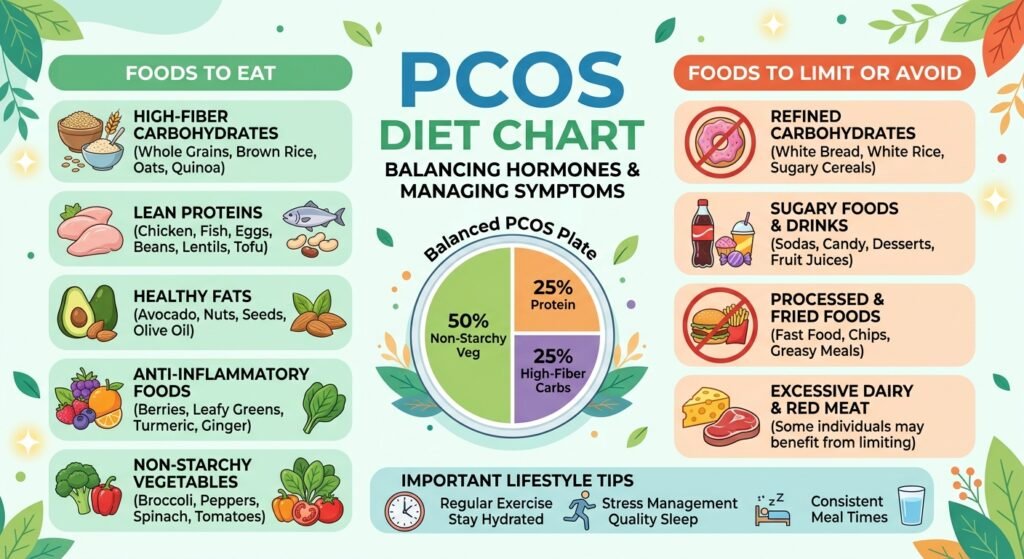
Polycystic ovary syndrome (PCOS) is a common hormonal condition that can affect menstrual cycles, ovulation, skin, hair growth, body weight, metabolism, and fertility. Food cannot cure PCOS on its own, but a balanced and sustainable diet can support metabolic health and may help manage some of its symptoms.
When searching for a PCOS diet chart, many women want to know exactly what they should eat, which foods they should limit, and whether popular approaches such as seed cycling actually work. The answer is not as simple as following one strict diet.
Current international PCOS guidelines do not recommend one specific type of diet over another. Instead, they emphasize healthy eating patterns that are sustainable and tailored to a woman’s preferences, nutritional needs, lifestyle, and health goals.
This means you do not necessarily need to follow an extremely restrictive diet or completely eliminate carbohydrates. A more practical approach is to build balanced meals around nutritious foods, limit highly processed foods and excessive added sugar, and choose an eating pattern that you can realistically maintain over time.
How Can PCOS be Managed Through Diet?
Insulin resistance and metabolic abnormalities are common in PCOS, although not every woman experiences them in the same way. A nutritionally balanced diet can support healthy blood glucose levels, metabolic health, and weight management where appropriate.
However, weight loss should not be considered the only goal of PCOS management.
Women with PCOS can benefit from healthy eating and regular physical activity even when they are not overweight. The 2023 international guideline emphasizes that a healthy lifestyle can provide benefits even in the absence of weight loss. For women who are above their healthy weight range, a personalized approach to weight management may provide additional health benefits.
The most useful diet is therefore not necessarily the one that promises the fastest results. It is the one that provides good nutrition and can be maintained for months and years.
The Ideal Diet For PCOS
There doesn’t seem to be just one ‘ideal’ meal for PCOS. Whilst some people might gain advantages from low carb, Mediterranean Style diets, and other healthy eating patterns, there is at present no evidence to suggest that any dietary regimen will consistently result in improved
PCOS results than all of the others.
Instead, focus meals around;
- Protein rich foods – Make the meal more fulfilling and maintain muscle mass such as eggs, chicken, fish, greek yogurt, milk, lentils, chickpeas, beans and tofu. For women, who are vegetarian can integrate legumes, dairy products, eggs and other plant based protein sources in their diet.
- Leafy green vegetables – Must to have in lunch and dinner for an increased source of vitamins and minerals. It involves spinach, okra, broccoli, cauliflower, carrots, cucumber, bell pepper, tomatoes, cabbage, and egg plant.
- High fiber Carbs – Fibers are extremely helpful in maintaining good digestive health and nutritious meals. It includes oats, barley, brown rice, whole wheat roti, lentils, chickpeas, beans, vegetables, apples, pears, berries and guava.
- Whole grains
- Fresh fruits
- Nuts and seeds
- Healthy fats- In a PCOS meal diet, healthy fats shouldn’t be eliminated. Useful sources are almonds, walnuts, flaxseeds, chia seeds, pumpkin seeds, sunflower seeds, avocado, olive oil, and fatty fish.
- Sufficient water intake
The main goal is to offer nutritious, satisfying meals that refrain from relying too much on overly processed foods, sweetened beverages, and sugary carbs.
Foods to Limit or Avoid if You Have PCOS
There isn’t an exhaustive list of foods that all women of PCOS must avoid. Instead it is sensible to avoid foods packed with sugary refined carbs, processed fats, and extra added sugar.
You should cut use of the following;
- Soft drinks
- Sugary juices
- Cakes and pastries
- Cookies and biscuits
- Candy
- Excessive consumption of sweets
- Very refined bread
- Fast food usually deep fried
- Highly processed snacks
- Sweet breakfast
This doesn’t prohibit you from eating your favorite meal or desert. Overall, strict diets can be less feasible than balanced diets.
PCOS Diet Plan For Controlling Weight
It is potentially challenging for women with PCOS to control their body weight. Calorie reduction by itself, though, should not be the sole aspect of a healthy diet.
- Breakfast: Take eggs with whole wheat roti and vegetables, or you can take oats with fruits, unsweetened yogurt and nuts.
- Midday Snacking: A small handful of nuts or an apple.
- Lunch: Very reasonable portion of rice or roti with grilled chicken, fish, lentils, beans or vegetables.
- Evening snack: simple plane yogurt, or roasted chickpeas or fruits.
- Dinner: Lots of veges, a considerable amount of grains, fish, chicken, lentils or some other protein source.
- Drink: Consume water, tea with no sugar, or other low sugar drinks.
Size of the body, physical activity, dietary requirements, and health goals must all be considered when choosing the portion size.
Women’s 7-Day Healthy Diet Plan
A prime example of customizable 7-Day PCOS diet plan for women is as follow;
Days | Breakfast | Lunch | Dinner |
1 | Eggs, roti, veges | chicken+salad+roti | Lentils soup+veges |
2 | Oats, yogurt, nuts, berries | Chickpea salad+roti | Grilled chicken/fish+veges |
3 | Vege omelet, whole wheat toast | Chicken +mixed veges+roti | lentils + salad+ roti |
4 | Plain yogurt, fruits, seeds | Grilled chicken/fish+veges+brown rice | Chicken soup+veges |
5 | Oats with nuts, apple | lentils + salad+ roti | Chicken + roasted veges |
6 | Eggs + veges + Roti | chickpeas+salad+yogurt | Grilled chicken/fish+veges+brown rice |
7 | Yogurt + fruits+ oats + seeds | Chicken+beans, veges+roti | Lentils soup+veges+salad |
This can not be considered a diet recommended by a doctor; instead, it serves as an example of what a PCOS diet plan should look like. A specified diet plan may be required for those with Diabetes, food allergies, kidney problems, eating disorders, pregnancy and other medical conditions.
How Do Low Card Diets Affect PCOS?
On the internet, a low carb diet is often advertised as “the best diet for PCOS”. Reducing the consumption of added sugar and highly refined carbohydrates could potentially be beneficial, especially when you want to boost the overall standard quality of your food choices overall. But it is generally not necessary to entirely restrict carbs intake.
Vital minerals amounts and fibers can be obtained from whole grains, legumes, vegetables and fruits. According to international guidelines, data suggest a particular food diet plan according to overall PCOS outcome. A healthy and appropriate diet that matches a person’s goal and hobbies is ideal.
Seed Cycling
Taking multiple seeds at different phases of the menstrual cycle is a commonly accepted dietary technique known as ‘seed cycling’. A widely suggested strategy involves the following;
- The first half of the cycle;
Pumpkin seeds + Flaxseeds
2. The second half of the cycle;
Sesame + Sunflower seeds
The notion behind seed cycling is that certain plant nutrients present in such seeds could assist in keeping balance in the hormone levels. But it is important to differentiate a healthy meal from a proven treatment.
Though seeds themselves are nutritious, there is currently not much evidence that this specific practice of ‘seed cycling’ can regulate hormones and cure PCOS. Therefore, it should not be promoted as a treatment or substitute for the right medicine.
Diet and Fertility in PCOS
In women with PCOS who wish to get pregnant, maintaining a healthy diet can be especially crucial. Optimizing metabolic health or conception before birth could improve the overall reproductive health. But if there is no pregnancy, diet should not be the source of delay in fertility screening.
Depending on the specific situation of the patient, some couples may require IVF and IUI, while women with irregularities in the ovulation might gain benefit from assisted medical treatments such as ovulation induction.
PCOS Treatment Care at NJINSKY IVF & Fertility Clinic
Even though a PCOS diet chart can be a valuable start, successfully managing PCOS usually calls for more than simply changes in the diet. Women may undergo an extensive fertility and reproductive evaluation at NJINSKY IVF & Fertility Clinic that is tailored according to their specific signs and goals.
Hormonal balancing, ovulation tracking, and fertility evaluation constitutes some of the most effective treatment procedures by the medical facility. When considered clinically feasible, treatment options for PCOS affected women with infertility related problems, might consist of ovulation induction, IUI, IVF, ICSI and embryo transfer. A more holistic plan for controlling PCOS can be obtained through integrating specialized medical treatment alongside consistent dietary habits, exercise, and a good way of life.
Final Takeaway
Patients with PCOS are not required to comply with a high end expensive list of ‘superfoods’ or starve themselves or even cut out all the carbs when attempting to follow a diet plan. The most effective diet for PCOS is the one that limits excessive added sugar and overly processed foods, offers sufficient nutrition, should contain a lot of vegetables, fibers, contain enough sufficient protein and good amount of fats.
If you like, you may include ‘seed cycling’ into your daily routine. But it should not be marketed as the treatment of PCOS. Instead of concentrating on a single diet plan, current studies recommend continuous healthy eating and lifestyle management.
See a licensed gynecologist or fertility expert if PCOS symptoms including irregular periods, acne, excessive hair growth, weight fluctuations, or trouble getting pregnant are interfering with your life.