Whether or not you are undergoing fertility treatment, can endometriosis influence your likelihood of getting pregnant?
The medical condition endometriosis occurs when tissue similar to the lining of the uterus grows outside of it. It can cause many complications including inflammation, pain, scar tissue formation, ovaries and fallopian tubes getting affected. Such changes can make the conception even more difficult for some women in particular.
By allowing the fertilization of the eggs in the laboratory setting, in vitro fertilization (IVF) offers an alternative way to achieve conception. Many women with endometriosis are still capable of getting pregnant via IVF, notwithstanding the fact that the disorder may influence results of the treatment. Understanding how this disorder affects fertility can help guide treatment options.
The Effect of Endometriosis on IVF Fertility and Success Rate
Based on where the tissue is developing and how far the condition has progressed, endometriosis may result in various effects on fertility.
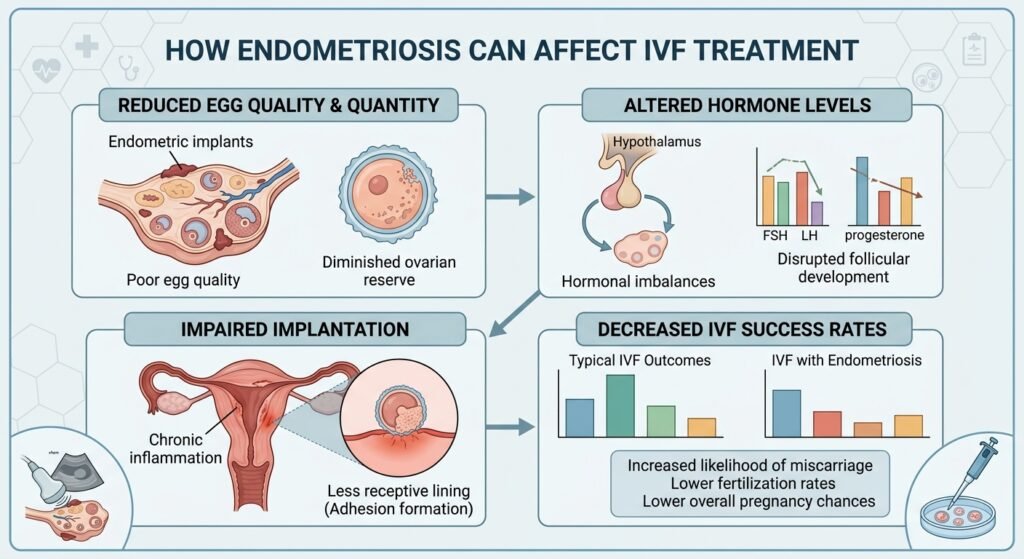
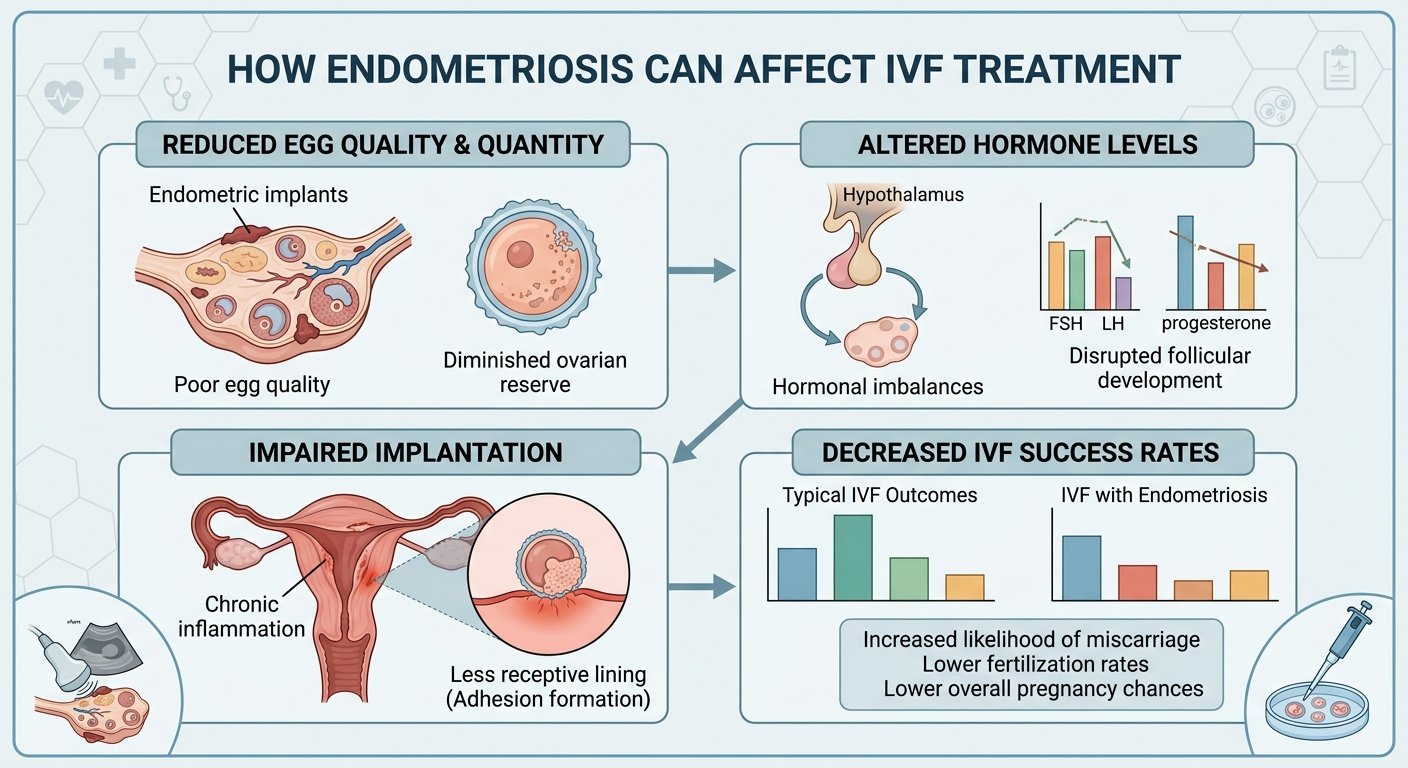
Reproduction Related Organs Damage: The ovaries and fallopian tubes might be damaged due to inflammation and scar tissue formation, which renders it more challenging for both the egg and sperm to fuse spontaneously.
Ovarian Endometriomas: These cysts in the ovaries, commonly referred to as “chocolate cysts”, are capable of having a significant effect on ovarian reserve. The number of eggs readily available for conventional fertility treatment can be influenced by a combination of cysts and the surgical procedures necessary to remove them.
Alteration in the Pelvic Environment: Inflammation associated with endometriosis can interfere with normal fertility processes. Researchers are also investigating whether the condition affects egg quality, embryo development, and implantation.
Reduced Ovarian Reserves: Following IVF stimulation, certain women affected by endometriosis can produce fewer eggs than usual, particularly if they are experiencing ovarian dysfunction or underwent previous fertility related surgical treatments.
But not every person gets to experience the exact same outcomes. Endometriosis is rarely a sign that treatment will not be effective, although some women with this condition respond poorly to IVF treatment. The likelihood of the treatment being successful also differs by age of the individual, development of the embryos, and various other reproductive variables.
Things to Expect From an IVF Treatment For Women With Endometriosis
Even though the treatment regimen can be altered according to the health condition of the patient, IVF treatment for women with endometriosis typically involves the same stages as a regular IVF cycle.
A typical IVF cycle includes:
- Evaluation and Assessment of Fertility Health
- Stimulation of the ovaries
- Egg retrieval and embryo transfer
- Pregnancy test
Not every endometriosis patient needs additional hormonal treatment or surgeries prior to IVF. A patient’s diagnosis serves as the basis to make choices based on certain pretreatment processes, ovarian stimulation, and frozen embryo transfer.
Techniques to Improve Endometriosis IVF Outcomes
Thorough planning of the treatment is able to help tackle complications that might influence the final result; however, no procedure assures the successful IVF result.
- Obtain Tailored Treatment Plan: The most effective way to get the treatment is determined by a variety of factors such as age, reserves of the ovaries, the place and severity of endometriosis and other such reproductive factors.
- Consider Surgery Carefully: Whenever an endometrioma interferes with safe access to follicles for egg retrieval or if there is severe pain, surgical treatment can be beneficial. However, surgery performed solely to improve IVF outcomes is not routinely recommended, as it may reduce ovarian reserve.
- Choose the Appropriate IVF Treatment Method: Based on the health of the patient, adequate reserves of the ovaries, and previous response to conventional advanced treatment techniques, the fertility professional can decide on whether ovarian stimulation should be done or not.
- Select the best Treatment Timings: Reserves in the ovaries, age, the duration of infertility, and surgeries of the past can all influence whether IVF is the better option.
- Looking for Additional Fertility Factors: Ensuring that the treatment happens after evaluating the fertility health for both partners. It includes sperm and egg evaluation, uterine issues, and other possible explanations of infertility.
It should not be presumed that hormonal inhibition will boost the fertility or IVF outcomes in every patient. However, it may help control the symptoms of endometriosis in some cases. There continues to be some contradictory evidence related to the effectiveness of hormonal suppression in improving live birth rates.
Should You Consider IVF for Endometriosis Related Infertility?
When endometriosis starts to affect fertility and other treatments are unsuitable or have not worked, IVF may be taken into consideration. The selection of the type of the treatment is centered on an individual’s reproductive goals, medical outcomes, and current treatment duration.
IVF could be explored by a fertility specialist when:
- Scar tissue severely damages the fallopian tubes
- Spontaneous pregnancy is uncommon and endometriosis is advanced.
- Age of the female partner and reserves in the ovaries may make treatment more difficult
- Male factor infertility
- Failed previous treatment attempts
IUI (intrauterine insemination), sometimes combined with ovarian stimulation, may be considered for women with minimal to mild endometriosis whose fallopian tubes are not blocked. Others can benefit directly from IVF. There is no single treatment methodology that is effective for everyone.
IVF, ICSI, IUI, embryo freezing/transfer and all such other assisted reproductive treatment techniques are accessible at NJINSKY IVF & Fertility Clinic. Women with endometriosis may look into treatment options, understand their fertility diagnostics, and ponder on a treatment plan that is going to work for them throughout the appointment.
Conclusion
If you are suffering from endometriosis, can IVF help you become pregnant?
A healthy pregnancy via fertility treatment is not completely ruled out by endometriosis, even though it may affect fallopian tubes, ovaries, and other reproductive processes.
The age, amount of reserves in the ovaries, severity of the disease, and previous treatment history are some of the factors which influence the most effective way of treatment. You are able to comprehend your choices and figure out if IVF or any other fertility treatment techniques will work for you, by consulting with your concerned fertility specialist.



One Response