


Can mumps cause infertility?

Can mumps cause infertility

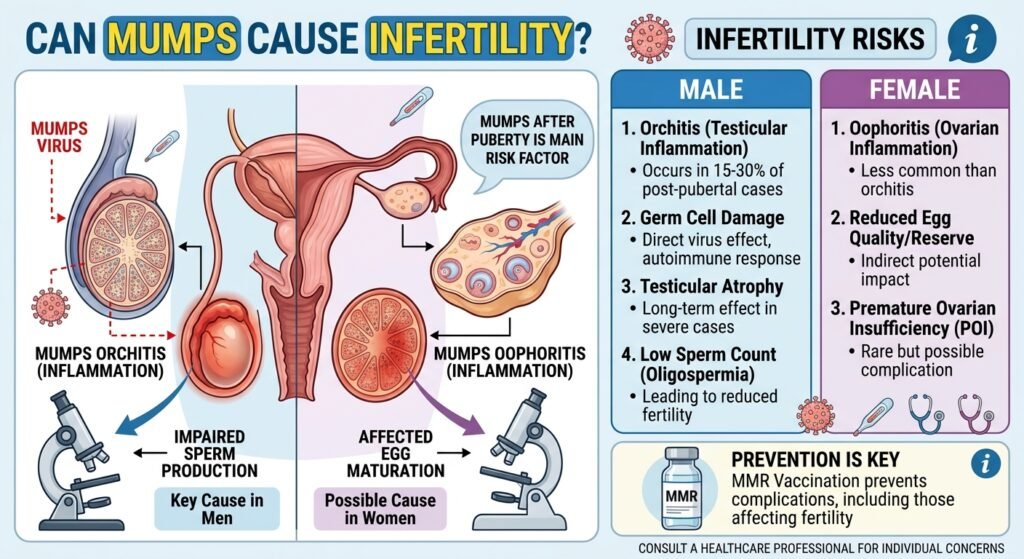
Mumps is a contagious viral infection caused by the mumps virus. In some cases, it can lead to infertility; however, permanent infertility from mumps is rare. Most people recover fully, but in cases of severe complications, mumps can become one of the few viral infections affecting fertility. 

Mumps and reproductive health

Mumps virus and infection-related fertility problems

In females, mumps can occasionally cause inflammation of the ovaries, a condition known as oophoritis. Oophoritis is uncommon, and current evidence suggests it does not significantly affect fertility.

Preventable causes of infertility

Mumps-related infertility is largely preventable. Although permanent infertility caused by mumps is rare, inflammation of the testicle (orchitis) can sometimes cause lasting damage to the sperm-producing tissues. Fortunately, timely vaccination with the MMR (measles, mumps, and rubella) vaccine greatly reduces the risk of mumps and its complications. Ensuring complete childhood immunization and maintaining awareness of vaccine-preventable diseases can help protect reproductive health and reduce the risk of fertility complications later in life.

Diagnosis and treatment of infertility caused by infections

Mumps-related infertility is most commonly seen in males who develop orchitis (inflammation of the testicles) following a mumps infection after puberty. Diagnosis begins with a detailed medical history, including previous mumps infection and symptoms of testicular swelling or pain. Fertility evaluation may include a semen analysis to assess sperm count and quality, hormone testing, and ultrasound examination of the testes if required. 

There is no specific treatment to reverse testicular damage caused by mumps; therefore, management focuses on assessing fertility potential and addressing any resulting reproductive issues. Men with impaired fertility may benefit from assisted reproductive techniques (ART), such as intrauterine insemination (IUI), in vitro fertilization (IVF), or intracytoplasmic sperm injection (ICSI), depending on the severity of sperm abnormalities. Since mumps-related infertility can be difficult to treat once testicular damage has occurred, prevention through MMR (measles, mumps, and rubella) vaccination remains the most effective strategy.

Conclusion

At Njinsky IVF & Fertility Clinic, we understand that infertility caused by infections such as mumps can be physically and emotionally challenging for couples. Our fertility specialists provide comprehensive evaluations, including semen analysis, hormonal assessment, and advanced reproductive investigations to determine the impact of previous infections on fertility. Based on the findings, we offer personalized treatment plans ranging from medical management to advanced assisted reproductive techniques (ART), including IUI, IVF, and ICSI. With a patient-centered approach and state-of-the-art fertility services, Njinsky IVF & Fertility Clinic is committed to helping individuals and couples achieve their dream of parenthood.

Related Articles

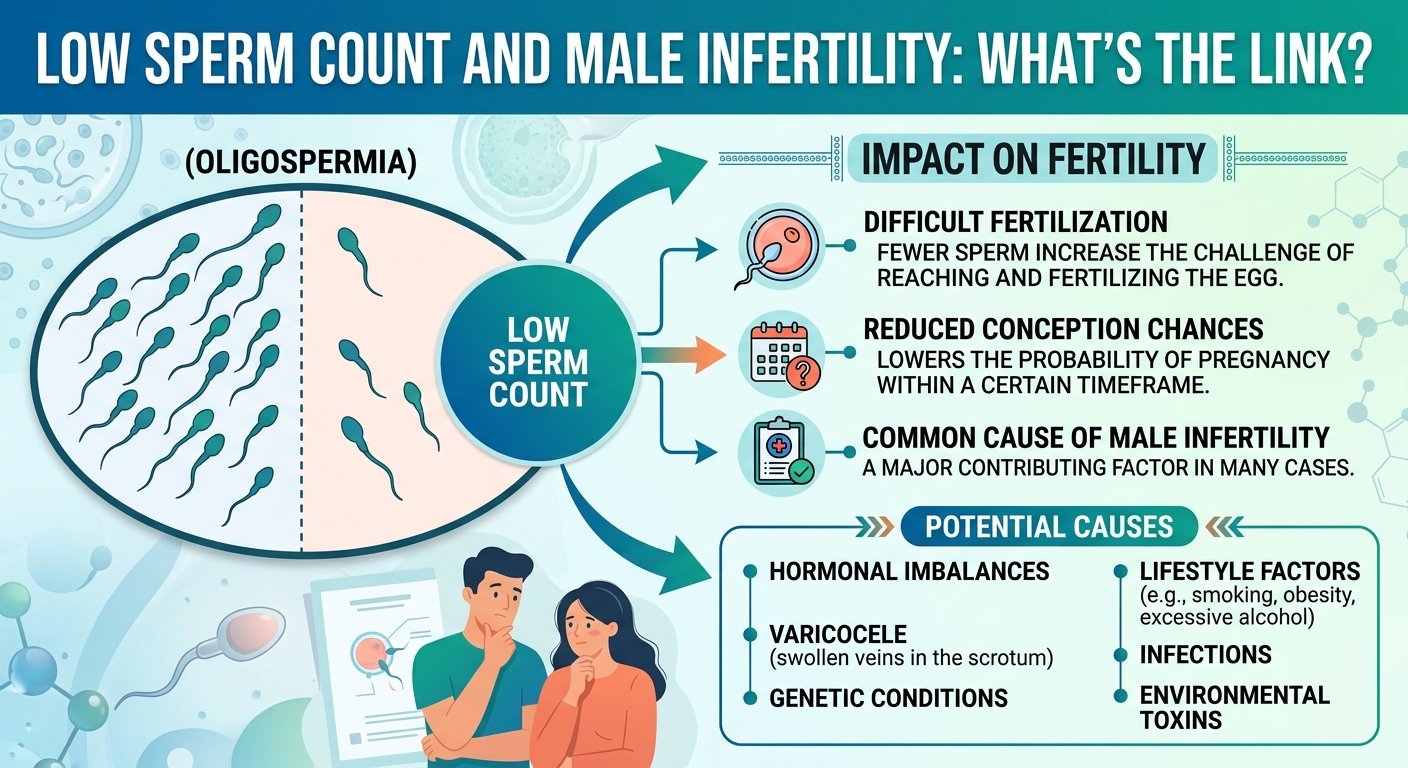
Low Sperm Count and Male Infertility: What’s the Link?
28Sep

Low Sperm Count and Male Infertility: What’s the Link?

Learn how to check for infertility with common signs, when to seek help, and what tests assess fertility in women and men. Know your next steps.
Difference between fertility and infertility​
26Sep

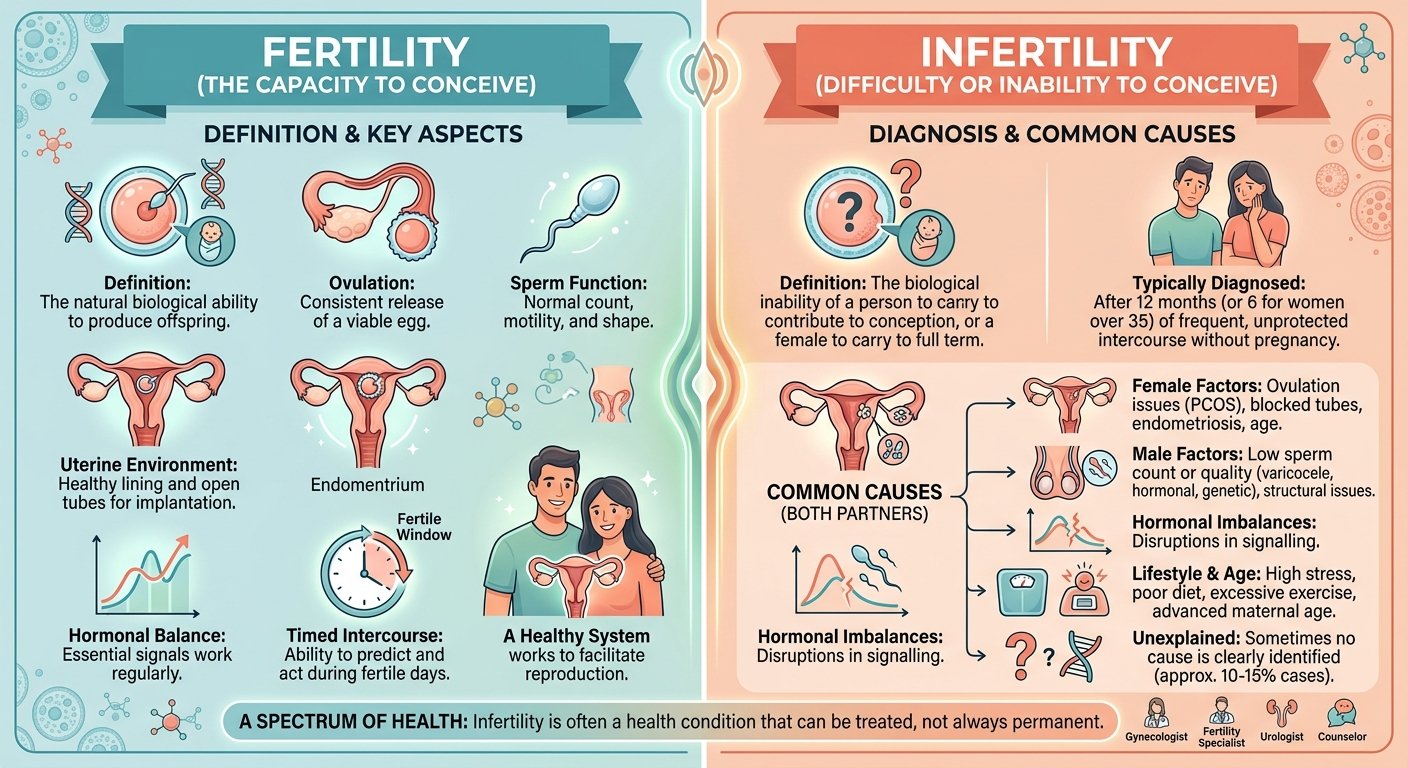
Difference between fertility and infertility​

Learn how to check for infertility with common signs, when to seek help, and what tests assess fertility in women and men. Know your next steps.
How to check for infertility​?
26Sep

How to check for infertility​?

Learn how to check for infertility with common signs, when to seek help, and what tests assess fertility in women and men. Know your next steps.