


Does a retractile testicle cause infertility?
Does a retractile testicle cause infertility? Explore the link between testicular position, sperm health, and long-term fertility concerns.

The role of vitamin D in various functions of the human body is well understood. Because vitamin D receptors are present throughout the body, including the male and female reproductive systems, scientists have speculated that vitamin D deficiency could cause infertility. However, this speculation has not been confirmed. Vitamin D deficiency has been associated with certain reproductive problems, but current evidence does not support a direct link between vitamin D deficiency and infertility.
Vitamin D is a fat-soluble vitamin that helps regulate calcium and phosphate metabolism. It supports bone health, muscle function, and immune function. Because it plays a role in several vital body functions, it may also influence hormonal activity associated with ovulation. Vitamin D is produced when sunlight falls directly on the skin, and it is also obtained through food sources such as oily fish, fortified dairy products, egg yolks, and supplements.
Vitamin D deficiency can disrupt overall health, primarily affecting bone and muscle health. Maintaining adequate vitamin D levels is important for everyone, but a deficiency is not considered a root cause of infertility. Diagnosing infertility requires a thorough evaluation by a fertility specialist. Correcting a severe vitamin D deficiency may improve overall health and may support normal reproductive function; however, there is insufficient evidence that vitamin D deficiency is among the nutritional causes of infertility or that correcting it directly improves egg or sperm quality.
Infertility refers to the inability to conceive after one year of regular, unprotected intercourse. Several factors can commonly contribute to infertility, including:
When diagnosing infertility, all of these factors are considered in order to identify the underlying cause. Fertility experts do not diagnose fertility problems as being caused by vitamin deficiencies or treat them with nutritional support alone. However, if a severe nutritional deficiency is present, it should be corrected, and a thorough evaluation of infertility factors is still required.
Infertility treatment mainly depends on the underlying cause. Nutritional support for infertility is typically used as a supportive therapy rather than a primary treatment. There is no evidence that resolving a nutritional deficiency can cure infertility on its own. Vitamin D supplements should only be used if a deficiency is confirmed through lab testing, as excessive vitamin D levels can cause toxicity.
At Njinsky IVF & Fertility Clinic, our doctors take their time to understand your concerns regarding nutritional deficiencies and infertility. Our female infertility treatments usually involve hormonal therapy for ovulation induction that can be used for IVF. Male infertility treatments usually involve sperm retrieval procedures. During IVF, ICSI, and IUI, supplements such as vitamin D may be prescribed to patients for improving the quality of eggs and sperm in certain cases. Even though there is no evidence regarding vitamin levels directly affecting the quality of eggs and sperm, it is a good practice to maintain optimal levels of all vitamins and minerals in the body during IVF.
Does a retractile testicle cause infertility? Explore the link between testicular position, sperm health, and long-term fertility concerns.
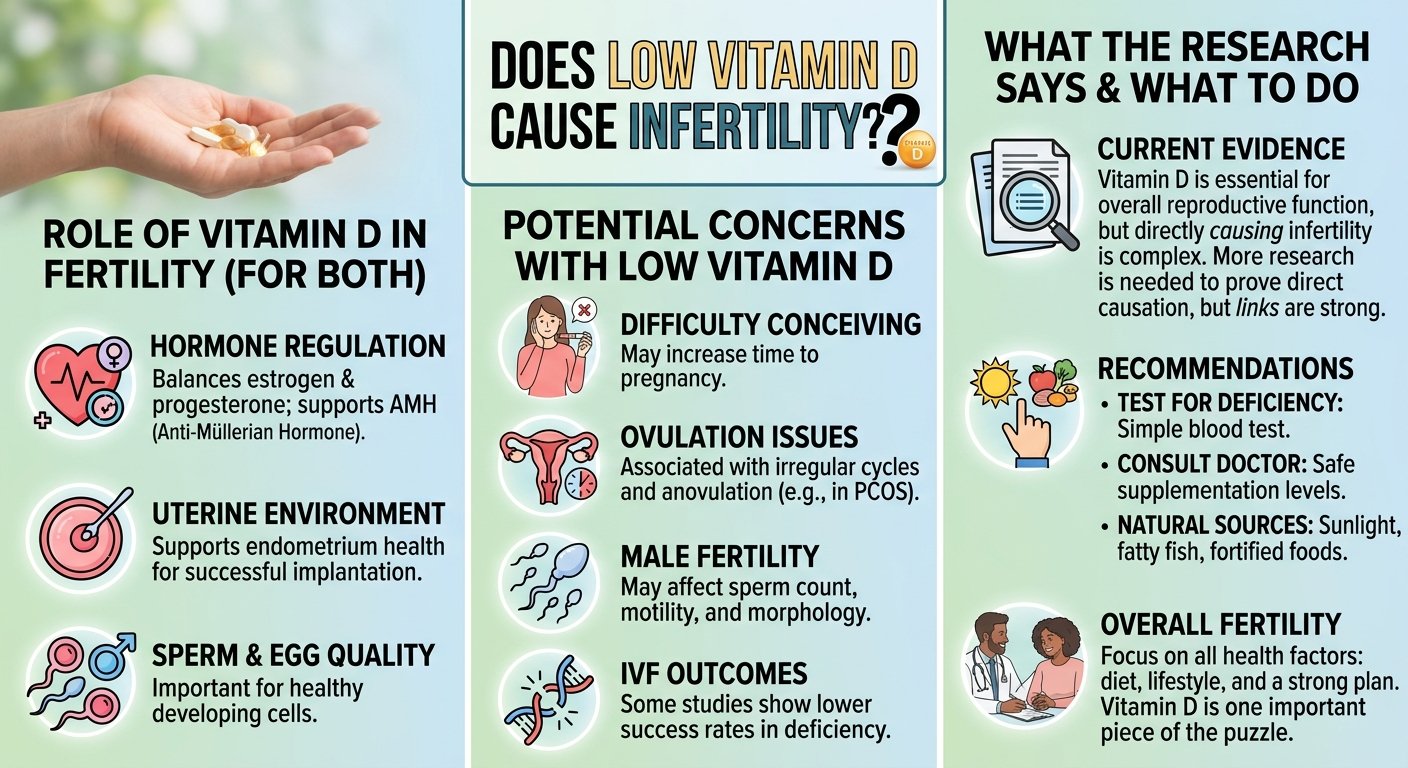
Does low vitamin D cause infertility? Explore what research says about vitamin D, fertility, and when to speak with a healthcare professional.
Do light periods mean infertility? Explore common causes of scant bleeding, its possible link to conception, and when to seek medical advice.

Stay updated with the latest fertility breakthroughs, tips, and success stories.
Njinsky IVF & Fertility Centre