


Low Sperm Count and Male Infertility: What’s the Link?
Learn how to check for infertility with common signs, when to seek help, and what tests assess fertility in women and men. Know your next steps.

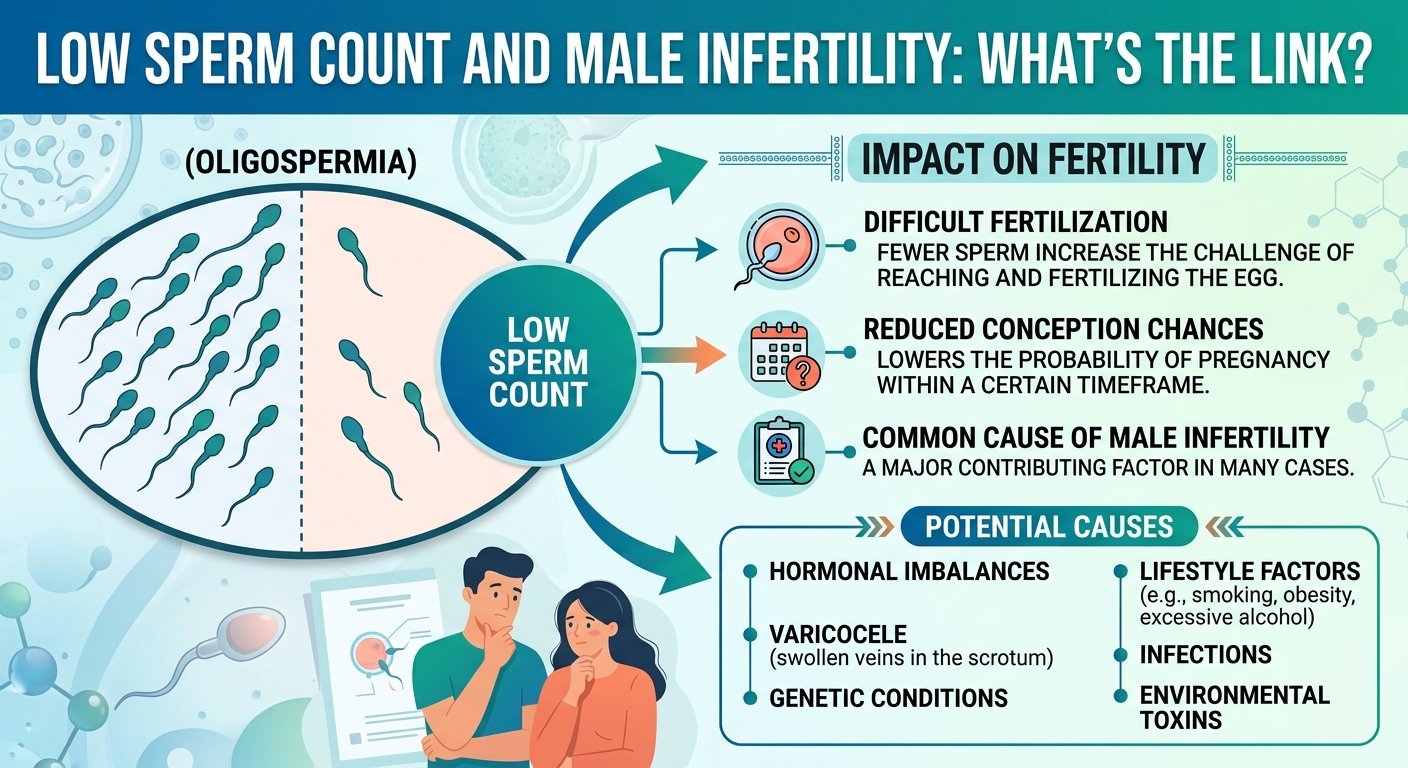
One of the most common questions couples ask when they are having trouble conceiving is, “How do we check for infertility?” There is no single test for infertility. Checking reproductive health for fertility issues involves several kinds of tests. Therefore, if you are experiencing fertility problems, it is important to visit a fertility specialist for the right fertility tests and diagnosis.
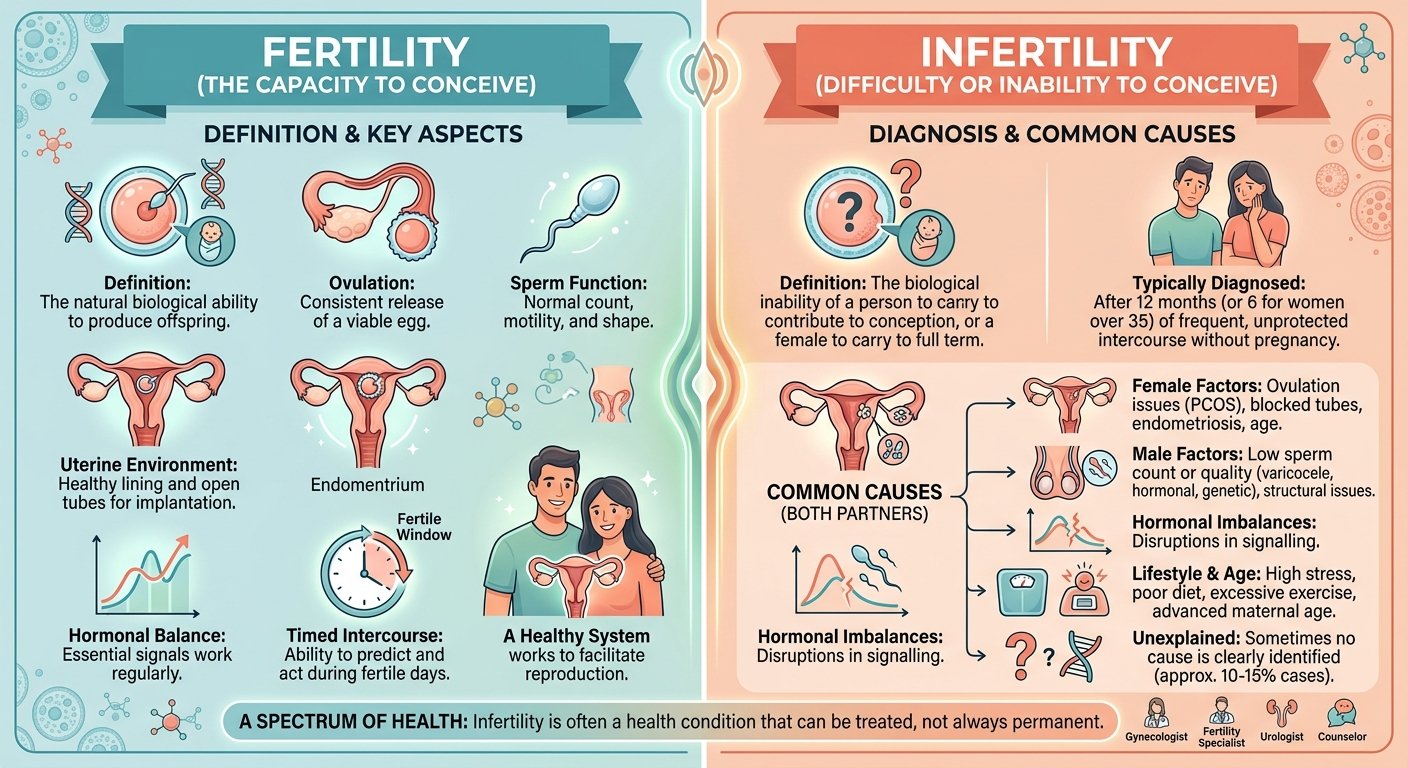
Infertility is generally defined as the inability to conceive after 12 months or more of regular unprotected sexual intercourse. For women aged 35 years and older, evaluation is recommended after 6 months, and women over 40 should be evaluated promptly. A couple should also seek earlier evaluation in the following situations:
Fertility assessment begins with a detailed history and examination of both partners. Male fertility is assessed with a semen analysis, which provides information on sperm count, motility (movement), and morphology (shape). Female fertility assessment usually involves several different tests. The most common tests for women are as follows:
This usually involves questions about the woman’s menstrual cycle, including the length of the period, the number of pads soaked, cycle regularity, pelvic pain, symptoms of ovulation, and previous pregnancies. Ovulation may also be confirmed with a mid-luteal progesterone blood test or ovulation predictor kits.
Blood tests are used to check hormone levels, such as anti-Müllerian hormone (AMH), follicle-stimulating hormone (FSH), luteinizing hormone (LH), and thyroid-stimulating hormone (TSH), which assesses thyroid function.
A pelvic ultrasound, usually performed transvaginally, is used to check for abnormalities in the uterus, ovaries, endometrium, and pelvis, and to count antral follicles as a marker of ovarian reserve. Hysterosalpingography (HSG), an X-ray procedure that uses contrast dye, is commonly used to check whether the fallopian tubes are open (patent) and to examine the uterine cavity. Hysterosalpingo-contrast sonography (HyCoSy) is an ultrasound-based alternative. A combination of tests for both partners is usually needed to evaluate conception problems.
Once infertility has been diagnosed, our doctors at Njinsky IVF & Fertility clinic offer different infertility treatments. We provide male infertility treatments as well as female infertility treatments such as IVF, ICSI, and IUI. We have highly qualified fertility experts as well as advanced technology to help you achieve parenthood. We provide treatments to our patients with great compassion and care.
Learn how to check for infertility with common signs, when to seek help, and what tests assess fertility in women and men. Know your next steps.

Stay updated with the latest fertility breakthroughs, tips, and success stories.
Njinsky IVF & Fertility Centre