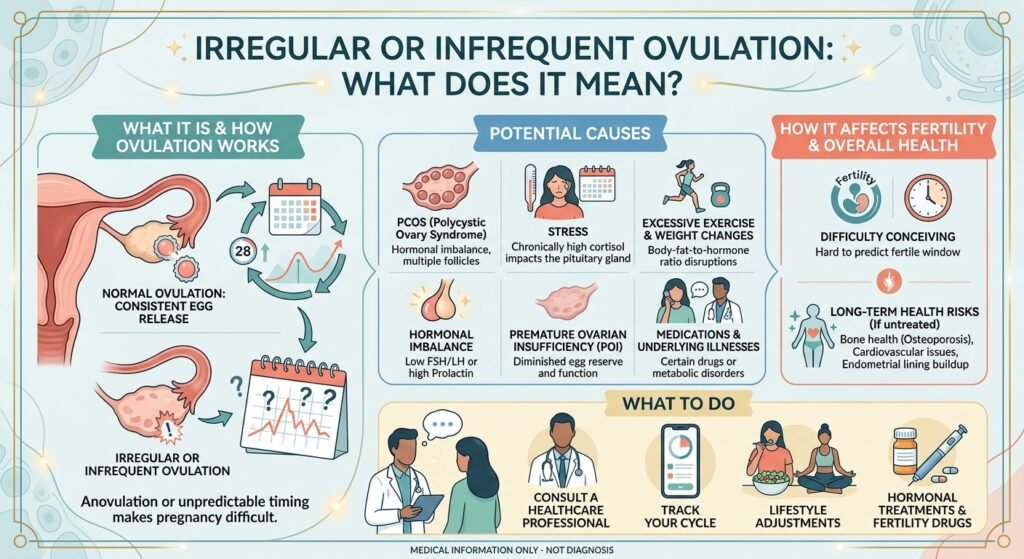
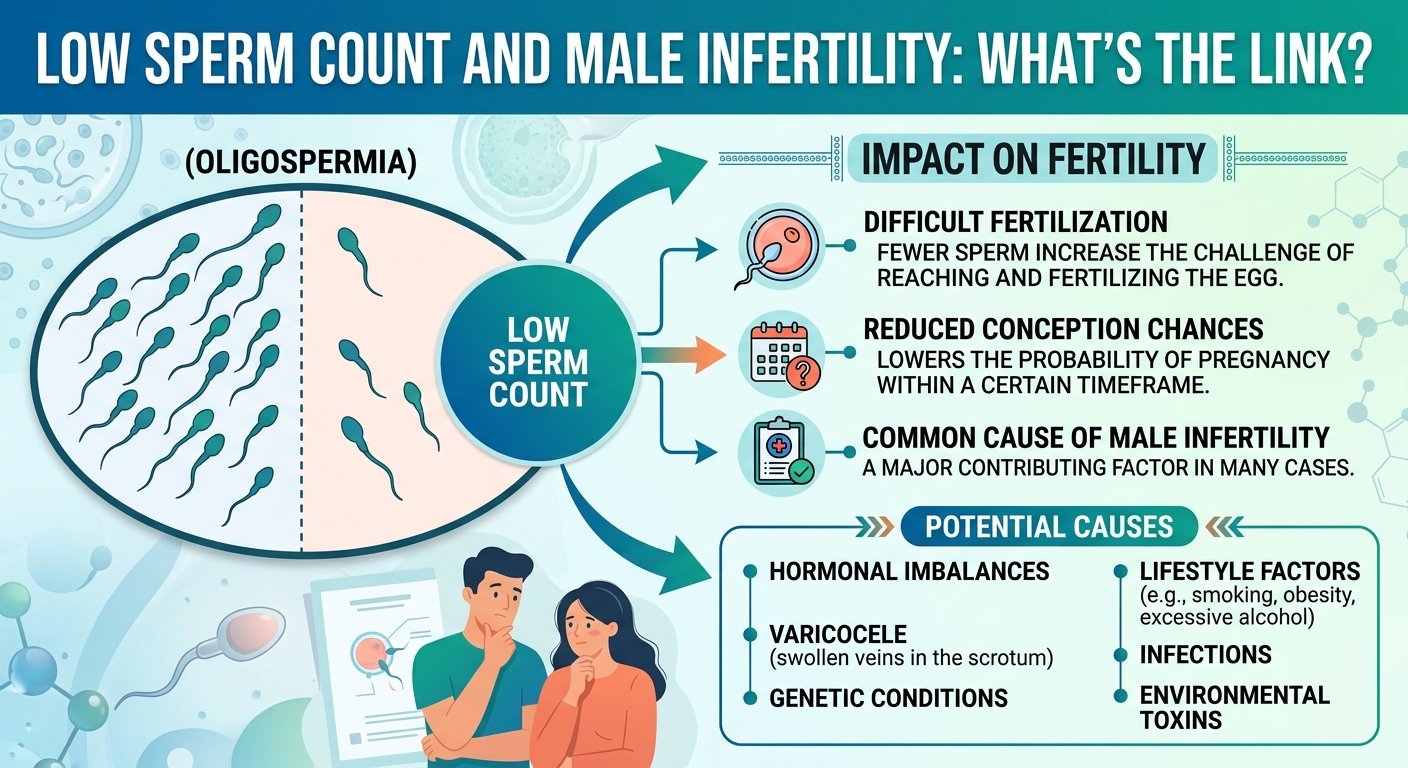
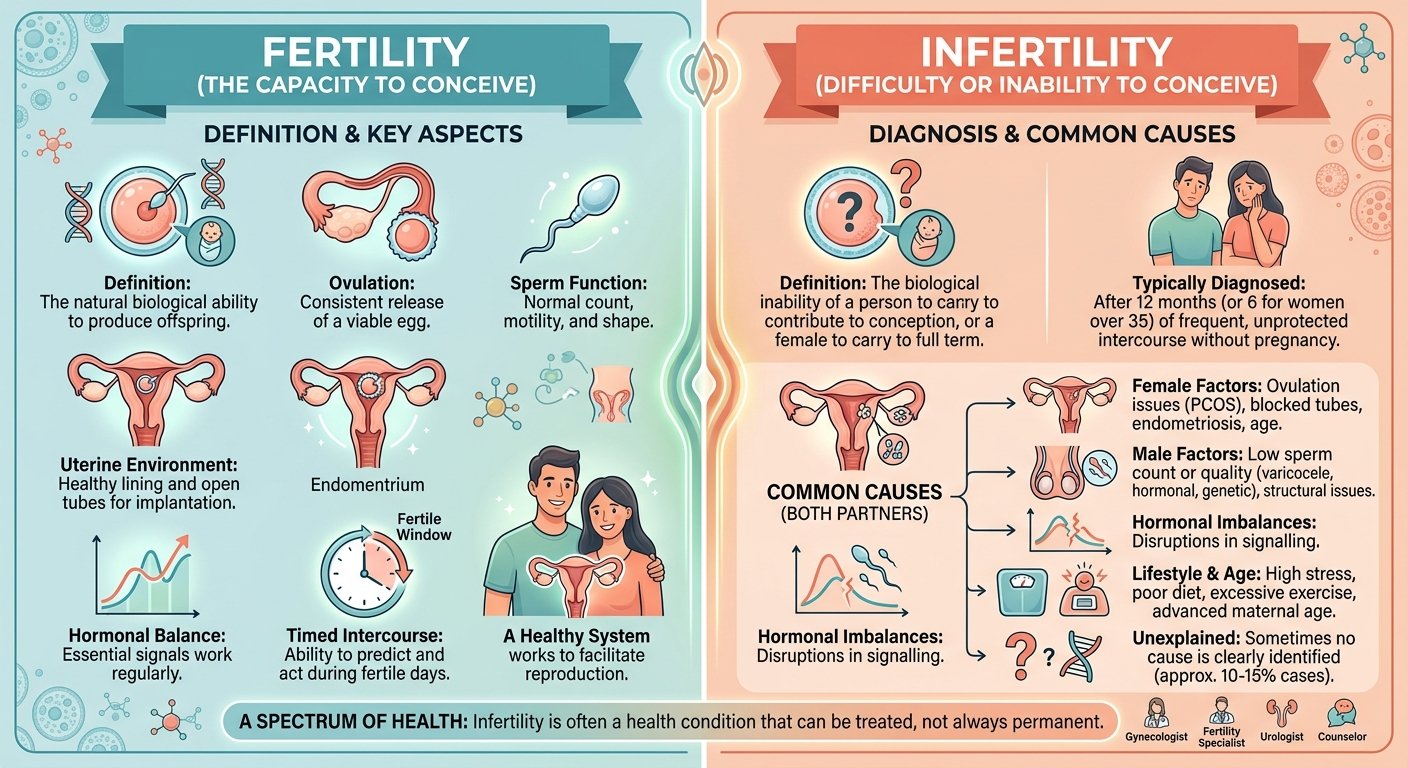
Ovulation is among the most essential stages of the menstrual cycle. It occurs when an ovary releases a fully mature egg, which may then be fertilized by sperm. Regular ovulation makes it easier to predict the fertile window and understand the menstrual cycle. This is not the case for women who experience inconsistent, irregular, or absent ovulation.
Ovulatory disorders are a broad category that includes delayed or infrequent ovulation. These conditions are a significant contributor to infertility and can directly affect normal menstruation. Furthermore, ovulatory disorders do not always present with the same symptoms.
Although some women continue to have fairly normal periods even when they are not ovulating properly, others experience prolonged or erratic cycles. It is therefore important to understand the root causes, particularly for women who are trying to conceive or who experience irregular menstruation.
What does it Mean to Ovulate Infrequently or Irregularly?
The hypothalamus, pituitary gland, and ovaries all coordinate during a typical menstrual cycle. These organs work together to regulate the hormones that trigger ovulation and follicular development. The release of the egg can be interrupted at any point along this hormonal cascade.
- Ovulation that does not occur at a consistent time from cycle to cycle is referred to as irregular ovulation.
- Ovulation that occurs less often than expected is known as infrequent ovulation.
- Anovulation refers to the condition in which ovulation does not occur at all.
According to the FIGO classification of ovulatory disorders, ovulatory dysfunction exists on a spectrum ranging from occasional or intermittent episodes to chronic dysfunction.
Occasionally experiencing a cycle without ovulation does not necessarily mean a woman has chronic infertility. However, severe and repeated ovulatory problems can make pregnancy more difficult. Menstrual patterns can offer useful clues about fertility.
For example, FIGO defines irregular menstruation as a cycle-to-cycle variation in length of more than 7 to 9 days (depending on age), while infrequent menstruation refers to a cycle that lasts longer than 38 days. Menstrual flow alone, however, is not always an accurate indicator of ovulation.
Common Causes of Infrequent or Irregular Ovulation
Ovulatory dysfunction has many possible causes. Hormonal, metabolic, ovarian, psychological, and other medical conditions can all interfere with the processes involved in ovulation.
PCOS (Polycystic Ovary Syndrome): PCOS is one of the most common conditions linked to ovulatory disorders. The hormonal changes associated with PCOS can impair healthy follicle formation and egg release. As a result, some women with PCOS experience anovulation or prolonged, irregular, unpredictable menstrual cycles.
Hypothalamic and Pituitary Disorders: Hormonal signals from the hypothalamus and pituitary gland help regulate ovarian function. Problems within this system can disrupt the hormonal cascade essential for follicular development. In some women, significant changes in body weight, inadequate caloric intake, intense physical activity, and psychological stress can also interfere with hypothalamic function.
Thyroid and Other Endocrine Conditions: Thyroid and other endocrine disorders can influence fertility. Conditions involving abnormal hormone levels, such as hypothyroidism or hyperthyroidism, can trigger menstrual irregularities and ovulation problems.
Elevated Prolactin Levels (Hyperprolactinemia): Ovulation can be affected by high prolactin levels, which interfere with the reproductive hormone pathway. Depending on the underlying cause, women may experience irregular periods or no periods at all.
Primary Ovarian Insufficiency: Some women experience a decline in ovarian function before the typical age of menopause, generally before age 40. This is known as primary ovarian insufficiency and can be associated with irregular ovulation, infrequent periods, and reduced ovarian reserve.
Medications and Other Medical Conditions: The hypothalamic-pituitary-ovarian axis can be affected by certain medications and other underlying medical conditions. Research indicates that hormonal, physiological, genetic, autoimmune, and medication-related factors can all contribute to ovulatory disorders. Persistently abnormal ovulation should not automatically be assumed to be PCOS; proper testing is important, since the underlying cause may be different and treatable.
Symptoms and Indications of Infrequent Ovulation Disorders
The warning signs of ovulation disorders can vary substantially between women. Some women may show few obvious symptoms, while others experience significant monthly changes.
Common signs include:
- Periods that last longer than expected
- Unpredictable menstrual cycles
- Missed menstrual cycles
- Abnormally heavy menstrual bleeding
- Difficulty predicting the fertile window
- Difficulty conceiving
- Symptoms of an underlying hormonal disorder
However, normal-seeming menstrual cycles do not always indicate that ovulation is happening properly.
When is the Right Time to Consult a Specialist?
Occasional variation in the menstrual cycle is common and does not always indicate a major fertility problem. However, prolonged inconsistency, irregular periods, long gaps between periods, probable anovulation, or difficulty getting pregnant should all be evaluated medically. In addition to reviewing the menstrual cycle, a fertility specialist can determine whether ovulation, hormone levels, or other reproductive factors are the root cause of the problem.
Fertility treatment at NJINSKY IVF & Fertility Clinic addresses standard ovulatory problems and offers individualized treatment plans for women who are having difficulty conceiving. IUI, IVF, ICSI, and infrequent-ovulation-related treatments are among the fertility treatments available at this clinic, allowing treatment to be personalized to each individual’s specific reproductive needs.
To Summarize
Is your menstrual cycle being affected by irregular or infrequent ovulation, or is it making conception more challenging? Ovulation issues range widely, from persistent anovulation to occasional missed ovulation. They may be linked to PCOS, hormonal imbalances, disruptions in the hypothalamic-pituitary-ovarian axis, and a number of other physiological or medical conditions.
Fortunately, irregular ovulation does not necessarily mean that pregnancy is not possible. Selecting the right course of treatment requires identifying the underlying cause. If your periods are consistently irregular, unusually far apart, or you have been trying to conceive without success, speaking with a gynecologist or fertility specialist can help determine what is affecting your ovulation and what treatment options may be appropriate.