An unpredictable menstrual cycle could represent more than simply a small problem. Your menstrual period may arrive on time one month, but it can be a few weeks late the next month or completely disappear. Prolonged abnormality can sometimes be a sign that ovulation is not happening regularly, although occasional changes can happen for a number of harmless factors.
Since, menstruation and ovulation are managed by some complicated hormonal fluctuations, then menstrual irregularities in ovulation disorders are closely associated. The menstruation cycle might also change the signals responsible for the hindrance in the release of the mature egg. However, irregular menstrual periods do not necessarily indicate infertility issues.
Effective treatment can often help to predict period cycle or improve the possibility of recurrence once the underlying root cause is identified.
What Triggers Irregular Menstrual Cycles in Ovulation Disorders?
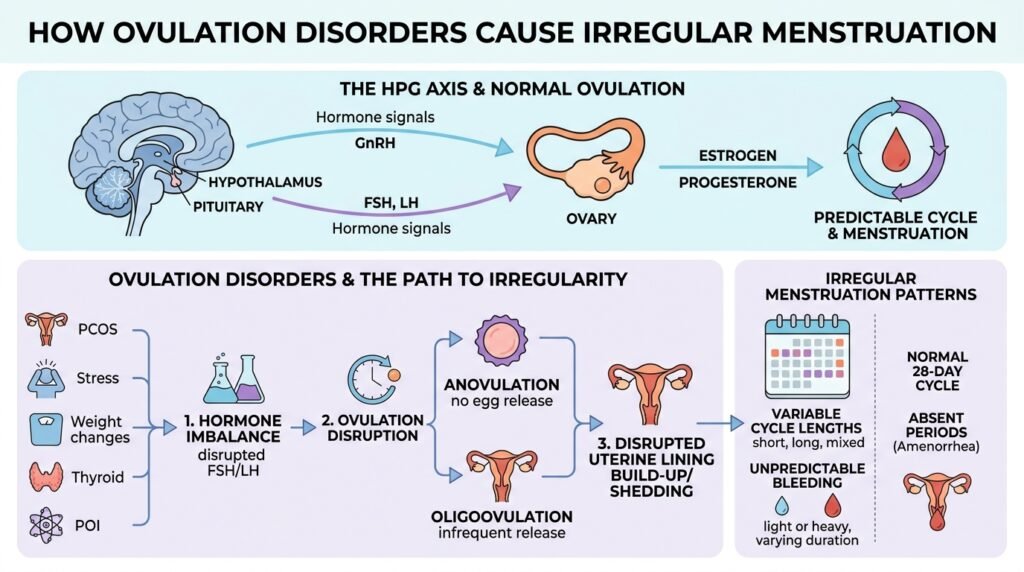
The coordinated interactions between the nervous system, pituitary gland (endocrine system), and the ovaries, controls the ovulation process. Hormones enable the release of an egg, stimulate the development of ovarian follicles and then prepare the uterus for possible pregnancy.
Ovulation may become unstable or halt completely when this hormonal connection is disrupted.
The duration and routine of the menstruation could subsequently be altered by this.
Several factors can lead to ovulation disorders, such as;
- Polycystic Ovary Syndrome-Hormonal imbalances can stop follicles from growing and releasing a mature egg. It can result in unpredictable and excessive bleeding.
- Thyroid Disorders- if the thyroid is inactive or overactive, both can alter the balance of the reproductive hormones.
- Body weight fluctuations- If you consume an inadequate amount of nutrients, changes in weight can affect the hormonal system associated with reproduction.
- Excessive exercise- Indeed, exercise is good for health but too much strain on your body can disrupt hormone signalling.
- Stress – Hypothalamic-pituitary-ovarian system can be influenced by chronic stress levels.
- Other Hormonal Conditions – Such as increased prolactin levels, premature ovarian insufficiency, and certain other adrenal issues can lead to ovulation disorders.
The Impact of Ovulation Disorders on the Menstrual Cycle
It is important to gather knowledge about what takes place during ovulation, and if the menstrual cycle is absent in an effort to understand how ovarian disorders influence the menstrual cycle. Hormonal alterations preceding with the release of an egg assist in prepping the uterus lining for a possible pregnancy. The levels of the hormones slowly change over time and the lining sheds throughout the menstrual periods cycle if the patient is not pregnant. This hormonal system may be knocked off when ovulation is delayed or absent.
As an outcome, women may notice that her menstrual cycle:
- Come for more than 35 days difference
- Happens with an abnormal frequency
- Is absent for a few months
- Become inconsistent
- Cycle is lengthy
Rather than just making periods absent, ovulatory problems can also cause erratic uterine bleeding. Alteration in menstruation frequency, consistency, length of the periods, and amount of the bleeding have been identified as indicative signs of ovulatory disorders by the standardized FIGO categorization.
It is additionally possible for a woman with moderate ovulation problems to get periods that look like the normal menstrual cycle. As a consequence, receiving monthly menstruation cycles does not always imply that ovulation is happening as it ought to be.
Typical Signs of Ovulation Disorders and Irregular Menstrual Cycles
Variations in menstrual cycle are among the most common symptoms of irregular menstruation and ovulatory disorders.
These might consist of;
- Less frequent periods
- Cycles that vary in length
- Missed menstrual cycles
- Prolonged menstrual periods
- Excessive bleeding(unusual)
- Very less menstrual bleeding
- Having difficulties predicting when the next cycle is going to happen.
The medical condition causing the ovulation disorder could also result in apparent signs in some women.
As an example, persistent acne, excessive facial and body hair, scalp hair thinning, and difficulties in getting pregnant may all be the possible signs of PCOS. Energy, body weight, mental state, and temperature tolerance can all differ as a result of thyroid problems. However, the existence of ovulation problems is unable to be detected just by the apparent symptoms.
Does Every Unusual Period Indicate an Ovulation Problem?
Not at all times.
High levels of stress, medical conditions, travelling, sleep disorders, changes in body weight, medications, and other such circumstances may trigger the menstrual cycle to change temporarily. In a normal healthy range, a woman’s menstrual cycle can also gradually change.
Nevertheless, significant and repeated abnormalities ought not to be ignored especially when pregnancy is planned if menstruation patterns have drastically changed. Menstrual abnormalities can result from various reasons, from hormonal and reproductive disorders to dietary and lifestyle changes based on clinical research review on irregular menstruation. Due to this, finding the root cause is more important than simply aiming to get the menstruation period on time, at the particular date.
How Fertility May be Affected By Irregular Menstruation Cycles?
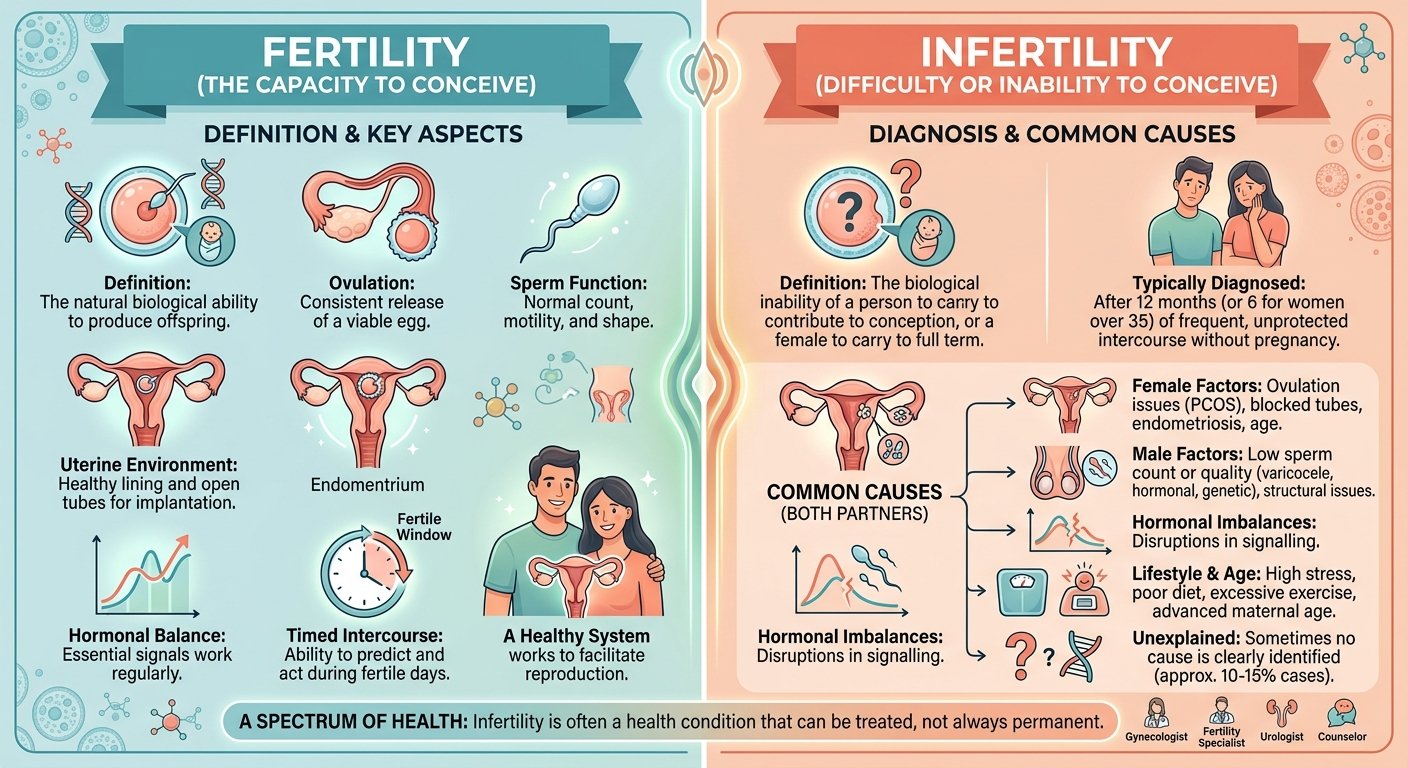
Fertility represents one of the few primary problems regarding irregular menstruation. Based on whether ovulation is currently happening, irregular menstruation can have a major impact on fertility.
There is not going to be a fertile egg for sperm to fuse with and fertilize, if ovulation fails to take place. There might be less likelihood for conception, if the ovulation happens rarely. Locating the fertile window can sometimes be difficult because of irregular disorders.
Unexpected ovulation cycles render it more difficult for a woman to figure out when ovulation is probably going to happen. A substantial number of infertility issues in women may be attributed to have resulted in dysfunction in the ovaries. It may prove to be particularly important for women who struggle with disorders like PCOS.
Pregnancy is rarely possible, however, if you get irregular periods. Based on the underlying root cause and regularity of the ovulation, some women with ovulatory disorders reproduce naturally, but others may become pregnant after a thorough treatment procedure.
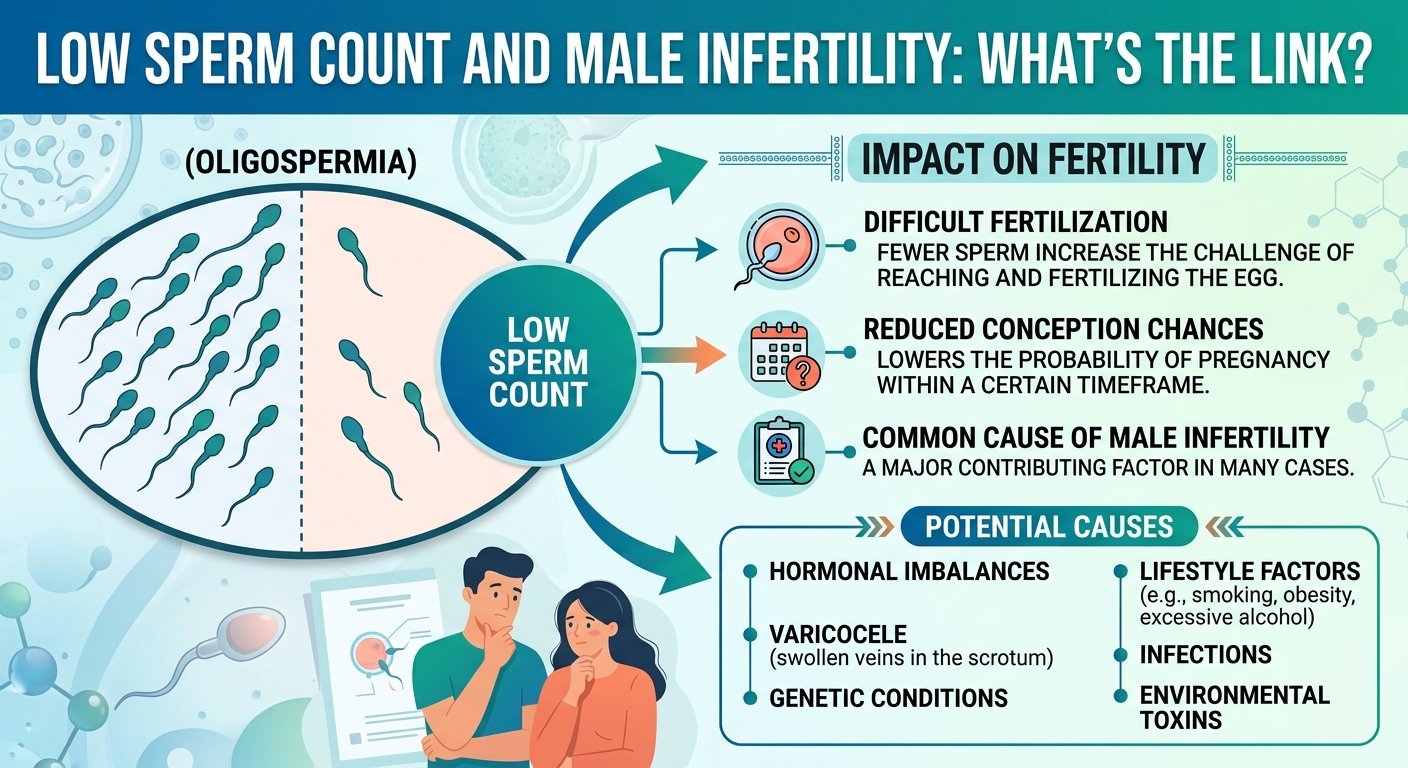
It’s likewise essential to think that both the partners are able to participate in the fertility treatment procedure. Infertility can additionally be triggered by problems with sperm, the fallopian tubes, ovarian reserves, the uterus and various other reproductive elements.
Fertility and Ovulation Disorders Care at the Top Clinic
Women who endure chronic irregularity in menstruation might wonder if they are ever going to be able to conceive. Women may undergo a tailored reproductive and fertility evaluation at NJINSKY IVF & Fertility Clinic in order to look into these problems with irregular menstruation and ovulation. Hormonal testing, ovulation tracking, ultrasonography, and fertility evaluation which may be incorporated in the standard medical checkup, according to the patient’s requirements.
Options for the treatment such as ovulation induction, IVF, IUI, ICSI and a standard embryo transfer may be taken into consideration, whenever an ovulation disorder is disrupting with conception. Getting predictions correct for your next period cycle should not be the primary goal.
Specialists can deal with the underlying problems and choose treatment according to the reproductive goal of the women by understanding the reason why the menstruation cycle is irregular.
Finally
Is your irregular menstrual cycle telling you things about your ovulation? When ovulation is delayed or absent, irregular menstruation might represent the obvious indication of an underlying hormonal, metabolic, and reproductive disorder. Fertility does not disappear when the cycle is unpredictable.
Many ovulation abnormalities can be managed with medications, lifestyle modification, ovulation induction treatment and if necessary, assisted reproductive technologies, once the root cause of the problem has been properly identified. Obtaining professional medical assistance could potentially help convert uncertainty into an improved awareness of your reproductive wellness if your menstrual health has been constantly disturbed.