A woman’s fertility is often the focus of attention when a couple struggles to conceive. But what if infertility stems from male factors instead?
Notably, a low sperm count usually causes no noticeable symptoms. Most men are unaware they have the condition until they undergo testing for infertility.
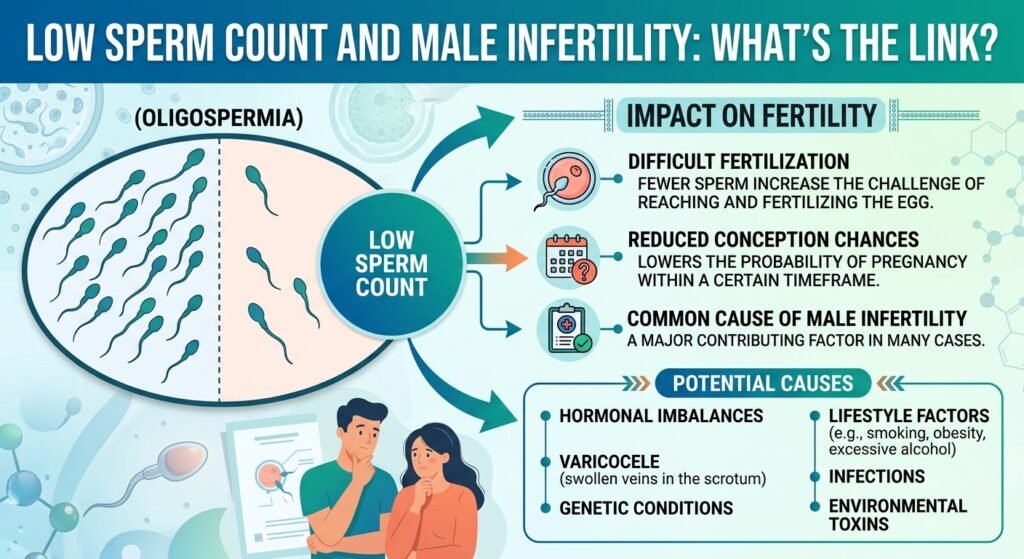
Common Causes of Low Sperm Count in Men
What causes some men to have reduced sperm production while others remain unaffected? Often, there is no single, clear answer.
A variety of factors can affect sperm production, motility, and quality:
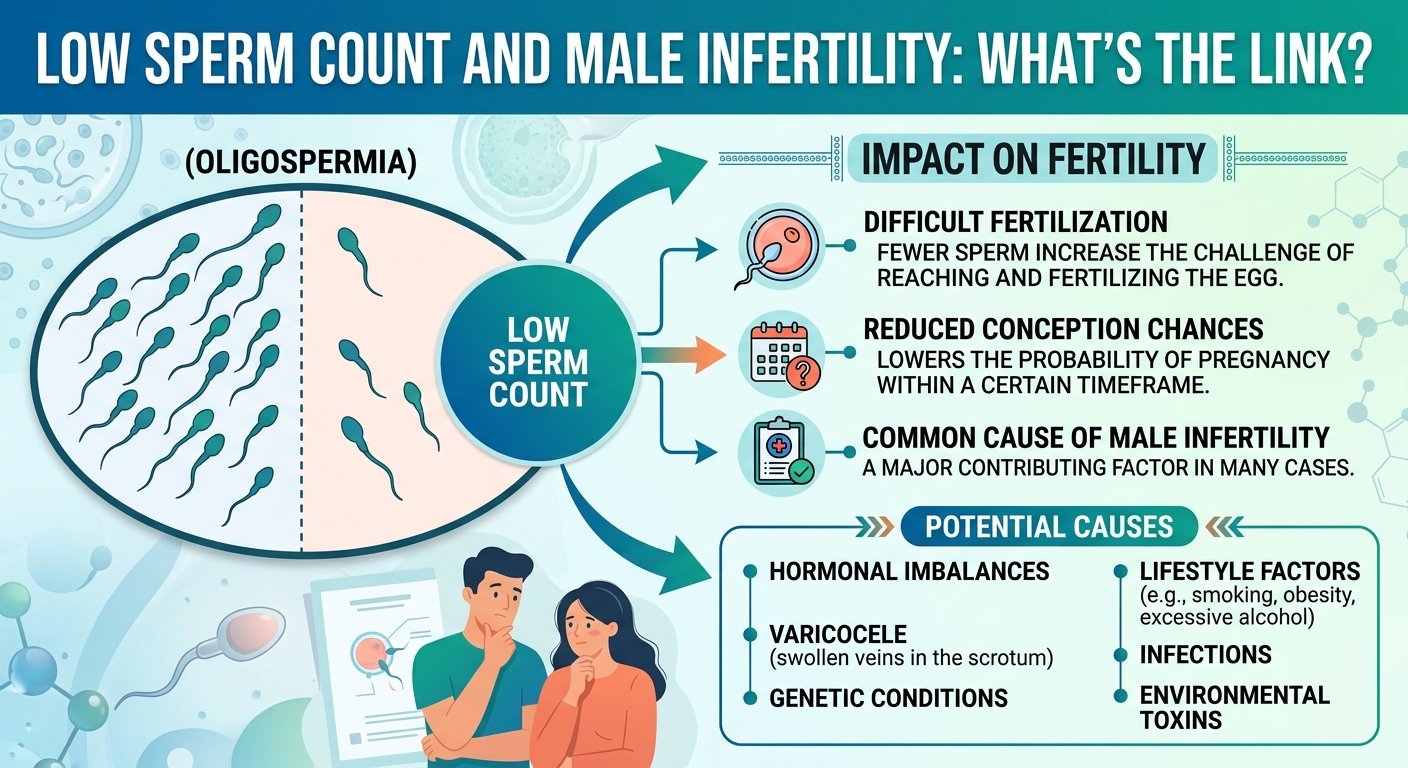
Medical Conditions- Sperm production can be impaired by abnormalities of the testicles. Irregular sperm production may result from previous infections, injuries, certain congenital disorders, testicular surgery, or other underlying conditions. Hormonal problems can also affect fertility; in particular, low testosterone levels, a hallmark of the various forms of hypogonadism, can hinder normal sperm production.
Varicocele– This is the swelling of veins within the scrotum that drain the testicles. It’s one of the most common causes of male infertility and reduced sperm production, affecting roughly 4 in 10 men evaluated for low sperm counts.
Hormonal Problems– The hypothalamus, pituitary gland, and testes together form the hormonal system required for sperm production. Disruption anywhere along this pathway can interfere with the hormonal signals needed for healthy sperm production.
Sperm production and testosterone production are related but distinct processes. Unsupervised use of testosterone or anabolic steroids can actually suppress the body’s natural ability to produce sperm.
Medications and Drugs– Certain medications can directly affect semen quality or sperm production. Anabolic steroid use, in particular, can significantly reduce sperm count and motility. Several recreational drugs can also negatively affect sperm quality, and chemotherapy can significantly reduce sperm production as well.
Environmental Factors– Environmental conditions and lifestyle habits can also significantly affect sperm production. Reduced sperm quality can result from smoking, excessive alcohol consumption, obesity, recreational drug use, and regular exposure to industrial chemicals, heavy metals, or radiation. In some cases, however, testing cannot identify a specific cause for abnormal semen analysis results, and the infertility is considered unexplained.
Warning Signs of Low Sperm Count
Many men are surprised to learn that a low sperm count usually causes no symptoms.
Even with a low sperm count, a man can still have normal erections, ejaculations, and libido. The condition often isn’t noticed until a couple starts trying to conceive. In some cases, other signs may point to an underlying cause.
The following symptoms may sometimes be present:
- Sexual dysfunction, such as difficulty getting or maintaining an erection
- Reduced libido
- Pain or swelling in the testicles
- An abnormal lump around the testicles
- Signs of hormonal imbalance, such as reduced facial or body hair
- Difficulty ejaculating
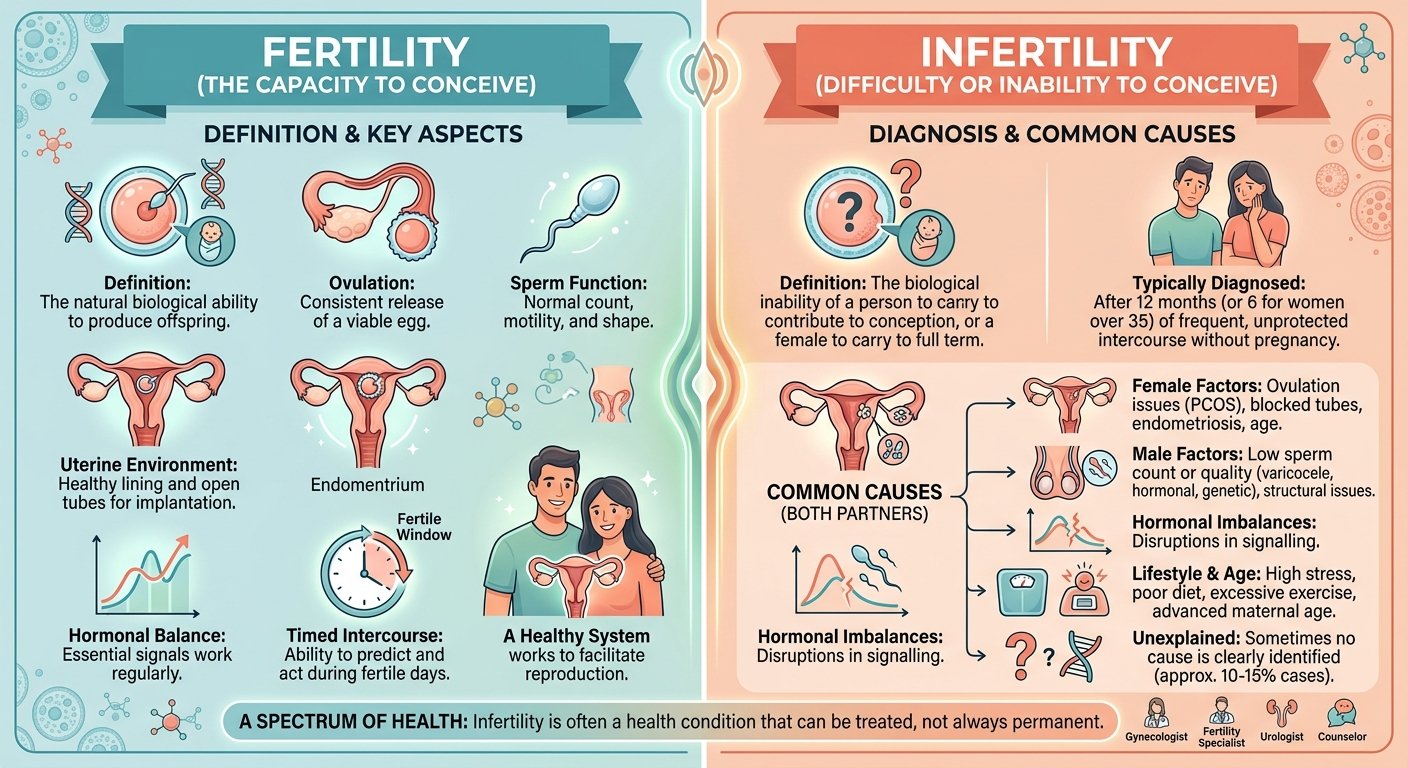
These symptoms warrant medical evaluation, though they don’t always indicate a low sperm count. Fertility testing is generally recommended for couples who have been unable to conceive after a year of regular, unprotected intercourse. In certain cases, such as a known reproductive health issue or the female partner being over 35, earlier evaluation is advisable.
How Low Sperm Count Affects Male Infertility?
For natural conception, sperm must be produced in sufficient numbers, travel through the female reproductive tract, reach the egg, and successfully fertilize it. When sperm counts are low, fewer sperm are available to complete that journey, which reduces the chances of fertilization.
Sperm count, however, is not the whole picture.
Morphology refers to the shape and structure of the sperm, while motility refers to how well it moves. Problems with either can impair the sperm’s ability to penetrate and fertilize an egg. For this reason, a thorough fertility assessment looks at more than just sperm count.
Diagnosis and Treatment of Low Sperm Count
Identifying the underlying cause is essential to treating low sperm count.
- Semen Analysis: This is the primary diagnostic test. A semen sample is examined in a lab to assess sperm morphology, motility, and count. If the result is abnormal, a second sample is usually collected at least two weeks later, since sperm counts can vary between samples and sperm take roughly two to three months to fully mature.
- Lifestyle Changes: Optimizing lifestyle factors can improve sperm health. This includes quitting smoking, limiting alcohol intake, maintaining a healthy weight, and avoiding recreational drugs.
Fertility Treatment for Low Sperm Count
The underlying cause and the couple’s overall fertility examination govern the approach to treatment. When a couple’s sperm count is insufficient for a healthy natural conception, assisted reproductive technologies such as IVF & ICSI could be a good option if performed at a reputed medical facility such as NJINSKY IVF & Fertility Clinic. In specific cases where sperm cannot be obtained through ejaculation, specialized sperm retrieval techniques may also be considered.
Both partners should undergo proper fertility screening and diagnosis. Men with fertility concerns can receive an assessment and an individualized treatment plan here at NJINSKY IVF & Fertility Clinic, based on their semen test findings and underlying medical condition. Male fertility treatment can include sperm retrieval techniques, appropriate medical management, and further diagnostic testing.
In Conclusion
Could your infertility concerns be linked to a low sperm count? A low sperm count doesn’t always mean fatherhood is impossible, even though it can make natural conception more difficult. It’s important to consider the underlying cause, severity, sperm motility and shape, and the fertility factors affecting both partners.
Finding out what’s really going on is the first step. Through semen analysis, further testing, and treatment tailored to the underlying cause, couples can explore their options for building a family.