Ovulation is considered one of the most important stages of a woman’s menstrual cycle. The ovaries typically produce a mature egg every month that might be fertilized by the sperm. Conceiving can be more difficult if this ovulation process is erratic or missing. Such problems are often referred to as Ovulation Disorders.
Even though ovulation problems are some of the primary reasons for fertility disorders, they do not rule out a normal pregnancy. The fundamental cause may often be discovered and rectified.
What Are Ovulation Disorders?
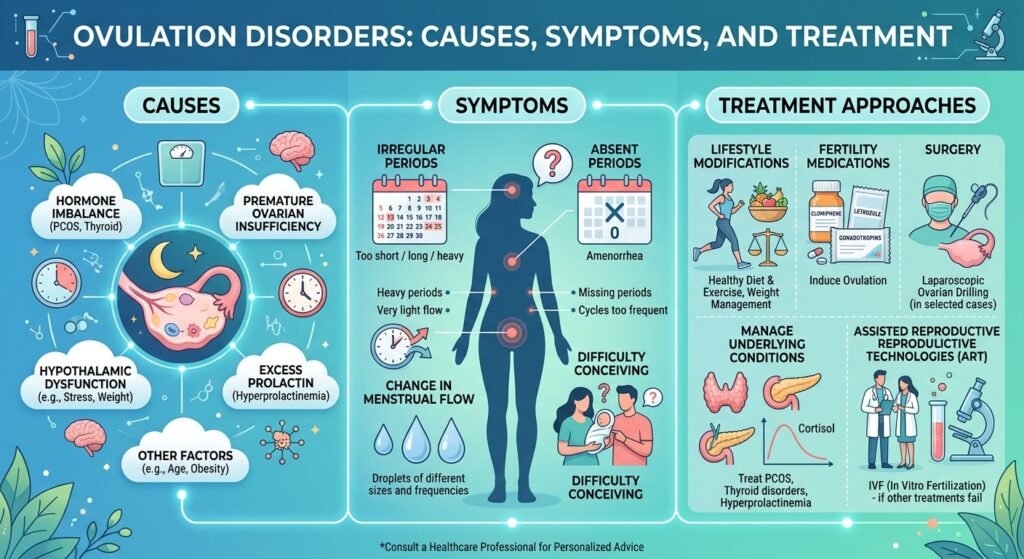
If the ovaries cease to release a fertile egg periodically, ovulation disorders may develop. A woman may come across the following;
- Ovulation irregularities
- Complete absence of ovulation
- Delayed or absent menstrual cycle
- Difficulty getting pregnant
The problem may not always be called for the total halt to ovulation. On occasion, women may conceive, but it is not very frequent.
The menstrual period is usually managed by the brain, pituitary gland, and ovaries. The ovarian follicles mature and finally produce an egg with the assistance of the hormones including Luteinizing Hormone (LH) and the hormones that stimulate the follicles (FSH). The normal ovulation pattern may become irregular when hormonal balance is disrupted.
Common Causes of Ovulation Disorders
Ovulation disorders can have a variety of causes. The hormonal mechanisms that lead to ovulation can be disturbed by several kinds of conditions and lifestyle decisions.
- PCOS or Polycystic Ovary Syndrome
One of the most prevalent reasons for delayed or sporadic ovulation is PCOS. Healthy follicle growth and egg production may be influenced by hormonal and metabolic imbalances.
Furthermore, women with PCOS might experience menstrual irregularities, persistent acne, dense facial and body hair, thinning of scalp hair, and difficulty getting pregnant.
Ovulation fertility hormones can be disturbed by the abnormalities associated with thyroid or prolactin concentration levels. When determining that PCOS is responsible, it is important to perform suitable testing because a variety of hormonal conditions may trigger the similar symptoms.
Activity of the reproductive hormone can be influenced by both the severe loss of the body weight or the gain of it. The menstruation period may be altered by rapid reduction in the weight of the patient, strict diet plans, and inadequate calorie intake. Likewise, some female’s ovulation may be impaired by metabolic disorders linked to being overweight.
- Excessive Physical Activity
Exercise can be beneficial for your health, however it may sometimes set your menstrual cycle off especially if you couple it with an inadequate diet.
This might develop as a consequence of the women’s body lacking sufficient energy to keep up with the reproductive function.
The hormonal signals that govern reproduction can be influenced by chronic psychological strain. Variation in ovulation patterns and menstruation cycles are sometimes caused by intense or prolonged stress.
But, fertility problems should not always be linked to regular stress levels. Appropriate medical diagnosis is required for recurrent ovulation problems.
- Decrease in Ovarian Function
Ovarian activity usually gradually varies as the women age. Fertility and ovulation are potentially impacted by a decrease in ovarian reserves and the quality of the eggs.
Age is therefore an essential factor that must be taken into consideration while evaluating infertility.
Typical Warning Signs of Ovulation Disorders
Recognizing the signs and symptoms of ovulation problems could assist women in determining when they should visit the doctor. An unpredictable menstrual cycle is one of the most evident signs.
You may experience the following;
- Delayed periods
- Irregular or missed periods
- Very short or excessively prolonged menstrual cycles
- Unexpected or excessive bleeding
- Difficulty conceiving
- Differences in the menstruation flow
But only certain women with ovulation disorders have apparent symptoms. Even if ovulation fails to proceed as intended, some women might continue to experience the bleeding monthly. Due to this, ovulation can not always be proved by monthly bleeding.
Changes in Cervical Mucus
The mucus in the cervical cavity gets less dense, clearer and even more slick around the time of ovulation. Though this change does not serve as a reliable sign of ovulation disorder, some women might experience it.
Difficulty Conceiving
Unusual problems while getting pregnant may represent the first indication that ovulation fails to occur on a regular schedule for women striving to conceive.
How Ovulation Disorders Can Cause Infertility?
Recognizing how ovulation disorders could lead to infertility begins by recognizing one clear fact: for fertilization to happen successfully, a mature egg is to be produced. If ovulation fails to happen, there will be no egg accessible to sperm for fertilization.
Although ovulation occurs irregularly, inconsistent release of the egg may limit the total number of possibilities for pregnancy to happen. It may additionally make it more challenging to identify the fertile window.
A woman who regularly ovulates, for example, is likely to know the time that she is most likely to conceive. This could prove to be particularly difficult for an individual who ovulates irregularly.
Ovulation is just one component of fertility, however. Conception can additionally be altered by abnormalities with the uterus, fallopian tubes, sperm, ovarian reserves, and various other biological components. Thus, instead of believing that ovulation disorder is not the only justification, fertility assessment ought to take both partners into consideration.
Treatment Options For Ovulation Disorders
The root cause of ovulation disturbance and whether or not pregnancy is desired dictate the course of action of the treatment.
- Lifestyle Management by taking a healthy and balanced diet.
- Getting treated and diagnosed for underlying hormonal disorders.
- Medication for ovulation induction
- Assisted Reproduction Treatment options including IUI, ICSI, and IVF.
When Should You See the Doctor?
An ovulation problem is rarely detected by irregular changes in the menstruation period. Recurrent irregularity, however, should not be overlooked, particularly when pregnancy is desired.
Consider contacting a medical specialist if you experience the following;
- Menstrual cycles often delayed or missed
- Extremely unpredictable menstrual cycles
- Skipped menstruation for few months
- Signs showing hormonal imbalance
- Trouble getting pregnant
- Underlying cause can be thyroid issues or PCOS
When you notice significant shifts in your menstrual cycle and other concerning symptoms, you should have them checked as soon as possible.
Fertility Evaluation at the Top Clinic
Rather than trying to control or manage their menstrual cycles by themselves, women with ovulation disorders might benefit from a comprehensive fertility assessment. Medical professionals at NJINSKY IVF & Fertility Clinic may evaluate ovulation patterns, menstrual periods, hormonal fluctuations and other fertility problems that might interfere with normal pregnancy.
Care at this clinic may involve ovulation monitoring, hormonal assessments, ultrasonography, and personalized treatment plans, based on the patient’s specific needs. When considered clinically appropriate, options of treatment for women who require assistance when getting pregnant involve ovulation stimulation procedures, IUI, IVF, ICSI and standard transfer of the embryos. The treatment plan is tailored to the individual’s fertility goals and the underlying root cause of infertility.
To Summarize
Is it likely that an ovulation disorder is the very mysterious cause behind infertility? The answer could be ‘Yes’ for some women. The possibility of the pregnancy can be significantly reduced by delayed or absent ovulation, but there are other numerous underlying factors that are manageable once the causes are discovered.
Never presume that infertility is unmanageable if your menstrual cycles are frequently irregular or if you have been attempting to get pregnant but no success. Alongside, confirming whether ovulation is happening, a comprehensive fertility assessment may identify additional factors that are potentially affecting pregnancy. Many women with menstruation problems could improve their probability of getting pregnant with appropriate care and conventional treatment.