Polycystic Ovary Syndrome (PCOS) is one of the most common hormonal and metabolic conditions affecting women of reproductive age. Because its signs and symptoms can vary considerably and may overlap with other conditions, some women may not recognise them or may experience delays in diagnosis.
Recognising PCOS Symptoms can encourage women to seek appropriate medical assessment and management. Early identification can also help address fertility concerns and associated long-term health risks.
If you have noticed changes in your skin, weight, hair growth, or menstrual cycle, understanding the common signs of PCOS can be an important first step. This article discusses common PCOS symptoms, possible treatment options, and when you should seek medical advice.
PCOS or Polycystic Ovary Syndrome
Polycystic Ovary Syndrome is a hormonal and metabolic condition that can affect ovulation, menstrual cycles, fertility, and androgen levels.
Women with PCOS may experience irregular ovulation, increased androgen activity, and polycystic ovarian morphology. However, not every woman with PCOS has polycystic ovaries or ovarian cysts.
PCOS is diagnosed using a combination of medical history, symptoms, clinical assessment, laboratory tests, and, where appropriate, ultrasound or other investigations. No single symptom or test can diagnose PCOS on its own.
Initial Symptoms of PCOS
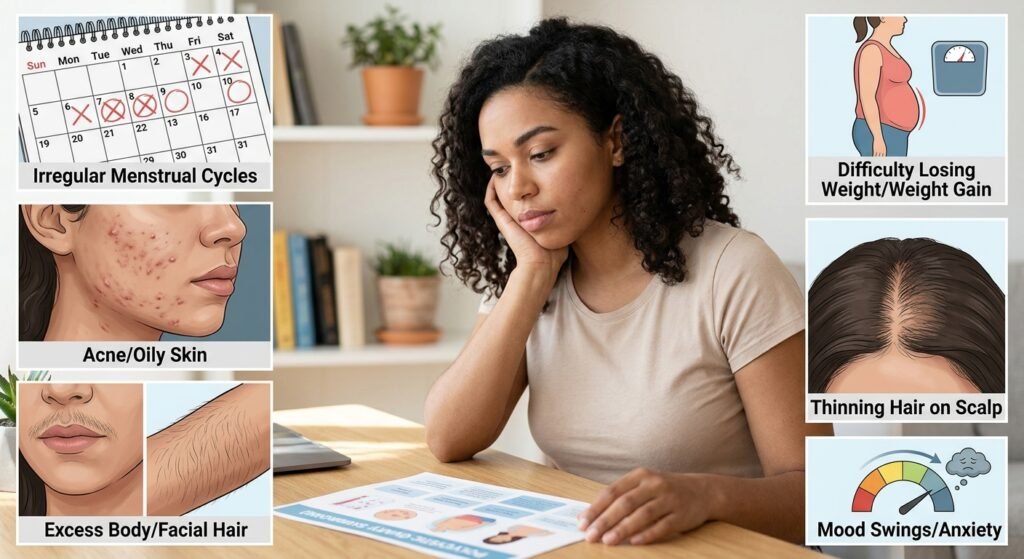
PCOS symptoms can differ from person to person. Common early signs may include:
- Irregular, delayed, or missed periods
- Acne
- Oily skin
- Weight gain or difficulty managing weight
- Thinning scalp hair
- Excess facial or body hair
Symptoms may develop gradually and can vary in severity.
Typical Symptoms of PCOS
Some of the most common features associated with PCOS include irregular ovulation and increased androgen activity.
1. Irregular Menstrual Cycles
Irregular menstrual cycles are one of the most common features of PCOS. Some women may have very infrequent periods, while others may experience unpredictable cycles.
Irregular periods can occur when ovulation does not happen regularly.
2. Oily Skin and Acne
Increased androgen activity can stimulate the skin’s oil glands and contribute to:
- Persistent acne
- Oily skin
- Acne breakouts on the face, back, or chest
Some women may continue to experience hormonal acne into adulthood.
3. Excessive Hair Growth
Some women with PCOS develop thicker, darker hair in areas such as:
- Chin
- Upper lip
- Chest
- Abdomen
- Back
This condition is known as hirsutism and can be associated with increased androgen activity.
4. Thinning of Hair
Some women with PCOS experience thinning of the scalp hair, particularly around the crown or top of the head. This can resemble female pattern hair loss.
5. Weight Changes
Weight gain or difficulty managing weight can occur in some women with PCOS. Insulin resistance is common in PCOS and may contribute to metabolic changes and difficulty with weight management, although not every woman with PCOS has insulin resistance or is overweight.
6. Dark Patches on the Skin
Some women may develop smooth, darker areas of skin, particularly around the:
This may be acanthosis nigricans, which can be associated with insulin resistance.
Other Common Symptoms
PCOS can affect women differently. Other symptoms or associated concerns may include:
- Irregular menstruation
- Acne
- Oily skin
- Excess facial or body hair
- Thinning scalp hair
- Weight changes
- Difficulty becoming pregnant
- Mood changes
- Anxiety or depression
Because these symptoms can also occur with other conditions, experiencing one or more of them does not necessarily mean that you have PCOS. A proper medical assessment is important for diagnosis.
PCOS Symptoms Beyond the Ovaries
PCOS affects more than reproductive health. It can also be associated with:
- Metabolic health
- Blood glucose regulation
- Skin and hair
- Cardiovascular risk factors
- Psychological wellbeing
- Sleep problems, including an increased risk of obstructive sleep apnoea
Women with PCOS may also experience anxiety and depression. Appropriate assessment and management can help address both reproductive and broader health concerns.
Fertility and Symptoms of PCOS
Difficulty becoming pregnant is one of the common concerns associated with PCOS because irregular ovulation can make conception more difficult.
However, PCOS does not mean that pregnancy is impossible. Many women with PCOS conceive naturally, while others may benefit from fertility treatment.
Depending on individual circumstances, fertility treatment options may include ovulation induction, intrauterine insemination (IUI), or in vitro fertilisation (IVF). ICSI may also be recommended in appropriate circumstances.
Can Men Have PCOS?
PCOS is a condition affecting ovarian function and therefore does not occur in men who do not have ovaries.
However, research suggests that male relatives of women with PCOS may share certain genetic or metabolic characteristics associated with the condition. This does not mean that men develop PCOS itself.
Treatment and Management of PCOS
Understanding the symptoms of PCOS is important because management should be tailored to each woman’s symptoms, health needs, and reproductive goals.
Depending on individual circumstances, management may include:
- Healthy lifestyle and dietary measures
- Medications to regulate menstrual cycles
- Treatment for acne or excess hair growth
- Management of metabolic risk factors
- Ovulation-induction medicines for women trying to conceive
- Fertility treatments such as IUI or IVF where appropriate
Treatment should be personalised according to each woman’s individual circumstances and fertility plans.
When Should You Consult a Doctor?
Consider speaking with a qualified healthcare professional if you experience:
- Irregular or missed periods
- Persistent acne
- Excessive facial or body hair growth
- Thinning scalp hair
- Unexplained or significant weight changes
- Difficulty becoming pregnant
- Darkened skin patches around the neck or underarms
A medical assessment can help determine whether these symptoms are related to PCOS or another condition and can help guide appropriate management.
Complete PCOS Care at NJINSKY IVF & Fertility Clinic
At NJINSKY IVF & Fertility Clinic, women experiencing PCOS and fertility concerns can benefit from comprehensive evaluation and personalised care. The clinic provides hormonal assessments, pelvic ultrasound scans, ovulation monitoring, and fertility assessments to help evaluate PCOS and its potential impact on reproductive health.
NJINSKY IVF & Fertility Clinic also offers personalised treatment plans that may include ovulation induction, IUI, IVF, ICSI, lifestyle guidance, and embryo transfer, depending on individual clinical needs.
The clinic’s gynaecologists and fertility specialists provide individualised care focused on managing PCOS symptoms and supporting women who are seeking to achieve pregnancy.
Final Thoughts
Recognising the symptoms of PCOS can encourage women to seek appropriate medical assessment and support. Common features include irregular periods, acne, excess facial or body hair, thinning scalp hair, and weight or metabolic changes.
Because PCOS can affect women differently, experiencing these symptoms does not necessarily mean that you have the condition. A qualified gynaecologist or fertility specialist can provide an appropriate assessment and personalised treatment plan.
With appropriate management and care, many women with PCOS can effectively manage their symptoms, address fertility concerns, and maintain healthy, active lives.