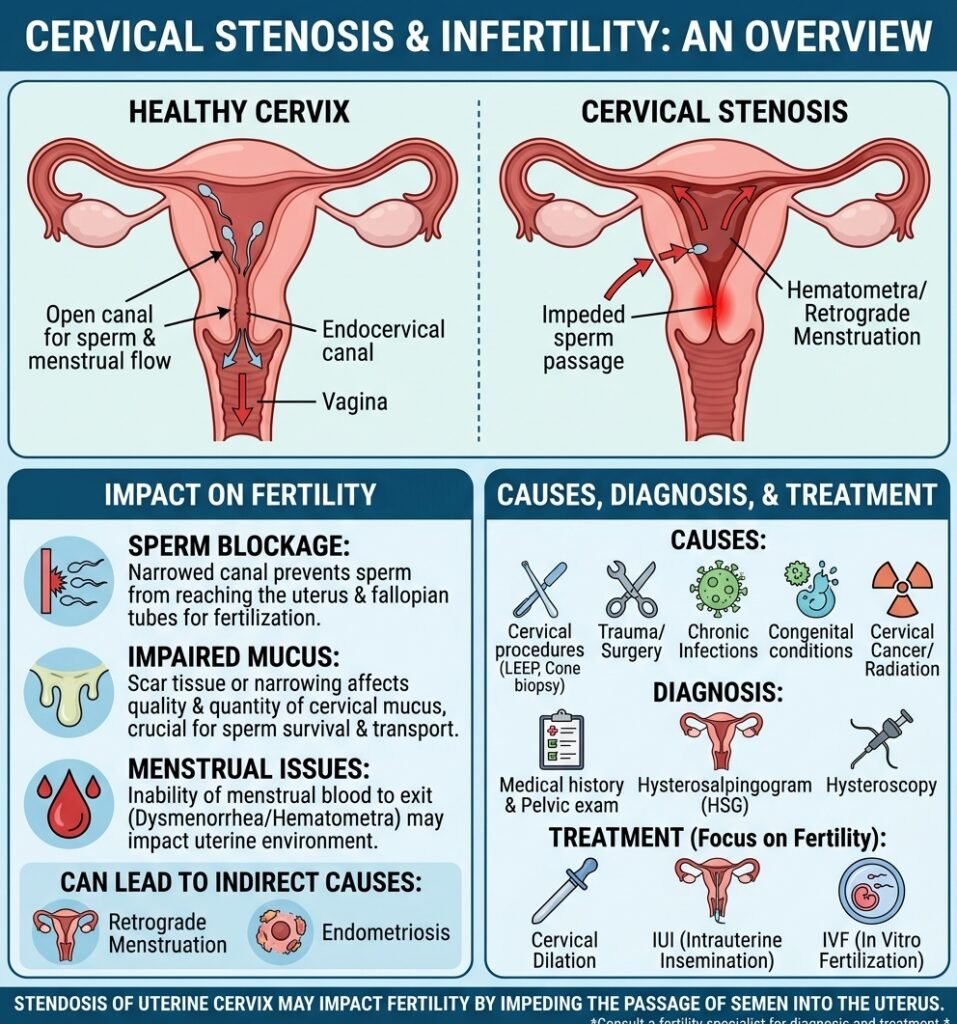
Before knowing about the concept of cervical stenosis, one should be familiar with the anatomy of the female reproductive system. The cervix is the organ that joins the vagina and uterus – this organ has a passage through which menstrual blood comes out and sperm passes through. Cervical stenosis is a condition in which the cervix becomes narrow and even closed. Though cervical stenosis is not an important cause of infertility, the cervix becomes a very important organ at the time when sperm enters into the female reproductive system. This condition is easily treated with appropriate management when diagnosed by a healthcare expert.
Cervical health and fertility
Cervical stenosis is one of the rare causes of infertility. The occurrence of infertility is characterized by the inability of the sperm to meet the egg in the fallopian tube. The narrowing of the cervix may vary from slight to total obstruction. Some women experience no symptoms at all while others experience absence of menstruation, pelvic pain or infertility. It is important to understand that it is the obstruction affecting conception rather than the condition itself.
A severely narrowed or completely blocked cervical canal can interfere with this process by:
- Preventing sperm from entering the uterus.
- Reducing the passage of cervical mucus that supports sperm survival and transport.
- Making it difficult for sperm to reach the fallopian tubes.
In addition, cervical stenosis may complicate fertility investigations and assisted reproductive procedures because accessing the uterine cavity becomes technically difficult.
Causes of cervical infertility
Here are some reasons for cervical stenosis:
- Scarring due to previous gynaecological procedures most commonly LEEP( Loop electrosurgical excision procedure), cervical cauterization, cold knife biopsy and other cervical surgeries.
- Menopause— this results in decline in estrogen levels that causes tissue shrinkage and cervical narrowing
- Radiotherapy may cause fibrosis and narrowing of the cervical canal
- Congenital cervical stenosis( females born with cervical stenosis)
- Severe cases of infection can cause damage to the cervical canal resulting in fibrosis and scarring hence narrowing the cervical canal.
Symptoms of cervical stenosis
Some females do not experience any symptoms at all and are usually diagnosed when they appear to the clinic to identify their cause of infertility.
However, women may experience the following symptoms:
Difficulty in conceiving
Long-term pelvic pain
Very light/absent menstrual bleeding
Pain during menstruation( due to trapped menstrual blood)
Difficulty during gynecological examinations
Recurrent accumulation of blood within the uterus (hematometra) in severe cases
Diagnosis of fertility problems due to cervical issues
Diagnosis of cervical stenosis begins with a detailed history and examination. Sometimes during cervical examination your healthcare professional may try cervical dilation using instruments– failure to do so strongly suggests cervical stenosis. Other specific tests include pelvic ultrasound to see pooling of menstrual blood in the uterus, hysteroscopy and hysterosalpingography (HSG). Treatment is planned according to the extent of narrowing.
Treatment options for cervical-related infertility
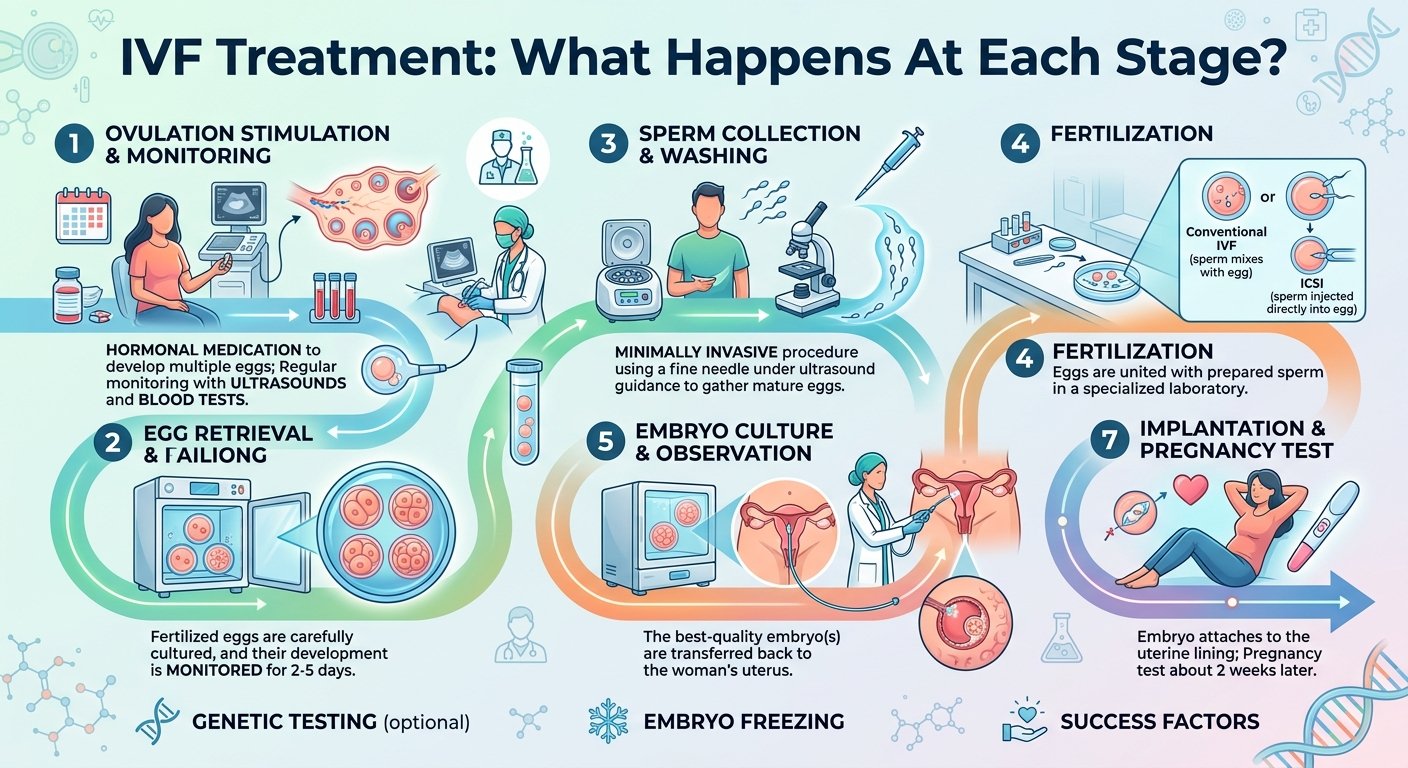
Treatment options usually depend on the severity of the narrowing, symptoms and reproductive goals of the patient. In some cases before going for infertility treatment it might be necessary to treat cervical stenosis. Treatment for cervical stenosis includes cervical dilatation, hysteroscopic treatment , temporary cervical stenting and oestrogen therapy. If a patient is suffering from infertility despite treating cervical stenosis advanced fertility treatments are usually recommended by doctors.
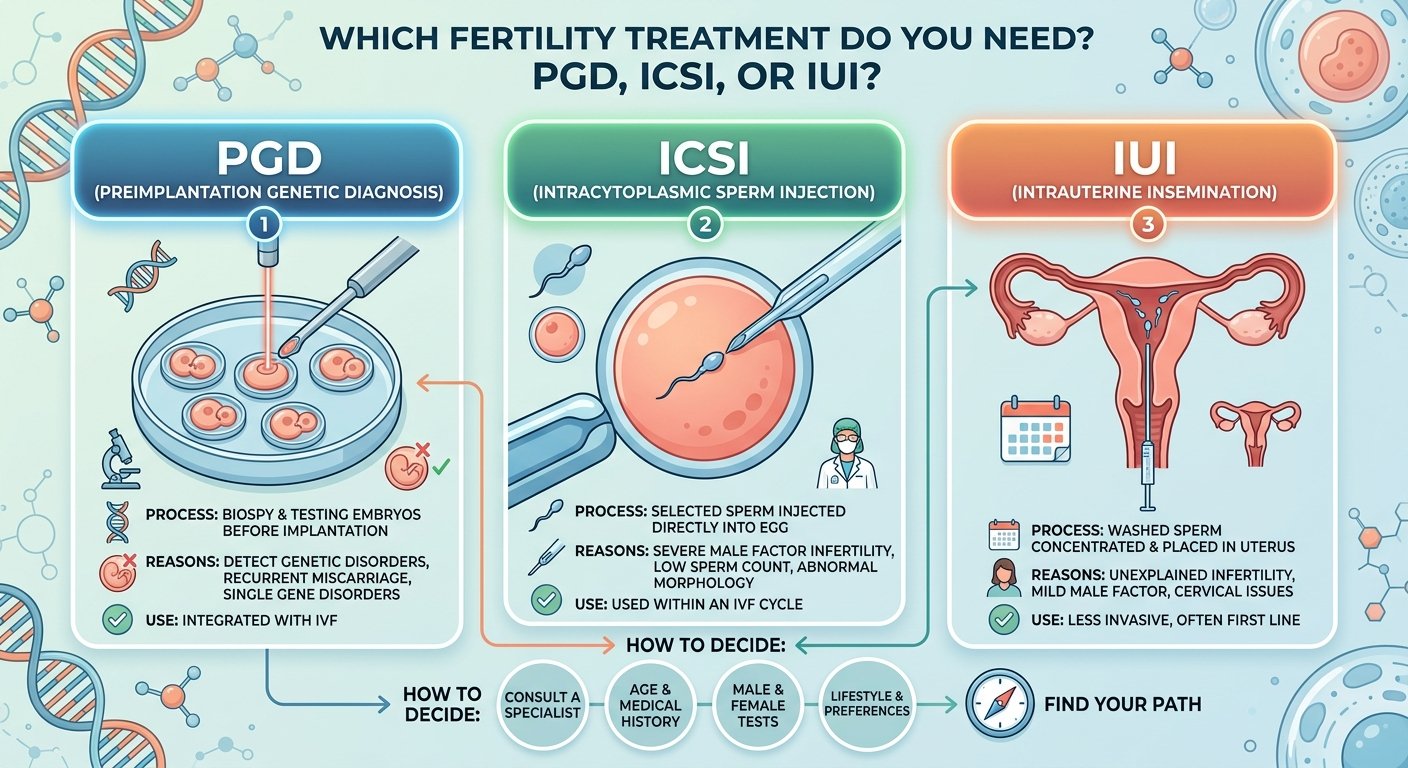
Female infertility treatment usually includes ovulation induction for IVF. While male infertility treatments are based on hormonal therapy, surgery (e.g., varicocele repair), sperm retrieval techniques, or assisted reproduction such as IVF and ICSI.
At Njinsky IVF & Fertility Clinic our doctors ensure accurate diagnosis with detailed history and thorough examination for cervical stenosis. Our doctors also help identify if the root cause of infertility is cervical stenosis while ruling out other causes of infertility. Along with treatment for cervical stenosis our clinic offers advanced fertility treatments such IVF,IUI and ICSI. Njinsky ensures evidence-based-care to patients with compassion and helps couples achieve their dream of parenthood.