Adopting the most advanced technique first should not necessarily be the goal of an individual seeking conventional fertility treatment. Various strategies may at times prove to be effective in different phases of the procedure, which might include supporting sperm in contacting the egg and supporting professionals in identifying embryos with specific genetic conditions.
Throughout the whole process of the fertility treatment, couples might stumble across terms like IUI, ICSI, and PGD, without knowing what their purposes are. The treatment process might appear slightly less perplexing as long as you understand exactly what each procedure does.
The Distinction Between PGD, IUI, and ICSI Fertility Treatment
Consider evaluating these treatments in terms of dealing with different challenges involving fertility health.
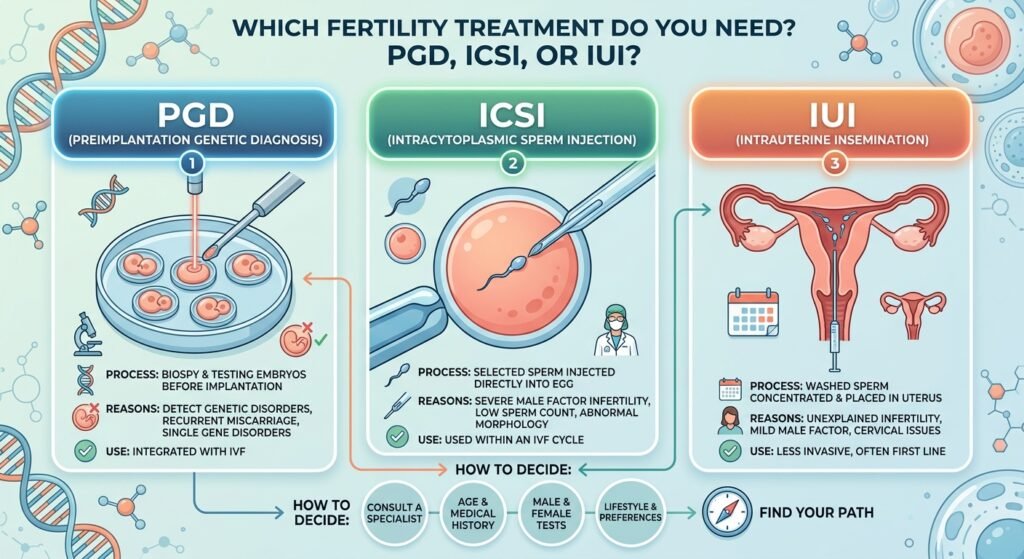
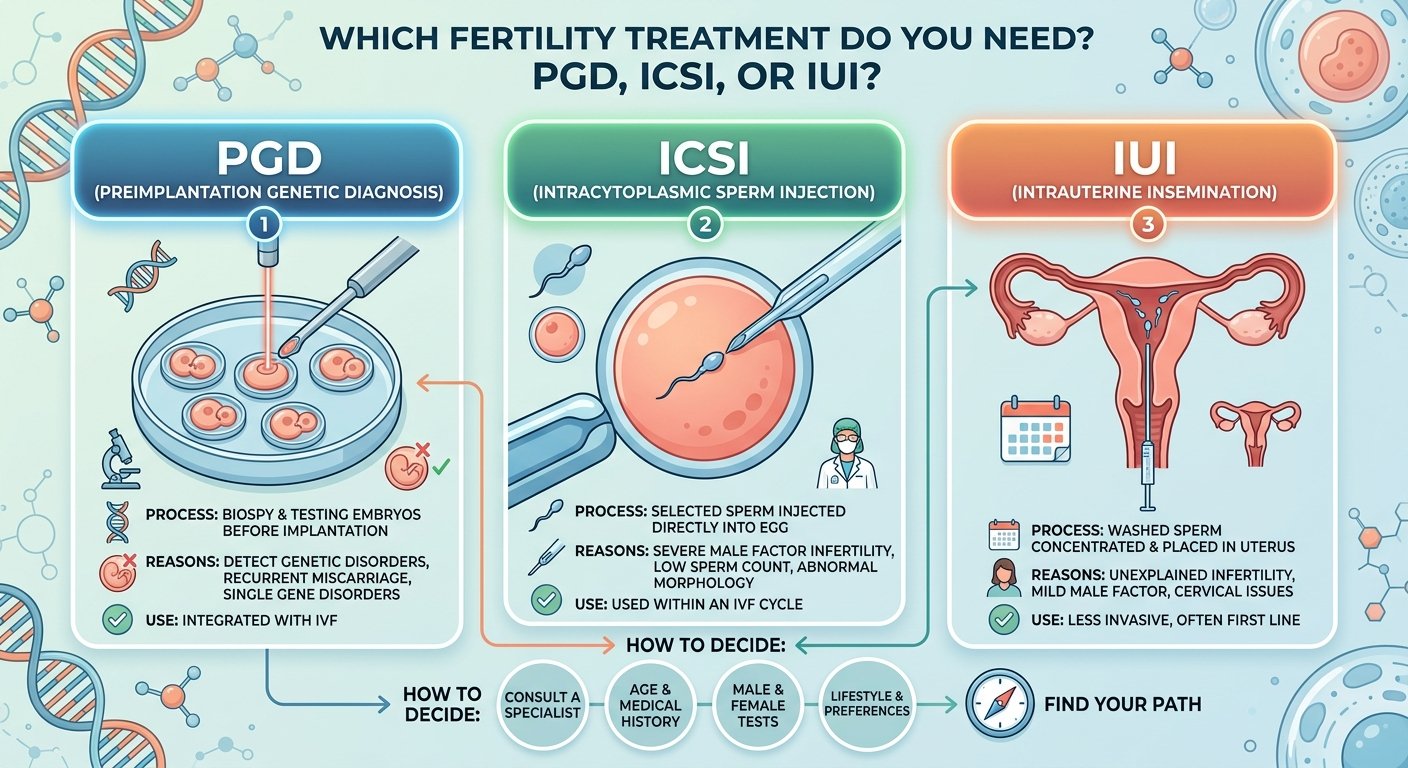
By introducing the sperm directly into the uterus during ovulation, IUI (Intrauterine Insemination) aids in the sperm’s approach towards the egg. Fertilization then continues to happen naturally inside the body.
During IVF (In Vitro Fertilization), the process of ICSI (Intracytoplasmic Sperm Injection) is administered. Only a single sperm is introduced straight into the healthy mature egg instead of merely letting the sperm float towards the egg and fertilize it spontaneously. When you have substantial sperm-related reproductive issues or any past problems with the process of fertilization, it could prove to be particularly helpful.
ICSI and IUI are not the same as PGD (Preimplantation Genetic Diagnosis), which is now more commonly known as Preimplantation Genetic Testing (PGT). PGD involves screening IVF-created embryos to identify particular genetic or chromosomal abnormalities before an embryo is selected for transfer. To keep it simple, genetic analysis and testing provide information about embryos prior to transfer, while ICSI enables the sperm to fertilize the egg and IUI helps sperm approach the egg.
When Should PGD, IUI or ICSI be Recommended?
The root cause for difficulty in conception and the couple’s fertility goal will influence the optimum choice of treatment.
In certain cases, which include unexplained infertility, certain ovulation problems or mild male factor infertility, IUI may be offered as an accessible treatment. When sperm performance or quantity is severely deficient, when sperm must be surgically retrieved or when previous IVF has given rise to poor or failed fertilization results, ICSI may be suggested.
PGD might be considered when there is an identified risk of children inheriting a particular genetic disorder or in certain other clinical conditions. It is not automatically required for every cycle of IVF.
The most valid point is that a treatment being more advanced does not necessarily make it more suitable. Fertility professionals decide on treatment according to the patient’s condition.
How to Integrate PGD and ICSI in an IVF Treatment Strategy?
What happens when a couple needs support with both genetic analysis and fertility health?
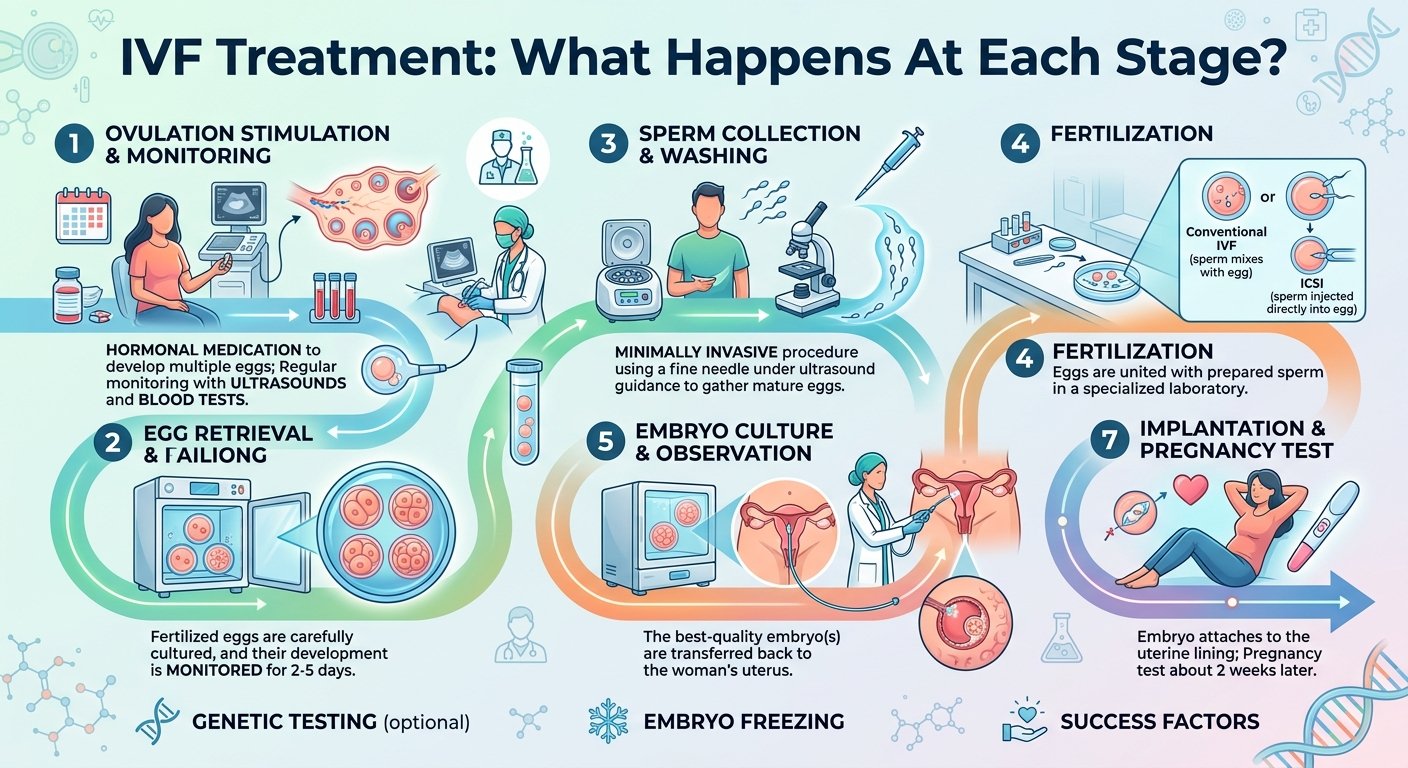
This signifies the point whereby PGT/PGD and ICSI can be included in the same IVF cycle. In the beginning, eggs are retrieved and fertilized in a lab, via ICSI if required.
Whenever PGD is suggested, a small sample of cells can be taken from each embryo for genetic analysis once the embryos have developed to the blastocyst stage. With respect to the specific kind of genetic testing being performed, the team dealing with fertility may then utilize the test’s results to decide which embryos are suitable for transfer.
Hence, ICSI and PGD may complement each other at various stages of the IVF treatment approach, though these treatments do not do the same job.
Picking Out the Best Fertility Treatment Strategy For Your Needs
No single fertility treatment is suitable for everyone. The age of the partners, the ovarian reserve, the proper functioning of the fallopian tubes, the quality of the sperm, any history of fertility treatment, genetic analysis and the root cause of unexplained infertility all affect the recommended treatment approach.
IUI might be considered a suitable approach to start your fertility journey. For other individuals, IVF might become a preferable choice from the start, combined with ICSI and PGD in certain situations.
Fertility treatment techniques at NJINSKY IVF & Fertility Clinic can be adjusted to each couple’s particular needs and fertility goals. With the goal to personalize the treatment based on the couple’s particular situation, the clinic conducts IVF, ICSI, PGT/PGD, freezing of embryos, freezing of sperm and eggs, and other reproductive treatment technologies.
In the End
Regardless of their complexity, IUI, ICSI, and PGD each serve a distinct role in fertility treatment. IUI supports sperm migration towards the egg; ICSI helps in the process of fertilization; PGT/PGD provides hereditary information from genetic analysis of the embryos.
The underlying reason for infertility determines the most suitable combination, if any.
Couples may choose a treatment approach with greater insight, and with confidence in a decision that meets their expectations, if they fully understand the treatment procedure.