It can become difficult to start IVF. A combination of optimism and doubt may be triggered by prescribed medications, tests, regular blood tests and long, dreadful periods of waiting.
But what exactly happens from the preliminary assessment up to the pregnancy test during IVF treatment?
The fertility technique commonly referred to as in vitro fertilization (IVF) requires the removal of eggs from the ovaries, fusing them with the sperm in a laboratory setting, and then placing the resulting embryos back in the uterus. Each of the treatment strategies is unique, but the treatment is often composed of an array of closely monitored stages. You will be better prepared for the journey ahead by making yourself aware of the treatment steps.
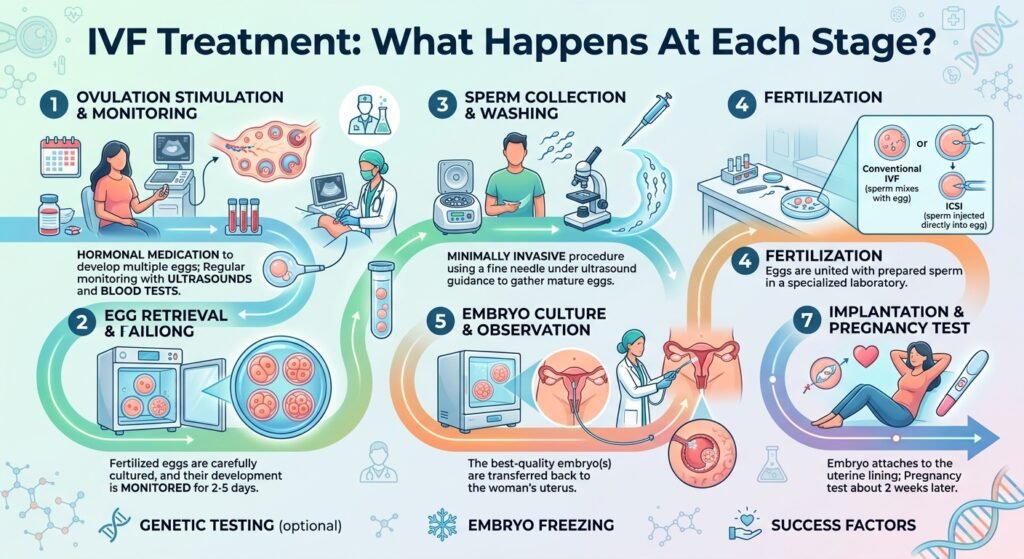
Step 1: Tracking and Stimulating Ovaries
Medicines to stimulate the ovaries in order to generate numerous follicles, every one of which might contain an egg, generally constitute the primary step in the procedure of IVF. In a regular menstrual cycle, a single egg usually develops and is released.
The objective of stimulation during the session of IVF is to increase the number of eggs that can be retrieved. The team of fertility specialists conducts ultrasonography and, if necessary, blood tests in order to monitor follicular growth during this phase. When the follicles are ready, a trigger injection is given to promote final egg maturation before the eggs are retrieved.
Medications and treatment duration differ for each individual, depending on factors such as the age of the patient, ovarian reserve, and response to treatment.
With careful monitoring, the fertility team may adjust the procedure and minimize the risk of complications such as Ovarian Hyperstimulation Syndrome (OHSS).
Step 2: Egg Removal, The Process of Fertilization, and Embryo Development
Once the eggs are mature, they are collected through a process that is guided by ultrasound imaging, which usually involves sedation or anesthesia. This technique involves collecting eggs from the follicles of the ovaries via a small needle. The laboratory thereafter prepares a semen sample.
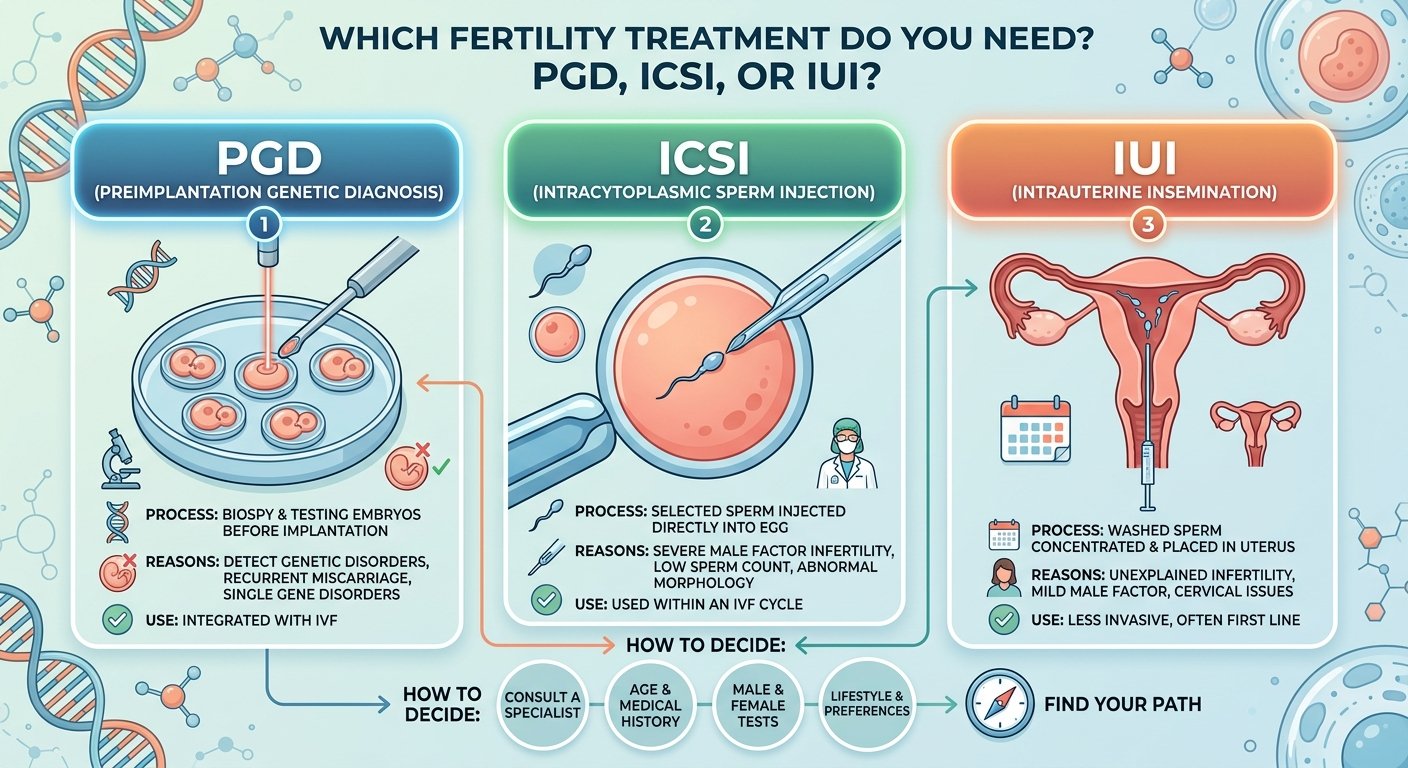
When medically appropriate, Intracytoplasmic Sperm Injection (ICSI), which involves injecting a single sperm directly into a mature egg, is another technique of assisted fertilization.
In the following days, the fertilized eggs are monitored as they begin to develop into embryos. Not every egg may fertilize, and not every fertilized egg will continue to grow.
To figure out which embryo would be suitable to undergo transfer or freezing, the embryology specialist team observes their progress.
Step 3: Selection of the Embryos To be Transferred
The team of the fertility specialists analyzes the embryos and selects which will be suitable for the transfer after several days of development in the laboratory. The decision to proceed is based on a number of factors, particularly the health and growth of the embryo along with the patient’s preferred choice of treatment.
Genetic screening is not required in every IVF cycle, though it may be taken into consideration in certain situations.
The selected embryo is transferred into the uterus via an embryo transfer procedure, in which a thin catheter is inserted through the cervix, usually guided by ultrasonography. Generally, the procedure is swift and does not require the administration of anesthesia.
Any remaining embryos can be preserved for later use. With the goal of achieving a healthy pregnancy while limiting risks such as multiple pregnancies, the total number of embryos transferred is set according to each individual’s medical condition and clinical guidelines.
The Steps After Embryo Transfer
Even though embryo transfer is considered a major turning point in fertility treatment, pregnancy is not immediately guaranteed.
It is essential for the developing embryo to implant in the lining of the uterus and begin producing measurable pregnancy hormones. Because the exact timings differ based on the clinical protocols, a pregnancy test is typically performed about 10-14 days after embryo transfer, on the date your clinic advises.
It is imperative to follow the fertility specialist team’s advice, since testing too early can produce inaccurate results.
After the transfer, many patients are able to return to their normal daily routine unless their medical facility instructs otherwise.
Keep taking the medications as prescribed, particularly progesterone if recommended, and do not stop simply because of side effects or an early home pregnancy test until you have consulted your clinic.
Your medical facility will guide you through the next steps if the pregnancy test is positive, which could include an ultrasound examination and further blood tests. If the test result is negative, your fertility specialist may provide guidance about the outcome and whether any modifications or alternatives need to be considered.
How Can NJINSKY IVF & Fertility Clinic Support You?
IUI, IVF, ICSI, embryo transfer, freezing and other fertility treatment techniques are readily accessible to patients at NJINSKY IVF & Fertility Clinic. The reproductive health and fertility specialists at this medical facility are capable of helping patients fully understand the next steps in the procedure in accordance with their particular treatment strategies, outlining the screening methodologies and analytical processes, and leading them through every step of the treatment.
Finally
IVF encompasses an array of stages, starting from stimulation of the ovaries and egg collection to embryo transfer and pregnancy testing. Each phase of the procedure has a specific purpose and the methodology is tailored to each patient’s medical condition and response to treatment.
This fertility journey can become more manageable as long as you know what to expect. A detailed fertility consultation session can assist you in evaluating whether IVF is the right choice for you, which treatment strategy to follow, and what to consider when starting treatment.





One Response