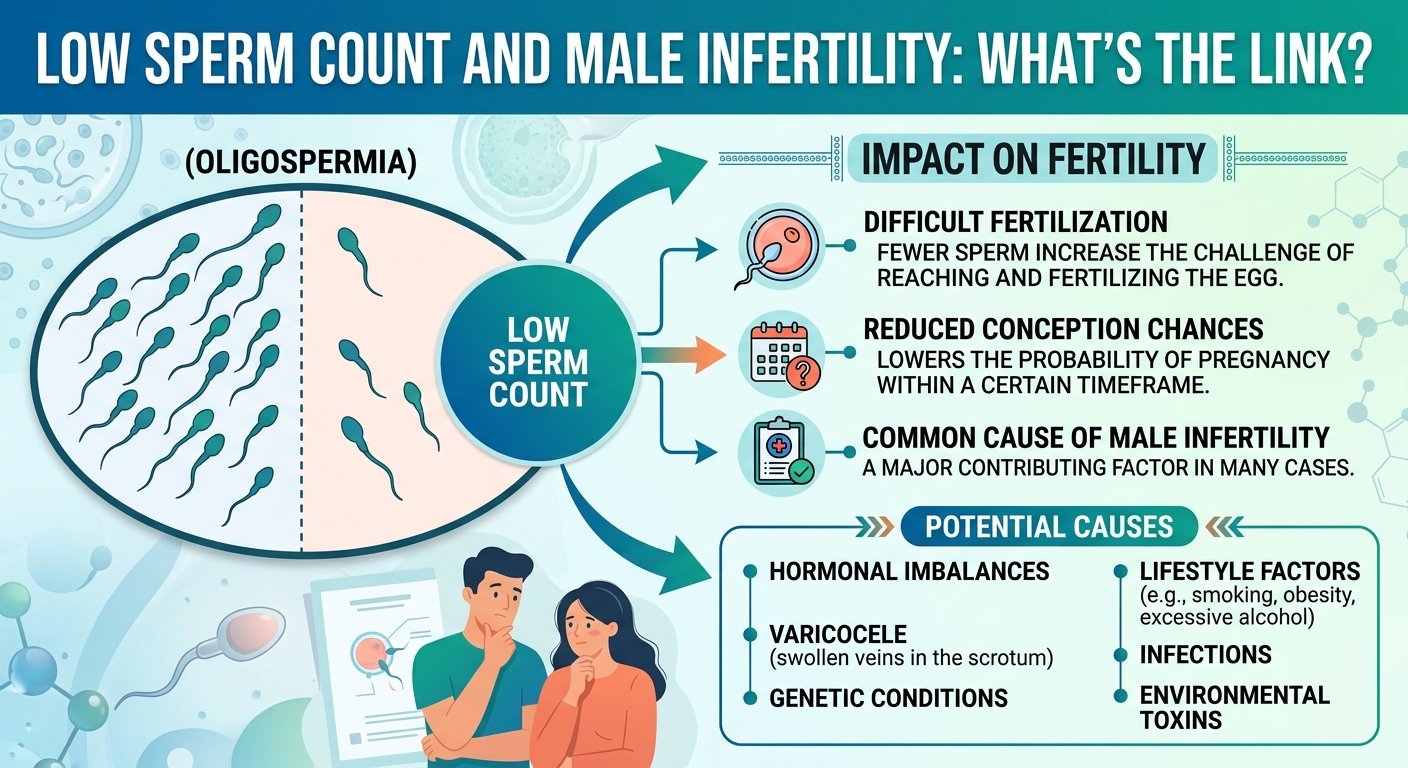
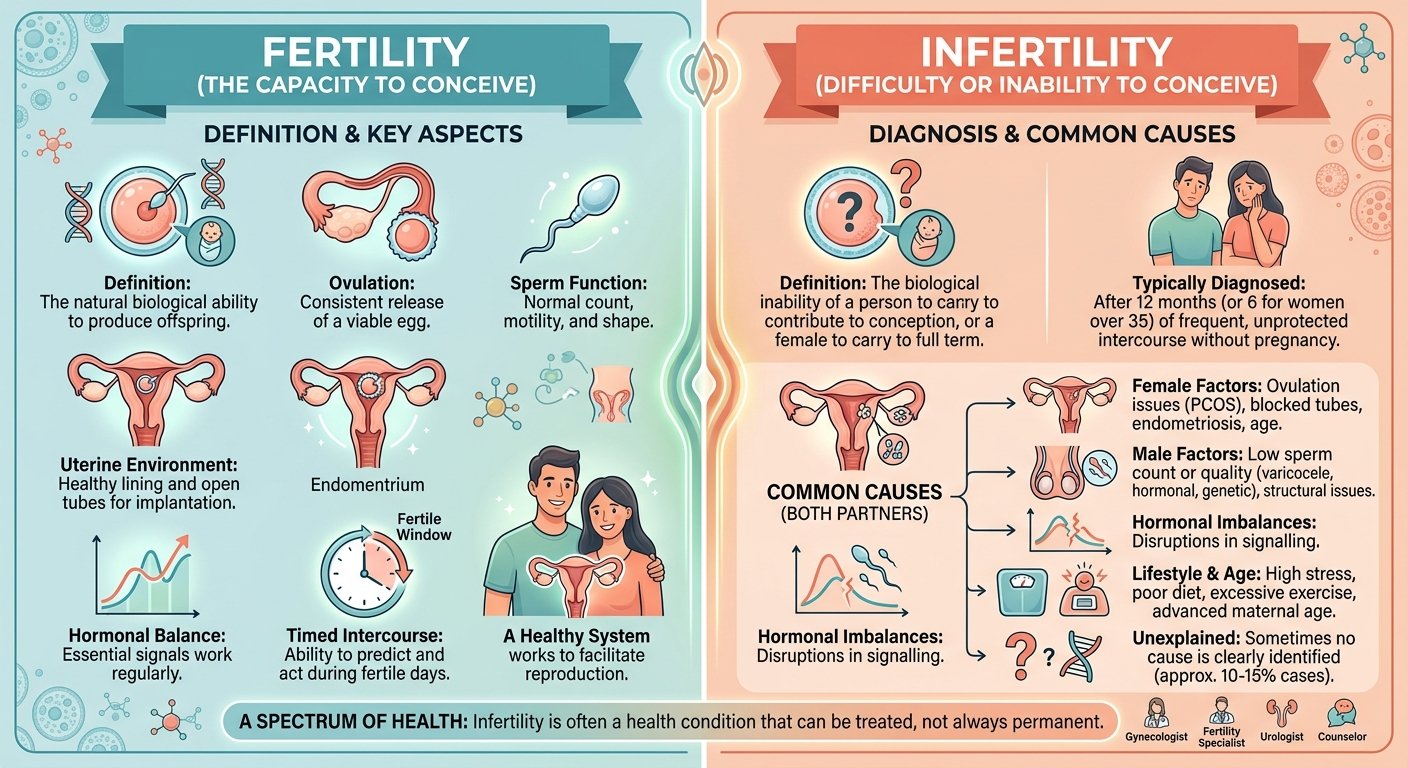
Hormones play a crucial role in fertility, and thyroid hormone is one of the major hormones affecting it. It is important for both males and females to understand the relationship between thyroid disorders and fertility. Infertility isn’t simply caused by a problem in the reproductive organs—pregnancy is a complex process that requires thorough investigation from every aspect. Thyroid hormone plays an important role in regulating various bodily functions, including reproduction. When thyroid hormone levels are low, it may lead to infertility in both men and women.
Low Thyroid and Reproductive Health
When thyroid hormones (T3 and T4) are low in the blood, the condition is known as hypothyroidism. In this condition, all metabolic processes of the body slow down, which also affects reproduction by reducing the chances of fertilization and conception. Hypothyroidism is a common hormonal imbalance causing infertility.
Low thyroid hormone levels increase secretion of thyrotropin-releasing hormone (TRH), which raises prolactin levels. Elevated prolactin suppresses gonadotropin-releasing hormone (GnRH), leading to reduced secretion of follicle-stimulating hormone (FSH) and luteinizing hormone (LH), impaired ovulation, menstrual irregularities, and infertility. Additionally, hypothyroidism directly affects ovarian function, endometrial receptivity, and progesterone production, further reducing the likelihood of conception and increasing the risk of miscarriage.
Diagnosis of Thyroid-related Fertility Problems
When diagnosing hypothyroidism, doctors usually look for its common symptoms, which typically include:
- Cold intolerance
- Constipation
- Abrupt unexplained weight gain
- Fatigue
- Hair loss
- Depression
- Irregular periods
If these symptoms are present along with difficulty conceiving, hypothyroidism may be suspected, and further investigation is required to confirm the diagnosis. The most appropriate investigation is thyroid function testing—most commonly TSH, free T4, and free T3.
Doctors at Njinsky IVF & Fertility Clinic conduct detailed hormonal profiling in couples having difficulty conceiving, along with ultrasound, to rule out every possibility that may be causing infertility. It is important for a couple to have hormonal testing done, because not all individuals present with obvious symptoms of hypothyroidism.
Possible effects in men with hypothyroidism include:
- Reduced sperm production
- Decreased sperm motility
- Abnormal sperm morphology
- Reduced libido
- Erectile dysfunction
Fortunately, many of these effects may improve once thyroid hormone levels are adequately treated.
How Does Hypothyroidism Affect Female Fertility?
Hypothyroidism can affect female fertility in many different ways. Here are a few common ways in which it can result in infertility.
1. Ovulation problems: Hypothyroidism can disrupt the release of eggs from the ovaries. As a result, the exact date of ovulation is not known, making conception more difficult.
2. Irregular menstruation: Women with hypothyroidism may experience irregular periods, heavy menstrual bleeding, infrequent periods, and absent periods (amenorrhea). These menstrual disturbances often reflect underlying ovulatory dysfunction.
3. Low thyroid levels can stimulate prolactin secretion, resulting in high prolactin levels (the hormone responsible for milk production during breastfeeding).
4. Increased risk of miscarriage.
Treatment for Hypothyroidism-induced Infertility
At Njinsky IVF & Fertility Clinic, our fertility specialist offers personalized treatment plans for each couple. If the root cause of infertility is hypothyroidism, the treatment of choice is thyroid hormone replacement therapy with levothyroxine. Pregnancy can be planned accordingly once optimal thyroid hormone levels are restored. We offer treatment plans for both males and females. In certain cases, due to advanced maternal age or insufficient ovarian reserve, couples are unable to achieve pregnancy even after the thyroid levels are returned to normal.
In these cases, Njinsky IVF & Fertility Clinic gives hope to patients by offering advanced procedures such as IVF, IUI, and ICSI. Our goal is to help couples achieve their dream of parenthood through comprehensive fertility care, advanced reproductive techniques, and the highest standards of patient safety and support.