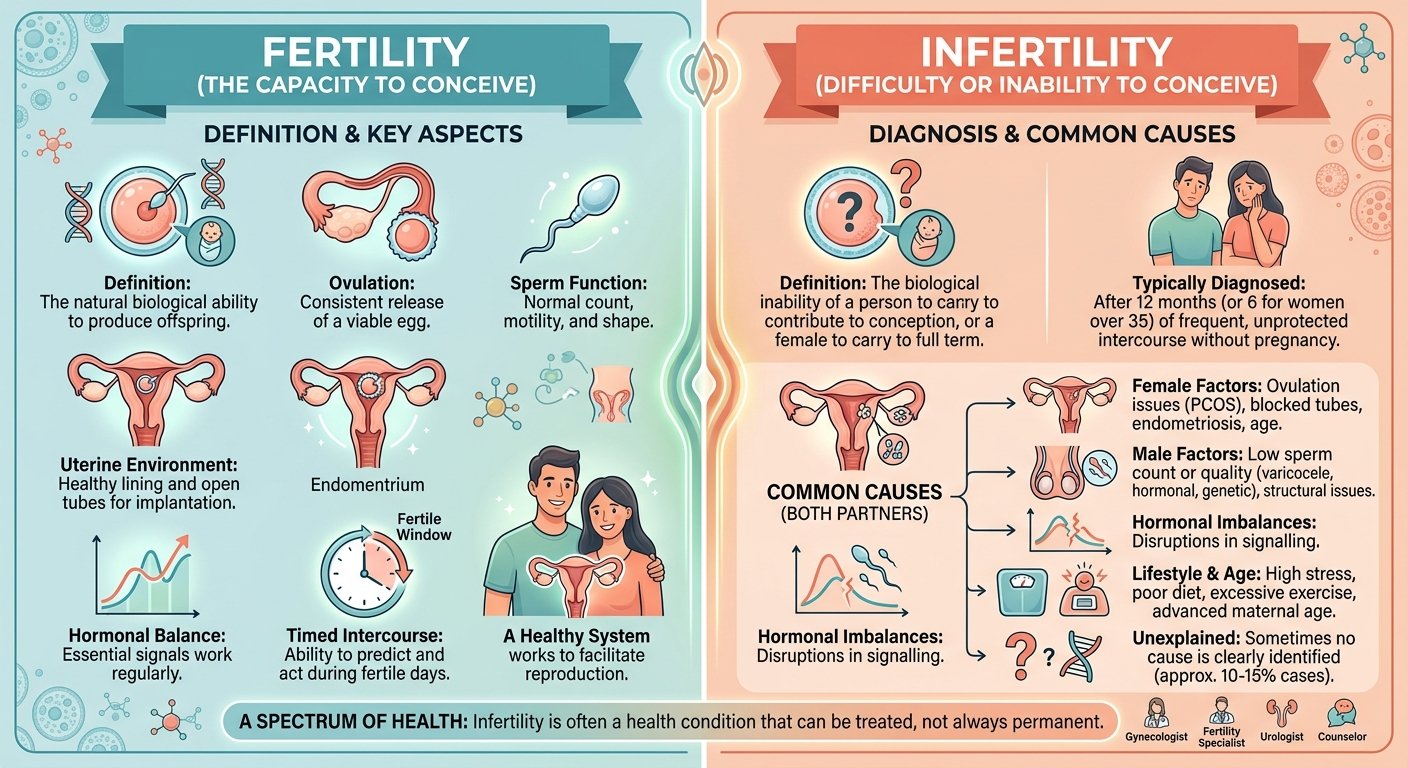
Endometriosis is one of the common causes of female infertility. Many women of reproductive age have endometriosis, which may be associated with difficulty conceiving. However, many women with endometriosis can still conceive naturally; the likelihood depends mainly on the severity, location, and extent of the disease and its associated inflammation. Therefore, it is important to seek help from a healthcare professional if you have endometriosis affecting fertility.
What is endometriosis?
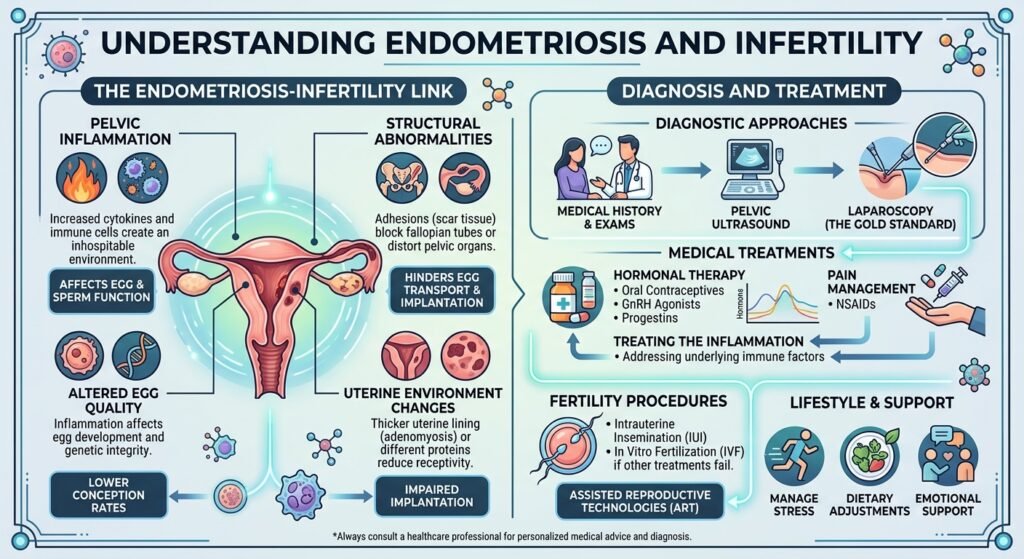
Before concluding that endometriosis is the cause of infertility, it is important to understand what the condition is. Endometriosis is a chronic condition in which tissue similar to the endometrium (the lining of the uterus) grows outside the uterus. These sites are called endometrial implants or lesions, and they are most commonly found on the ovaries, fallopian tubes, pelvic peritoneum, and other pelvic organs. Less commonly, they may occur outside the pelvis. The main problem is that this tissue responds to hormonal changes but cannot leave the body as menstrual blood does, which causes inflammation, adhesions, and scarring. When adhesions and scarring affect the fallopian tubes, sperm may not reach the egg, or the embryo may not be able to travel to the uterus, resulting in infertility or even an ectopic pregnancy.
Symptoms of endometriosis
Common symptoms of endometriosis include:
Chronic pelvic pain
Bleeding or spotting between periods
Severe menstrual pain (dysmenorrhoea)
Pain during intercourse
Heavy menstrual bleeding
Pain during bowel movements or urination, especially during menstruation
Difficulty getting pregnant
Importantly, the severity of symptoms does not always reflect the severity of the disease.
Hormonal and reproductive health issues
Endometriosis is oestrogen-dependent. Endometrial tissue present in the ovaries, fallopian tubes or pelvic tissues is strongly influenced by oestrogen levels. This can cause inflammation and pain, and may eventually lead to adhesions that make it more difficult to conceive. Endometriomas (ovarian cysts caused by endometriosis) may reduce ovarian reserve, while scar tissue and adhesions may interfere with the transport of the egg and sperm. The uterine and pelvic changes that accompany endometriosis may lower the chances of fertilisation and embryo implantation. Nevertheless, most women with endometriosis ovulate normally, and many can conceive naturally, especially those with mild disease.
Diagnosis of endometriosis
Diagnosis begins with a detailed gynaecological history, including any history of painful periods or other associated symptoms. It also includes a reproductive history and a thorough physical examination. When endometriosis is suspected, ultrasound is used to identify ovarian endometriomas, which may affect fertility.
Additional investigations may include:
Pelvic ultrasound (particularly useful for ovarian endometriomas)
MRI in selected cases
Diagnostic laparoscopy with histological confirmation, when appropriate
Not every woman requires surgery to establish a diagnosis, especially if imaging and symptoms strongly suggest endometriosis. However, normal imaging does not rule out the disease, particularly superficial peritoneal endometriosis, so laparoscopy may still be considered.
Treatment options for infertility caused by endometriosis
Treatment for endometriosis includes medications to relieve pain and suppress disease activity, such as hormonal therapies including oral contraceptives, progestins, and GnRH agonists. However, these medications only control symptoms and suppress ovulation, so they do not improve fertility and are not used to treat infertility. Laparoscopic surgery can remove endometriosis lesions, adhesions, and scar tissue. It may improve the chance of pregnancy, particularly in minimal to mild disease, and may also relieve symptoms. Surgery on endometriomas should be considered carefully because it can reduce ovarian reserve. Fertility treatments include intrauterine insemination (IUI) with ovarian stimulation, which may be considered in mild disease, and assisted reproductive technologies such as in vitro fertilisation (IVF), which is recommended in selected patients, for example when the fallopian tubes are damaged, there is a male factor, or other treatments have failed.
Njinsky IVF & Fertility Clinic
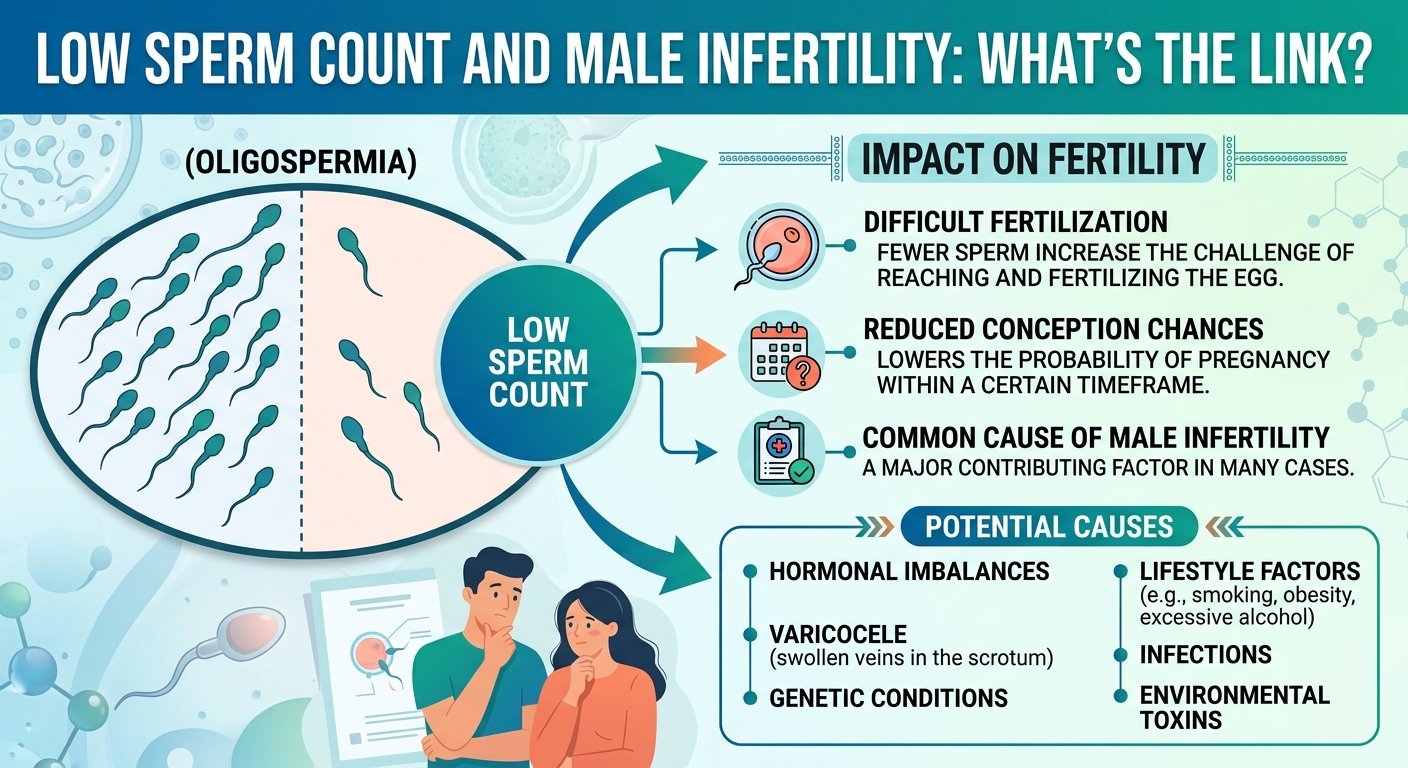
At Njinsky IVF & Fertility Clinic, we provide female fertility treatments to patients suffering from infertility due to endometriosis. We treat our patients with compassion and care while ensuring effective treatment plans for the couple. While treating endometriosis and infertility, we also provide male infertility treatment options to increase chances of conception through IVF. We understand that having endometriosis can cause pain and distress to patients and emotional damage when this results in infertility. Therefore, our doctors take their time to understand the situation, empathise with patients, and provide the best possible treatment to help you achieve your dream of parenthood.