Many women deal with endometriosis, a chronic gynecological condition. Endometriosis occurs when tissue similar to the lining of the uterus grows outside the uterus, causing pelvic discomfort, inflammation, and fertility issues. Although each person’s signs and symptoms are distinct, understanding the stages of endometriosis can help patients and medical specialists evaluate the severity of the disease and devise an appropriate treatment strategy.
It is essential to recognize that the degree of severity of the disease and its symptoms is not always associated with the stages of endometriosis. A woman with severe endometriosis might experience few symptoms, while a woman with mild endometriosis can experience extreme pain. This is why a comprehensive evaluation by a qualified specialist or fertility expert is necessary.
Stages of Endometriosis
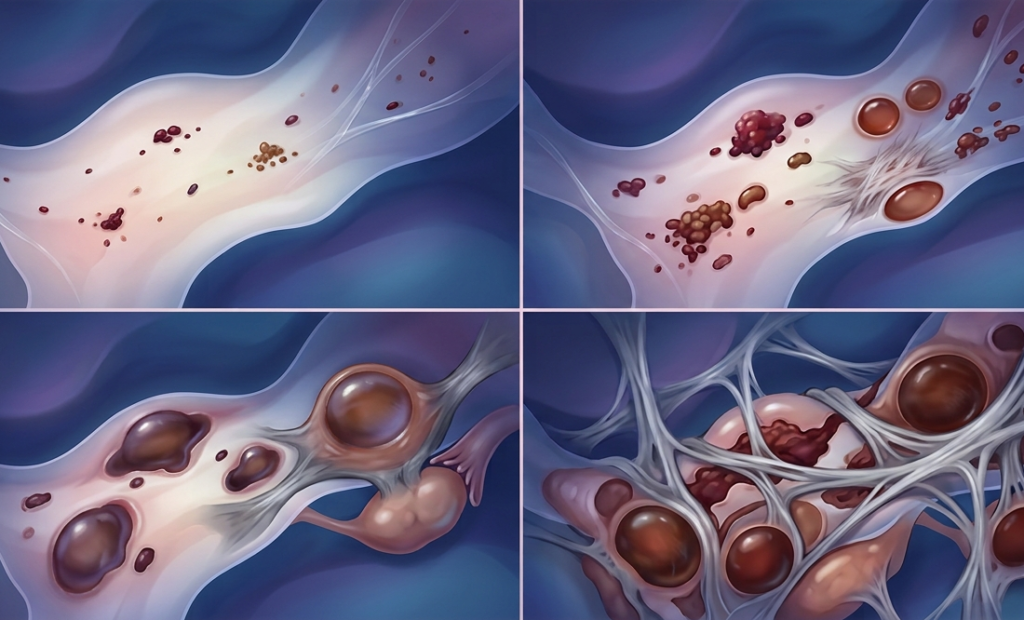
Specialists often use an approach established by the American Society for Reproductive Medicine (ASRM) to classify endometriosis stages. This method evaluates the presence of cysts in the ovaries (endometriomas) and scar tissue (adhesions) with respect to the quantity, size, thickness, and position of the endometrial implants.
There are four stages accepted and recognized:
STAGE 1 – Minimal Endometriosis
STAGE 2 – Mild Endometriosis
STAGE 3 – Moderate Endometriosis
STAGE 4 – Severe Endometriosis
While these stages do not always predict pain levels or fertility outcomes, they help medical specialists recognize the severity of the disease.
Stage 1: Minimal Endometriosis
Stage 1 is the earliest phase of endometriosis. Women in this stage usually have a small number of superficial implants with little to no scarring. Some characteristics are:
- Few superficial lesions
- Low levels of inflammation
- No significant adhesions
- Little to no ovarian engagement
While some women with Stage 1 endometriosis only become aware of the disorder after undergoing fertility examinations, others may experience moderate symptoms.
Stage 2: Mild Endometriosis
In contrast to stage 1, the lesions in stage 2 are deeper and more numerous. Specialists note:
- Greater number of implants
- Mild scar tissue
- Little inflammation
- Acute involvement of pelvic structure
Many women still respond effectively to conventional medicine and conservative treatment, even as the disease progresses.
Stage 3: Moderate Endometriosis
In the third stage, the condition becomes more extensive and can begin to interfere with fertility. Some attributes include:
- Deep endometrial lesions or implants
- Small ovarian endometriomas
- Moderate adhesions
- Increased inflammation in the pelvic region
During this stage, women often experience painful intercourse, chronic pelvic pain, and increasing difficulties with natural conception.
Stage 4: Severe Endometriosis
Stage 4, the most severe form of the disease, is characterized by large ovarian cysts, significant pelvic adhesions, extensive scar tissue, and deep endometrial implants. Women with stage 4 endometriosis may experience:
- Chronic pain in pelvic region
- Menstrual discomfort
- Constant lower back pain
- Pain during intercourse
- Large endometriomas in ovaries
- Fertility issues
- Adhesions including bowel, bladder and other organs
Despite its severity, treatment options are still available, and with specialized care, many women with stage 4 endometriosis can effectively manage their symptoms and conceive.
Is Life Expectancy Affected by Stage 4 Endometriosis?
Because a stage 4 diagnosis can feel overwhelming, many women worry about their life expectancy. Fortunately, stage 4 endometriosis does not decrease average life expectancy. Rather than being a fatal disease, endometriosis is considered a chronic disorder. However, severe endometriosis can significantly affect:
- Quality of life
- Daily duties
- Emotional wellbeing
- Fertility health
- Persistent pain and discomfort
Many women manage to live healthy and satisfying lives when they are given the right medical attention, pain management, and fertility support when needed.
Some Common Symptoms of Endometriosis
Regardless of the stage, symptoms can vary.
Some common signs and symptoms include:
- Severe menstrual cramps
- Persistent pelvic pain
- Heavy bleeding during menstruation
- Pain during intercourse
- Pain while passing a stool or urine during menstruation
- Fatigue
- Difficulty getting pregnant
However, some women with stage 4 endometriosis may experience very few symptoms, while others with stage 1 endometriosis may experience severe pain. This shows that symptom severity cannot be determined by stage alone.
Want to recognize the warning signs? Read our guide on Endometriosis Symptoms: Early Signs & Fertility Impact.
How are the Stages of Endometriosis Determined?
Evaluating the patient’s health, medical history, and symptoms is usually the first step in the diagnostic process. Doctors may suggest:
Because laparoscopy allows direct visualization of the pelvic organs, it remains the gold standard for accurately diagnosing endometriosis and determining its stage.
Treatment Based on Endometriosis Stage
Several factors influence standard treatment, such as:
- Stage of the disease
- Age of the patient
- Severity of the pain
- Fertility goals
- Overall health
Can a Person with Stage 4 Endometriosis Get Pregnant?
Yes, pregnancy is possible, although some women with stage 4 endometriosis may have reduced fertility.
Many women conceive:
- Naturally
- Or after a laparoscopic procedure
- Using IVF or other assisted reproductive technologies.
Treatment approaches can be tailored to each patient’s fertility goals, beginning with a consultation with a fertility specialist.
Advanced Endometriosis Care
In addition to managing the signs and symptoms, women with endometriosis often need specialized fertility care, especially if they want to become pregnant. For women with endometriosis, NJINSKY IVF & Fertility Clinic conducts complete fertility evaluation tests and personalized treatment approaches. Fertility assessments, ovulation induction, IVF, IUI, embryo transfer, and modern reproductive care consultation are some of the few treatment approaches available at this clinic.
NJINSKY IVF & Fertility Clinic helps patients understand how endometriosis may be affecting their fertility health and recommends treatment options based on each patient’s needs, integrating experienced fertility specialists with modern diagnostic technologies. Each patient is given professional guidance and compassionate support throughout their fertility journey, thanks to its patient-focused approach.
Final Thoughts
Patients can better comprehend the course of endometriosis by being aware of its stages, but it’s crucial to keep in mind that the stage does not always correspond to the intensity of symptoms. While some women with stage 4 endometriosis may have relatively moderate symptoms, others with early-stage illness may endure severe discomfort.
Similarly, medical facts, not fear, should guide any concerns regarding life expectancy with stage 4 endometriosis. Despite being the most severe stage of the illness, Stage 4 does not shorten life expectancy. Many women are able to effectively manage their symptoms, safeguard their fertility, and maintain a high quality of life with prompt diagnosis, individualized therapy, and continued medical care.
If you are planning a pregnancy or experiencing endometriosis symptoms, a skilled gynecologist or fertility specialist can provide an accurate diagnosis and the best course of action for your situation.