As you first learn about the terms like ICSI and IUI, infertility treatments may appear overwhelming. Although both are common assisted reproductive technologies, their techniques, levels of complexity and capacity to work efficiently, are extremely distinct.
Finding the most suitable type of treatment method involves the knowledge to distinguish between ICSI and IUI.
This blog presents a simple overview of ICSI vs IUI, covering how each one of them works, who can use these treatment techniques, and which type of the treatment would be ideal for your particular condition.
Intrauterine Insemination or IUI
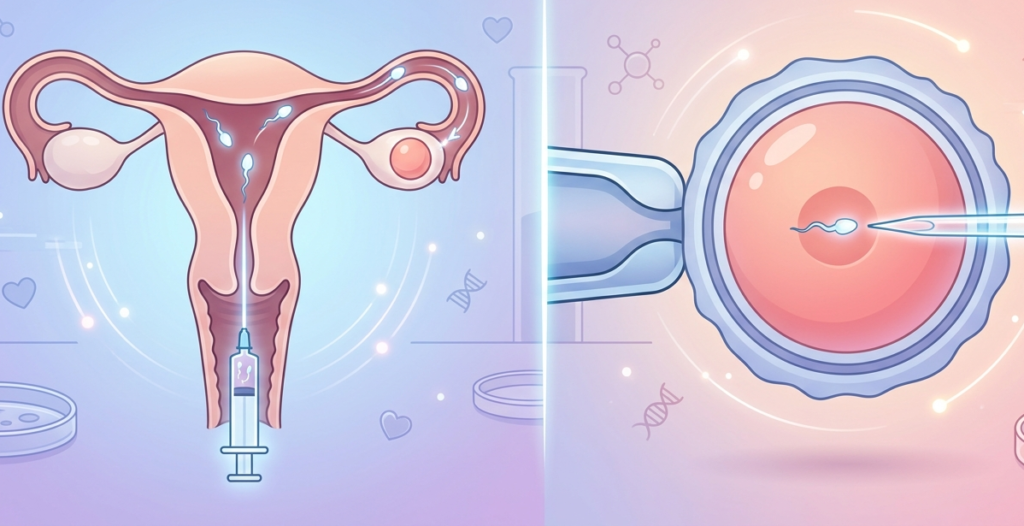
Among the most uncomplicated reproduction technologies is IUI (Intrauterine Insemination).
In this treatment;
- In a laboratory setting, sperm is taken and processed
- The most healthy sperm is chosen
- During the time of ovulation, it is introduced in the uterus
The objective is to enhance the possibility of successful fertilization by decreasing the distance sperm has to travel towards the egg. The fusion of sperm with the egg marks the process of fertilization that has happened within the body.
Intracytoplasmic Sperm Injection or ICSI
A single sperm from the male partner is directly inserted into the egg of the female partner beneath a microscope using the ICSI technique of fertilization. This technique substantially increases the probability of fertilization by breaking the natural reproduction hurdles.
ICSI confirms that conception by manually inserting the sperm into the egg increases the chance of fertilization, in comparison to the conventional IVF, where the sperm fertilizes the egg naturally in a laboratory dish.
Who Requires ICSI?
In the following situations, the ICSI treatment is generally suggested;
- Low Sperm Count or Oligospermia
- Weak motility of sperms
- Abnormal sperm formation
- Past IVF sperm failures
- Absence of sperm or Azoospermia
- Making use of the preserved and surgically acquired sperms
Due to this, ICSI is considered the most optimum way to treat acute male infertility.
The Core Difference between ICSI and IUI
How and where fertilization happens is the main difference between both these treatments.
IUI → Fertilizations happens naturally in the body
ICSI → Fertilization occurs artificially in a laboratory environment
While ICSI involves direct manual intervention in the natural fertilization process, IUI supports fertilization by assisting it in a less invasive manner.
Comparing ICSI vs IUI
The procedure of IUI;
- Monitoring the ovulation
- Taking a sperm sample
- Insertion of sperm in the uterus
- Wait for fertilization to happen naturally
This approach is simple, fast and minimally invasive.
The procedure of ICSI;
- Stimulation of the ovaries with hormones
- Eggs retrieval
- The sperm selection
- Sperm is microinjected into the egg
- Embryo culturing
- Transfer of the embryo in the uterus
Degree of Complexity
The level of complexity is one of the major differences between IUI and ICSI.
While IUI is simple and minimally invasive, ICSI is highly complicated and complex.
Specialized tools, fertility experts and properly monitored laboratory facilities are required for ICSI.
Why Is IUI Recommended?
Situations where there is mild infertility, IUI is often the primary option for treatment.
It is suitable for;
- Mild male infertility
- Complications with ovulation
- Hostile Cervical mucus
- Unexplained infertility
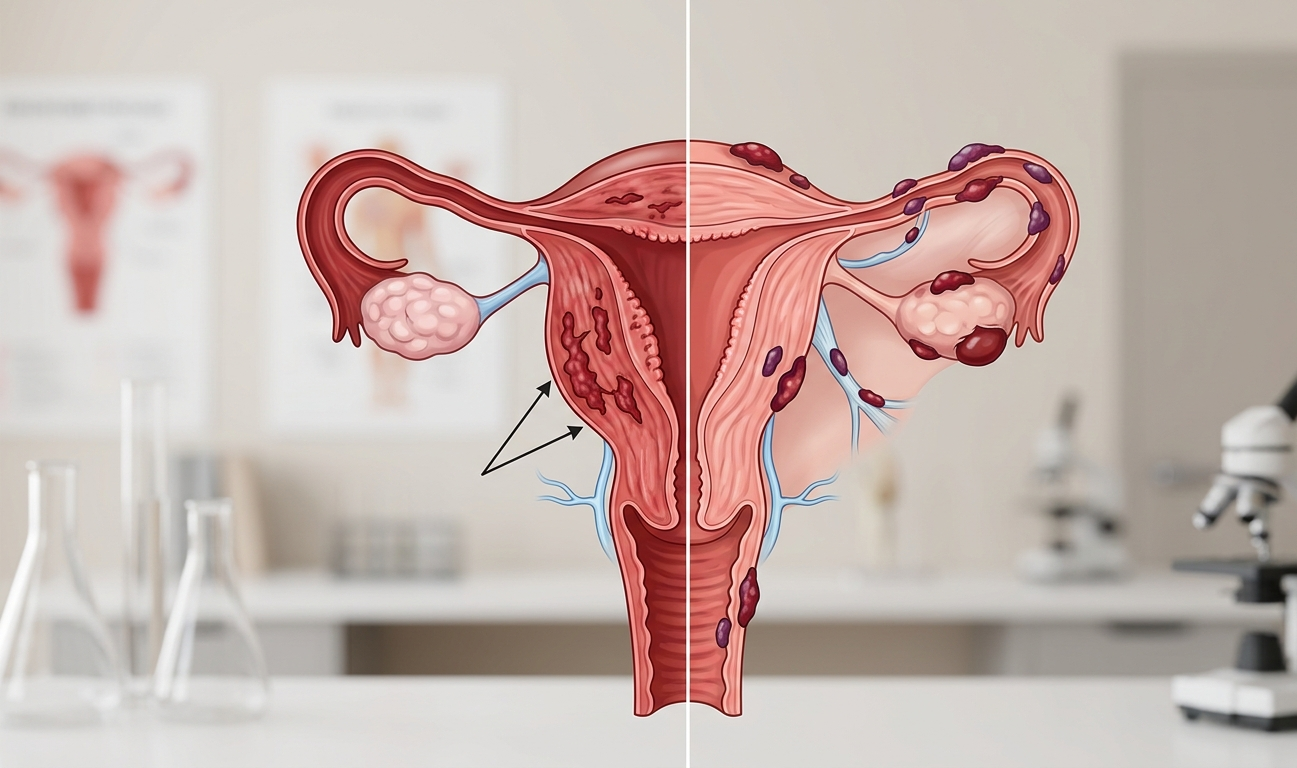
- Mild endometriosis
Specialists usually use IUI prior to resorting to more advanced treatment options considering that it is less invasive.
Success Rates: ICSI vs IUI
Age, physical health and fundamental problems all influence the rates of success.
ICSI has a higher success rate per cycle, especially in cases of severe infertility but it is not always the best or first option.
But, a lot of couples effectively conceived through IUI, which means ICSI is not necessarily needed.
Difference in Cost
Price is another important difference between IUI and ICSI.
- IUI is more readily available and cost-effective.
- ICSI has higher cost considering that it is a complex laboratory procedure
When transitioning towards ICSI if required, couples typically initiate with IUI.
Pros of IUI
- Simple and fast procedure
- Minimally invasive
- More affordable
- Little medications needed
Pros of ICSI
- High success rates
- Efficient when severe infertility
- Need only a single sperm per egg
- Reduced probability of fertilization failure
Cons of ICSI and IUI
IUI has lower rates of success since it relies on conception to happen naturally. While ICSI is more invasive, hormonal stimulation is needed and poses stress on emotional level.
Emotional and Physical Effects
Both treatments are emotionally draining.
IUI experience;
- Few clinic visits
- Only a handful of procedure steps
ICSI experience;
- More complex
- Requires constant monitoring and medications
- Prolonged course of treatment
Which One is Better: ICSI or IUI?
There can not be a single best choice.
The suitable choice depends on;
How Physicians Choose Between ICSI and IUI?
Fertility specialists evaluate the following factors before recommending any course of treatment;
- Hormone Levels
- Quality of sperm and eggs
- Medical History
They propose the most suitable plan of treatment based on these factors.
Role of Good Fertility Clinic
The success of the treatment is greatly influenced by quality standards of fertility clinics.
A good fertility clinic like NJINSKY IVF & Fertility Clinic offer the following;
- Careful and precise diagnosis
- Latest Technology
- Skilled Professionals
- Individualized care
Picking a suitable clinic may significantly boost the outcomes.
Current Developments in Fertility Treatment
With the growth in technology;
- The application of ICSI is increasing
- The success rate is improving
- Personalized treatment approaches are increasingly common
IUI is still considered an important first step.
Common myths about ICSI and IUI
- Myth1: ICSI is always best
This is false; ICSI is only necessary in specific cases.
In cases of mild infertility, IUI can be very effective
- Myth3: Expensive means better
Your medical condition decides the most appropriate approach to treatment rather than the price.
Getting Reading for the Treatment
To be able to improve the success rate;
- Maintain a healthy lifestyle
- Avoid drinking and smoking
- Manage stress levels
- Follow medical advice
Final Thoughts
Making informed decisions on treatment of infertility demands awareness of the difference between ICSI and IUI. For complex cases of infertility, ICSI offers a more technical and regulated method, whereas IUI is basic, affordable and less intrusive.
A patient’s medical condition will dictate whether ICSI or IUI is a viable option. The most appropriate way to make the right decision is to consult with a fertility specialist at a renowned facility like NJINSKY IVF & Fertility clinic. Both methods are capable of making the dream of parenthood possible with proper guidance, quality care and support.