Sperm may be present in a man’s semen and move normally, yet their shape can still be abnormal. The size, shape, and structure of sperm are collectively referred to as sperm morphology.
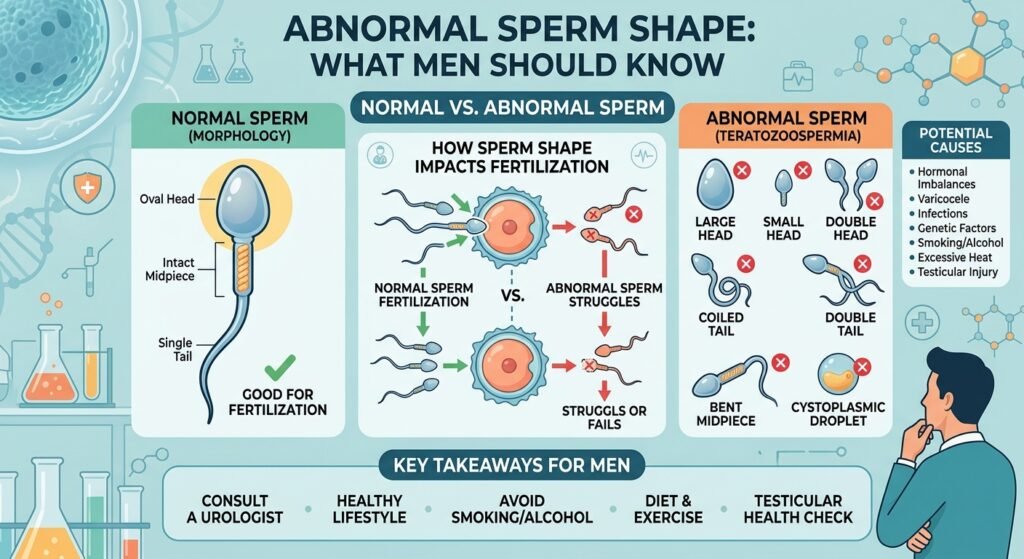
A normal sperm has an oval head, a distinct midpiece, and a single long tail. Each part has a specific purpose: the head carries the genetic material (DNA) and the acrosome, a cap of enzymes that helps the sperm penetrate the egg; the midpiece contains the mitochondria that supply energy; and the tail provides the movement needed to reach the egg.
Teratozoospermia (also called teratospermia) is the term used when a high proportion of the sperm in a semen sample have abnormal shapes or structural defects. According to the World Health Organization (WHO) laboratory manual (6th edition, 2021), a sample is considered within the reference range when at least 4% of sperm have a normal shape, which means that most sperm in a fertile man’s sample can look abnormal. This raises an important question: is it common to have some sperm with unusual shapes? Yes, it is.
A comprehensive semen analysis is important, and morphology should be interpreted together with other parameters such as sperm motility and sperm count. A man is not necessarily infertile simply because some of his sperm are irregularly shaped. What conditions might lead to abnormal sperm shapes, and at what point does morphology actually affect fertility?
What Does Abnormal Sperm Morphology Mean?
Sperm are highly specialized cells. The tail enables movement, the midpiece contains the energy-producing mitochondria, and the head stores the genetic material and enables fertilization. Structural problems can affect any of these parts.
For instance, a sperm may have two heads or two tails, an unusually large or small head, a bent or coiled tail, or an irregular midpiece. Such abnormalities can reduce a sperm’s motility or its ability to bind to and fertilize the egg.
Morphology is assessed by examining stained sperm under a microscope as part of a semen analysis. Other key parameters, such as sperm motility and concentration, are also evaluated in the laboratory.
Most semen samples contain a mixture of normally and abnormally shaped sperm, which is one reason a morphology result can look concerning on an analysis report. Even so, a high percentage of abnormally shaped sperm does not always signal a bigger problem.
Typical Causes of Abnormal Sperm Morphology
Why do sperm take on an abnormal shape? There is usually no single explanation.
Medical conditions, environmental factors, lifestyle habits, and problems with sperm production can all affect sperm morphology.
- Infections and Inflammation – certain infections of the reproductive tract can affect sperm production, alter sperm shape, and impair sperm function.
- Varicocele – an enlargement of the veins within the scrotum that is associated with poorer semen quality, including abnormal sperm morphology.
- Lifestyle and environmental factors – smoking, heavy alcohol use, obesity, recreational drug use, and exposure to heat or toxic chemicals can all contribute to abnormal sperm shape.
- Genetic factors – in some men, abnormal sperm morphology is related to genetic or chromosomal disorders.
- Age and medical conditions – advancing age and certain medical conditions, such as hormonal disorders, can affect testicular and hormonal function.
Signs of Abnormal Sperm Morphology
Abnormal sperm shape usually causes no noticeable physical symptoms, which makes it difficult to detect without testing.
A man with abnormal sperm morphology may still have:
- Normal libido
- Normal erections
- Regular ejaculation
- No discomfort in the testicles
- No change in overall health
In many cases, the condition is only detected when a couple has difficulty conceiving and undergoes a fertility evaluation.
How Can Abnormal Sperm Shape Affect Male Fertility?
This is where sperm morphology becomes especially relevant.
A sperm must travel to the egg, bind to it, and penetrate it. Several structural features of the sperm head, particularly the acrosome, are essential for successful fertilization. Abnormalities of the head, midpiece, or tail can therefore limit sperm function.
However, abnormal sperm morphology does not necessarily lead to infertility. A semen sample usually contains a mixture of normal and abnormal sperm.
Some couples conceive naturally even when only a small percentage of sperm have a normal shape, because enough normal, motile sperm may still be present.
According to current guidelines, morphology alone is not a strong predictor of fertility and should be interpreted together with the other semen parameters. The likelihood of infertility increases when several semen parameters, such as concentration, motility, and morphology, are abnormal.
Clinic To Seek Help From
Because abnormal sperm morphology has no obvious symptoms, a semen analysis is the first step in detecting it, and further evaluation is usually needed. If you and your partner have been trying to conceive without success for 12 months (or 6 months if the female partner is over 35), both partners should be evaluated rather than assuming that only one person is responsible for the fertility problem.
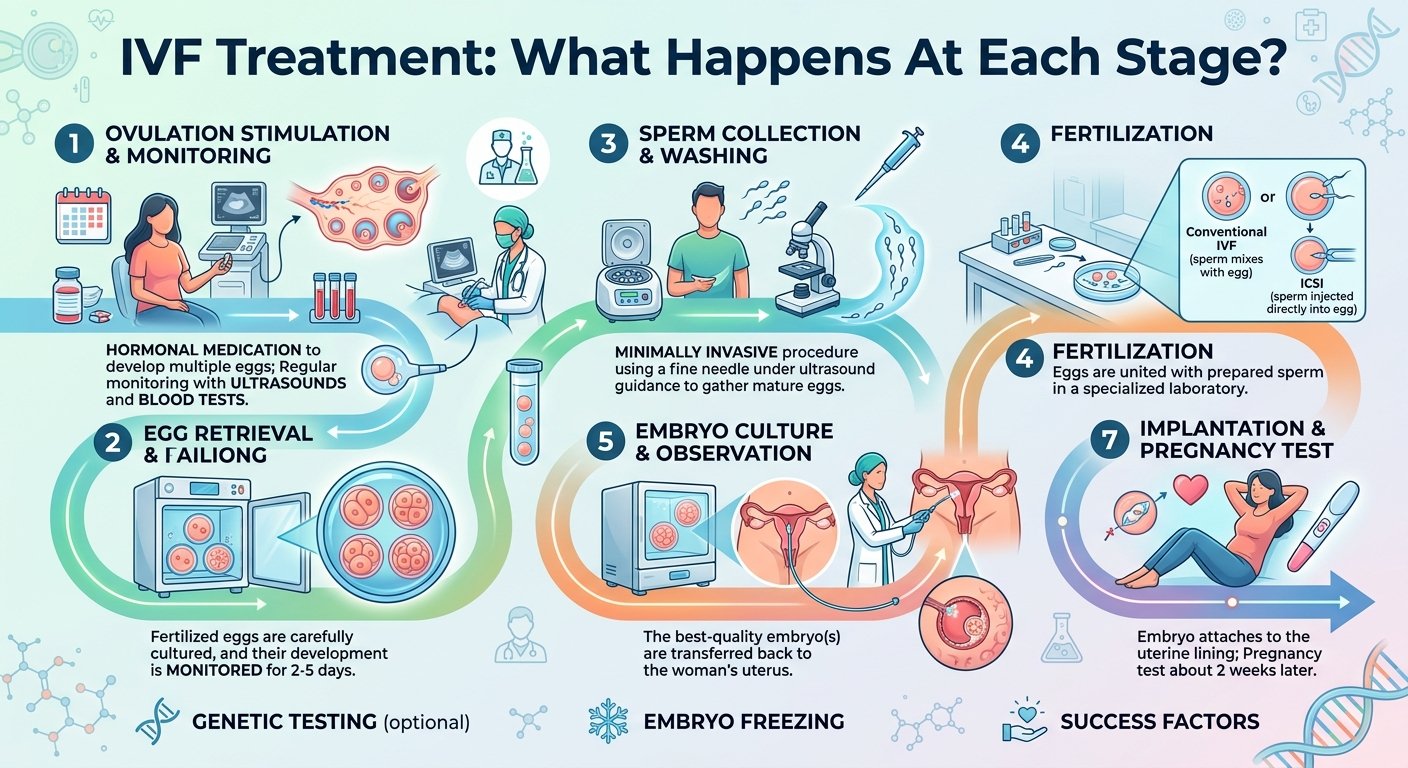
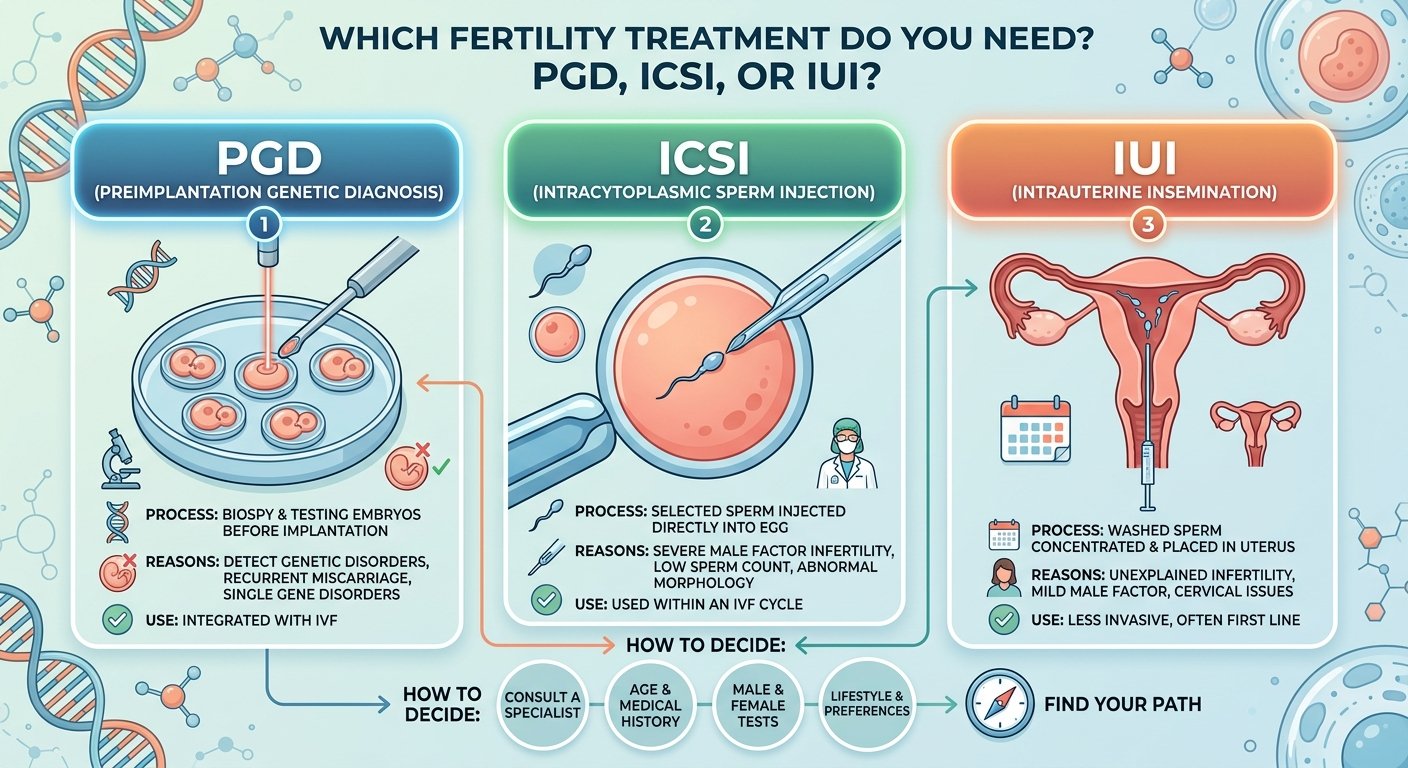
International guidelines recommend evaluating both partners at the same time, with a semen analysis included in the initial male fertility assessment. Men with reproductive issues can get tailored treatment care and sperm examination at NJINSKY IVF & Fertility Clinic. Treatment may include addressing the underlying causes and using assisted reproductive technologies (IUI, IVF, or ICSI), depending on the results of the examinations.
To Conclude
Is the shape of your sperm affecting your chances of getting pregnant? Abnormal sperm morphology can affect sperm function, but an abnormal morphology result by itself does not necessarily mean infertility. What matters is the entire semen profile, the severity of the abnormality, and the presence of other male or female reproductive factors.
A semen analysis provides the first important clue. If abnormal morphology is found, further evaluation can help determine whether treatment or assisted reproductive options may be appropriate.