Even when sperm are present in a healthy quantity and have the right shape, what happens if they are unable to travel efficiently enough to reach the egg?
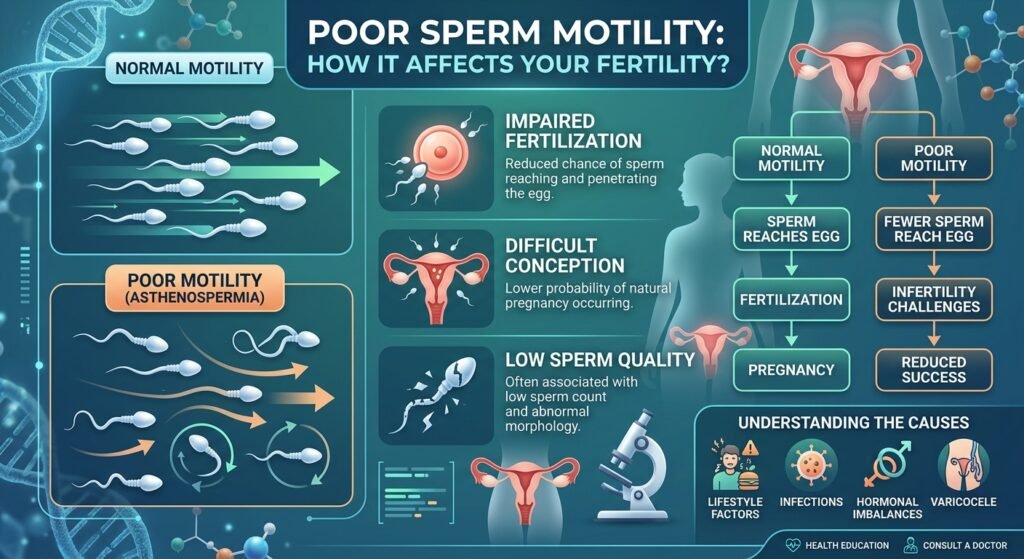
Sperm motility refers to sperm’s ability to move on their own. This movement matters because, for fertilization to occur, sperm must travel through the female reproductive tract after ejaculation and reach the mature egg.
Asthenozoospermia, commonly known as poor sperm motility, is a medical condition in which a significant proportion of sperm move abnormally and lack the ability to progress efficiently.
Poor sperm motility does not automatically rule out pregnancy. The extent of the motility problem, along with sperm count, sperm shape, and other reproductive factors, all influence overall fertility.
So what causes sperm to lose their motility, and how can this condition be treated?
What Does Poor Sperm Motility Imply?
Sperm need more than just the ability to swim — they need progressive motility, meaning the ability to move forward rather than simply moving their tails in place. Sperm are generally classified as immotile (unable to move), non-progressively motile (moving without advancing), or progressively motile (moving forward effectively).
Clinical assessment therefore looks at both the percentage of moving sperm and how effectively they move. In research and clinical practice, asthenozoospermia is defined as reduced total or progressive motility. Most of the mechanical force needed for movement is generated by the tail of the sperm, or flagellum.
The energy needed for this motion is supplied by mitochondria in the midpiece of the sperm. Motility can therefore be affected by structural abnormalities, impaired energy production, oxidative stress, and other biochemical factors.
In simple terms, even if sperm are present in sufficient numbers, they will have a much harder time reaching the egg if they cannot move properly.
Common Causes of Poor Sperm Motility in Men
Why does sperm motility become affected? There is not always a single answer.
Several factors — including diet and lifestyle habits, environmental exposures, infections, underlying medical conditions, and genetic defects — can lead to poor sperm motility.
- Oxidative Stress – An excess of reactive oxygen species (ROS) can damage sperm cells and impair their motility.
- Varicocele – An enlargement of the veins within the scrotum, similar to varicose veins. It is one of the most common correctable causes of reduced sperm quality, quantity, and motility.
- Inflammation and infection – Certain infections of the male reproductive tract can impair sperm function, including motility.
- Hormonal disorders – Normal sperm production depends on a properly regulated hormonal signaling pathway between the brain, pituitary gland, and testicles.
- Genetic disorders – Disorders such as primary ciliary dyskinesia can cause structural defects in the sperm tail, resulting in poor motility.
- Certain medications and environmental factors can also reduce sperm motility.
- Lifestyle habits – Smoking, excessive alcohol consumption, and recreational drug use can all affect sperm’s health.
Some Warning Signs of Poor Sperm Motility
One of the more frustrating aspects of poor sperm motility is that it usually causes no noticeable physical symptoms.
Despite having poor sperm motility, a man may still experience:
- Normal sexual desire (libido)
- Normal erections
- Normal ejaculation
- Normal urination
- Overall good physical health
Difficulty conceiving is usually the first noticeable sign.
How Poor Sperm Motility Causes Male Infertility?
Think of fertilization as a long journey. After ejaculation, sperm must travel through the female reproductive tract until they reach the fallopian tube, where fertilization actually takes place.
As a result, sperm motility is critical to this process. When motility is reduced, fewer sperm are able to complete this journey successfully, making it less likely that a sperm will reach and fertilize the egg.
The overall semen profile determines the outcome. A man may have poor sperm motility along with a low sperm count and abnormal sperm shape (morphology), which can further reduce the chances of a healthy pregnancy. Even so, pregnancy is not impossible with poor sperm motility.
A couple’s fertility also depends on factors affecting both partners, and some sperm may remain highly motile enough to fertilize an egg. For this reason, male factor infertility should be evaluated holistically rather than based on a single semen parameter.
Diagnose Poor Sperm Motility Before It’s Too Late
The first step in treating poor sperm motility is confirming that the problem exists and, if it does, identifying why it is happening.
Diagnosis typically involves:
- A detailed semen analysis
- Identifying the underlying cause
Depending on the diagnosis, a doctor may recommend the following treatments:
- Lifestyle modifications
- Treatment of underlying medical conditions
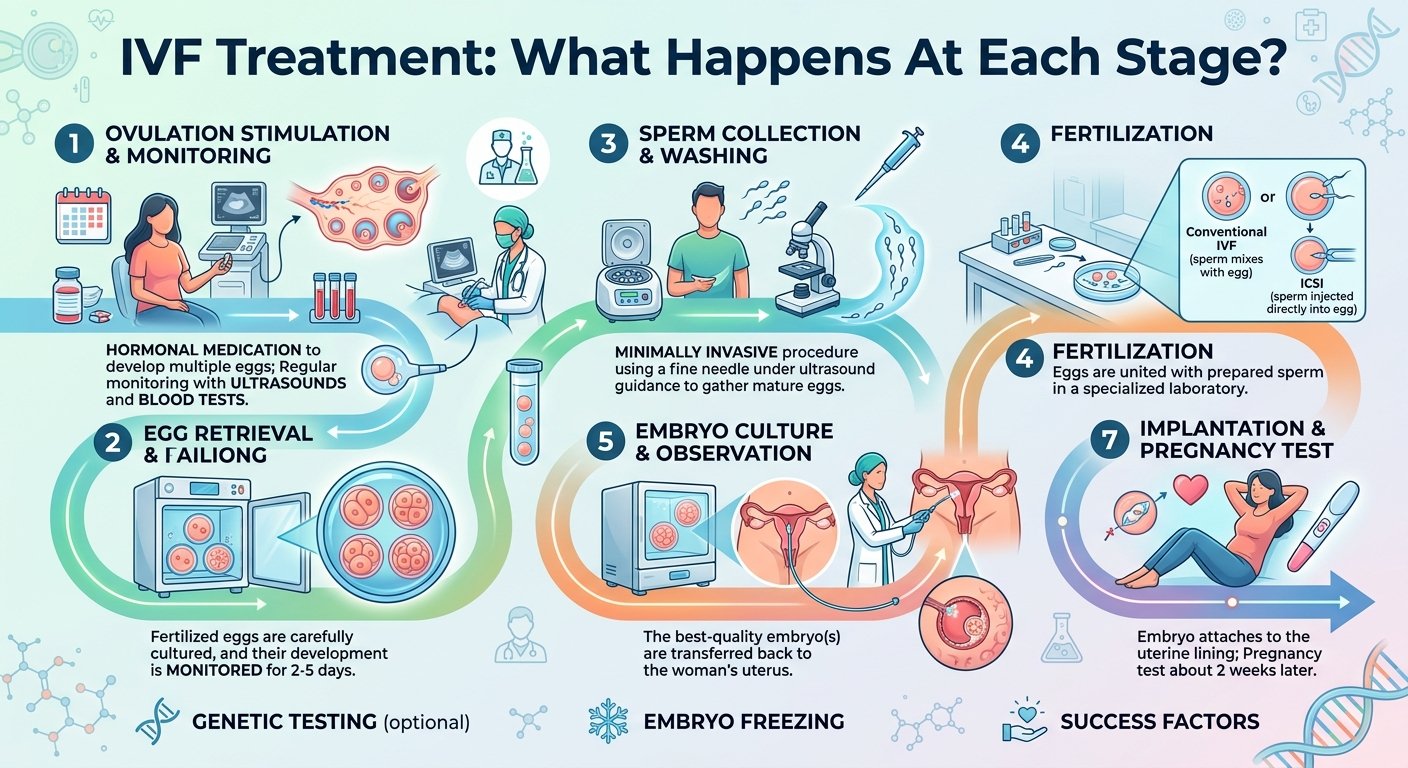
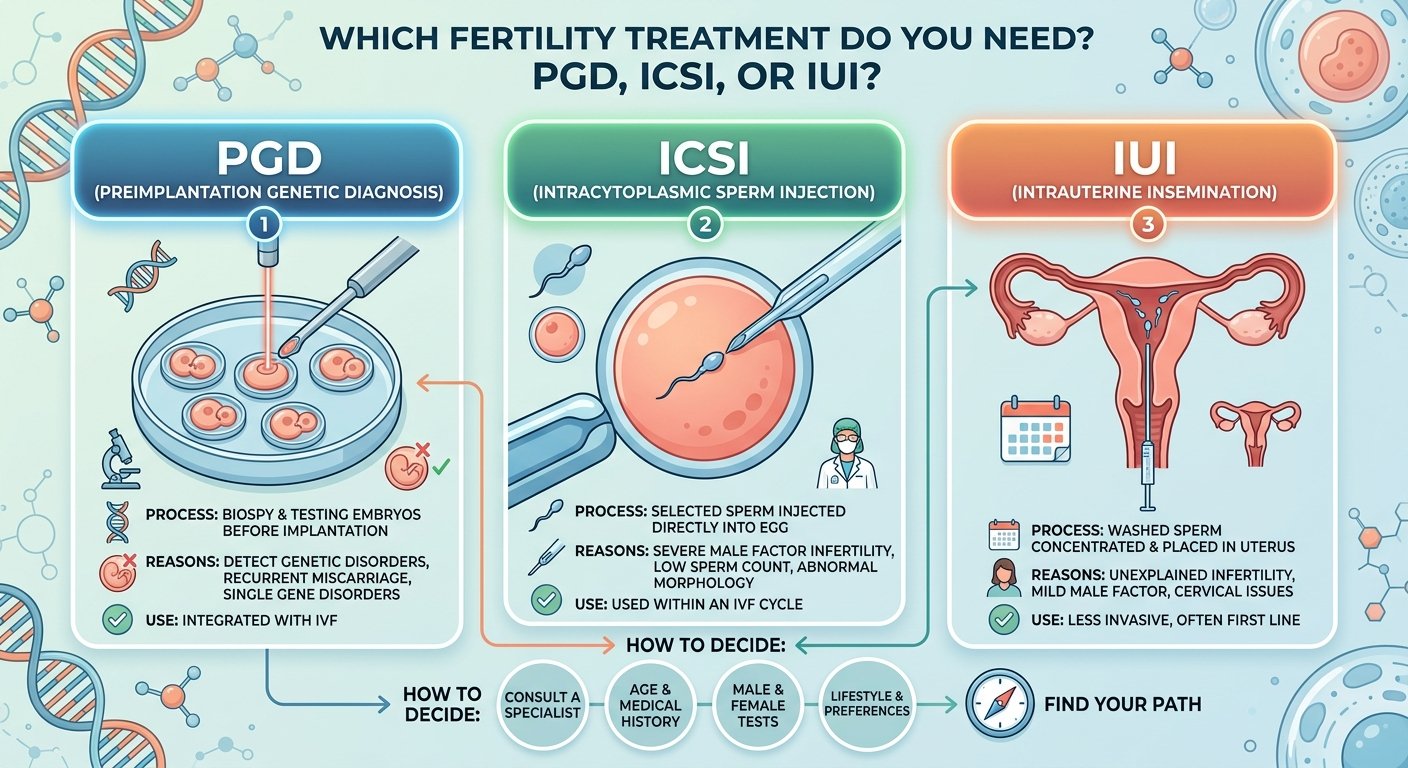
- Assisted reproductive technologies (such as IUI or ICSI)
Where and When Should You Seek Treatment?
Because poor sperm motility usually has little effect on sexual desire, it can easily be overlooked. Rather than assuming that only one partner is responsible, both male and female fertility should be evaluated together if a couple has been trying to conceive without success.
Men with male fertility problems are entitled to tailored fertility treatment care and a thorough assessment of their semen profile at NJINSKY IVF & Fertility Clinic. Treatment may include conventional medical care, sperm extraction techniques, or assisted reproductive technologies such as IUI, ICSI, or IVF, based on the diagnosis.
Finally
Could low sperm motility be making fertilization more challenging?
Sperm must not only survive in semen but also be able to travel efficiently toward the egg. Reduced motility can result from oxidative stress, infections, hormonal imbalances, varicocele, lifestyle factors, certain drugs, or structural abnormalities in the sperm.
The important thing is that low motility can be investigated. A semen analysis can show whether sperm motility is affected, and further testing can help identify the underlying cause and guide appropriate treatment.