Couples who are experiencing difficulty in trying to get pregnant are now offered more treatment options due to advancement in fertility procedures. Intrauterine Insemination or IUI, is often recommended first line infertility treatment. Although it is not as complex and invasive as more advanced techniques are, numerous couples still desire to find the answers to a single query: what is the success rate?
Couples are able to make more informed choices regarding their fertility path, by remaining aware of the IUI success rate in Pakistan.
IUI Success Rate
The percentage of cycles that results in successful conception after a IUI procedure can be described as the success rate of IUI. Usually, the success rate per cycle falls between 10% to 20%. The women younger than the age of 35 have a greater chance of successful conception after the treatment is done. In multiple cycles, you can achieve better outcomes.
It is essential to remember a successful conception depends on a variety of biological and medical factors besides the procedure. Pakistan’s IUI success rate, especially in properly equipped fertility centers like NJINSKY IVF & Fertility Clinic, generally aligns with global statistics. Higher quality monitoring and standardized diagnostic tools typically deliver more consistent and reliable results.
Factors Affecting Success Rate
Various factors affect the success rate of IUI;
- Age of the Female Partner
Among the most important factors affecting fertility is age. It is obvious that the IUI success rate declines with increasing age.
- Younger than 30 years of age;
Cycles success rate: 10% to 20%
10%-15% success rate per cycle
The chances of success are very low.
- Sperm Quality
The chances of fertilization increases with healthy sperm with good motility.
- Time of the Ovulation
Timing is an important aspect of IUI. The process of insemination must happen during the time of ovulation so the egg and sperm can meet at the optimal time.
- Unexplained Infertility
Infertility issues like mild male infertility, blocked fallopian tube and endometriosis.
- Health of the uterus
A healthy lining of the uterus is important for proper implantation of the embryo. Conditions like thin endometrial lining may reduce the chances of success.
- Medications
Fertility medications can disturb the hormonal balance.
Success Rates Over Multiple Cycles
The fact that the IUI success rate rises with multiple attempts is an important characteristic.
After 3 cycles → Higher Cumulative Success
After 6 cycles → The overall pregnancy rates may continue to improve, although the increase tends to slow down after several unsuccessful attempts.
When advancing towards more sophisticated treatment, doctors suggest trying a few cycles of IUI treatment.
When is IUI the most Effective?
The higher success rate for IUI treatment happens in;
- Mild Male Infertility
- Ovulation disorders
- Unexplained infertility
- Cervical factor infertility
IUI may be quite effective in such situations.
When is IUI less Effective?
IUI may not be helpful in situations when;
- Severe male infertility
- Fallopian tubes are blocked or damaged
- Female partner is of older age (Over 35-40 years of age)
- Severe endometriosis
How to Improve the Success Rate of IUI?
By sticking to the following factors, your chances of fertilization increases.
- Maintain a healthy lifestyle
- Follow medical advice
- Maintain a healthy weight and balanced diet
- Avoid stress inducing situations
- Avoid smoking, alcohol and recreational drugs
- Select the right clinic
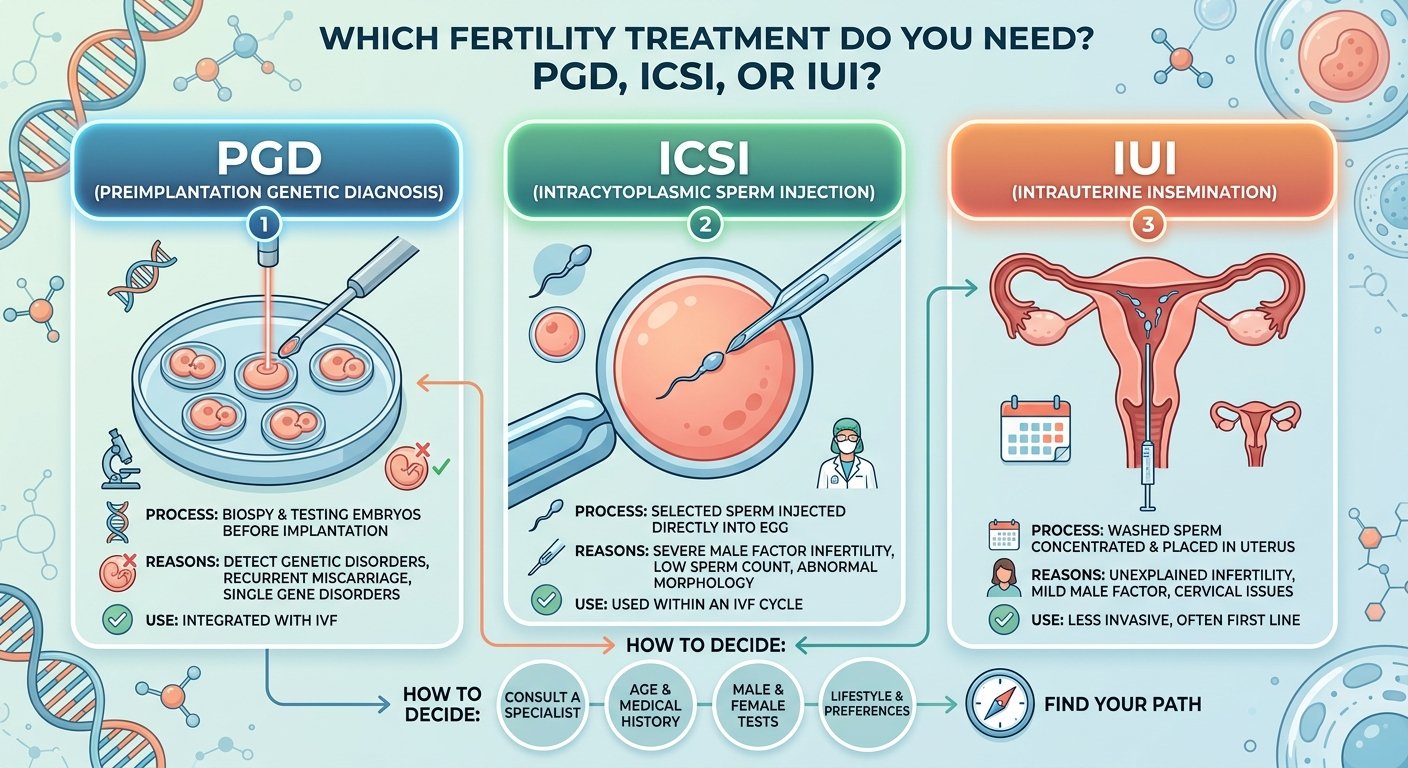
IUI vs Other Treatments
Compared to other treatments like ICSI or IVF,
- IUI is minimally invasive
- More cost effective
However, it is considered to be the first line of treatment before moving toward other advanced treatments.
Realistic Expectations
It is important to set realistic expectations;
- Pregnancy is not assured by IUI
- Multiple cycles are needed
- Success rate differs each cycle
Role of Fertility Clinic
Success rate also depends upon locating the suitable clinic. A good fertility clinic like NJINSKY Fertility & IVF Clinic offers the following services;
- Clear and precise diagnosis
- Precise ovulation timings
- Qualified medical experts
- Tailored treatment plans
Outcomes are greatly increased by excellent care and support provided by NJINSKY IVF & Fertility Clinic.
IUI Success Rates in the Future
With improvements in the treatment of infertility;
- Monitoring methods are getting better.
- The use of individualized treatment programs is growing.
- Success rates are steadily rising.
Over time, these advancements are increasing the chances of successful fertilization.
Conclusion
Age, health, and the underlying reason for infertility are some of the variables that affect the success rate of IUI. Although Pakistan’s IUI success rate is in line with international norms, individual results differ.
Couples are better able to make decisions and set reasonable expectations when they are aware of the general IUI treatment success rate as well as the success rates by age.
IUI is still a straightforward, economical, and successful beginning point for many couples on their path to parenthood, despite the fact that it may need patience and several cycles.